Dodge Dart 2015 steering angle sensor

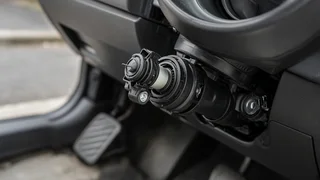
A 2015 Dodge Dart steering angle sensor question usually comes from dashboard warnings, unstable stability control behavior, or steering that feels inconsistent after an alignment or suspension repair. The sensor measures steering wheel position and rotation rate so the electronic stability control and electric power steering can react to driver input. Understanding what this component does, where its signal matters, and which symptoms point to calibration rather than internal failure helps narrow the diagnosis without assuming a fault code proves the sensor is bad.
Essential answer
The steering angle sensor on this Dart is a data source rather than a direct mechanical switch. It reports wheel position and movement direction to modules controlling stability intervention, torque assist, and related chassis functions. A lost or implausible signal can disable those systems, but the code only says the data is missing or outside expected range. Wiring, connector integrity, recent alignment changes, and the sensor clock spring assembly can all affect that signal, so the essential first step is to treat the code as a symptom, not a parts replacement order.
Vehicle-specific confirmation matters because some versions of this platform group the sensor with the clockspring or column electronics, while other applications require a separate calibration routine after steering or suspension work. The relevant reasoning is straightforward: if the module expects a centered reference and the steering shaft position no longer matches stored values, stability control may interpret normal driving as a slide or steering error. Checking for stored codes, reviewing recent work, and verifying calibration data usually provides a more accurate direction than swapping parts on a single scan result.