DIY Front-End Collision Repair: What You Can Fix Yourself and What Needs a Shop
The Short Answer
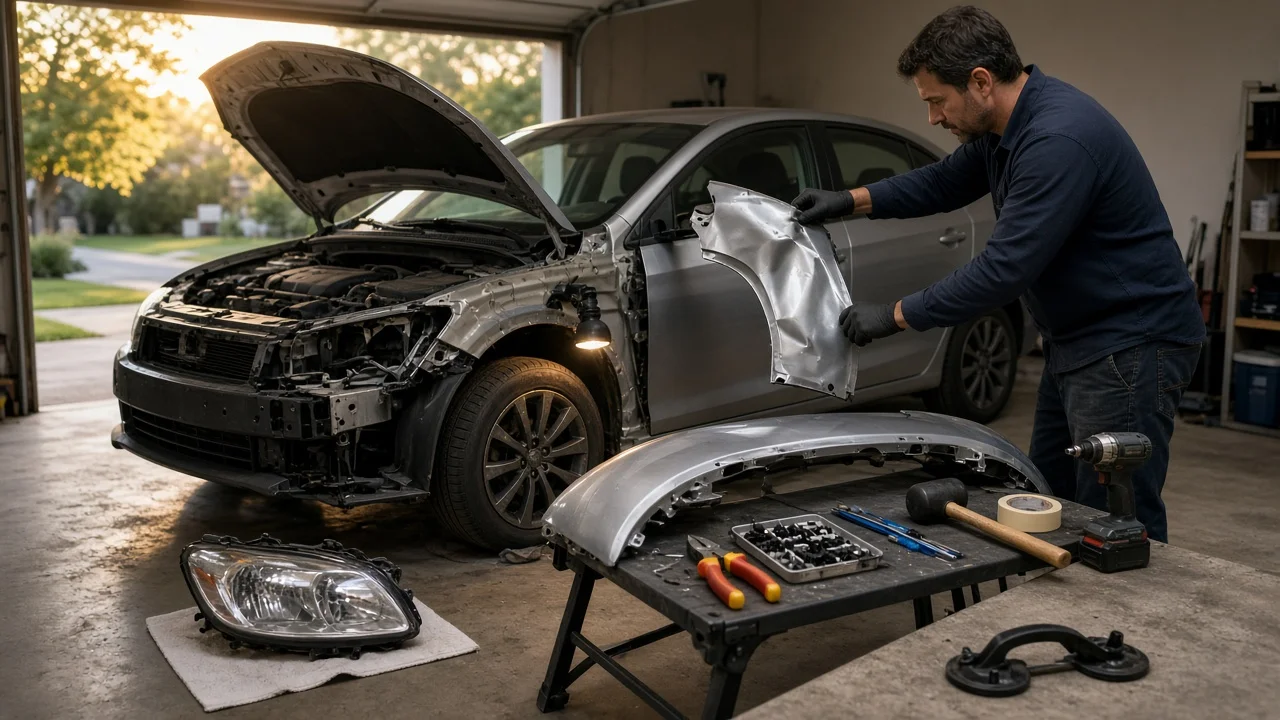
Some front-end collision damage can be repaired at home, but only a limited part of it. Bolt-on cosmetic parts such as a bumper cover, grille, headlight assembly, fender liner or a bent license plate bracket are often within reach of a careful owner with basic tools. Damage that reaches the structure behind those parts is different. Bent frame rails or unibody sections, deployed airbags, damaged crash sensors, misaligned driver-assistance cameras or radar, and suspension or steering components knocked out of position usually call for professional equipment and diagnosis.
The qualification that changes the answer most is what lies behind the visible damage. A cracked bumper cover can hide a crushed energy absorber, a bent reinforcement bar, a pushed-back radiator or a punctured A/C condenser. DIY repair makes sense only after you have confirmed that the damage stops at parts you can safely remove, replace and verify.
What Front-End Collision Repair Covers
The front of a modern car is built in layers. Knowing the layers helps you judge how far an impact traveled and which repairs are realistic.
Layer | Typical parts | DIY suitability; Outer cosmetic layer | Bumper cover, grille, emblems, trim, fog light bezels, splash shields | Often DIY-friendly if mounting points are intact; Lighting | Headlight and fog light assemblies, turn signals | Often DIY; some headlights need aiming afterward, and adaptive units may need electronic setup; Energy management | Foam or plastic energy absorber, bumper reinforcement bar, crush cans | Sometimes DIY when simply bolted on; inspect closely for hidden deformation; Cooling and climate | Radiator, A/C condenser, cooling fans, radiator support, hoses | Partly DIY; A/C refrigerant must be recovered with proper equipment and is regulated; Body panels | Fenders, hood, hood latch and hinges | Bolt-on panels are feasible; panel alignment and paint matching take skill; Safety electronics | Airbag sensors, radar units, front cameras, parking sensors | Generally professional; many need calibration or scan-tool procedures; Structure | Frame rails, apron, unibody front section | Professional only; requires measuring and straightening equipment
Assess the Damage Before Buying Parts
A systematic inspection keeps you from buying a bumper cover only to discover a bent rail or leaking condenser behind it. Work on a level surface with the engine off and cool.
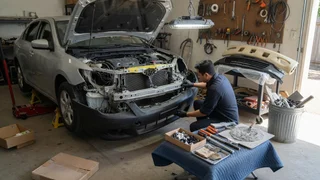
Compare panel gaps between the hood and both fenders, and between each fender and its door. Uneven or noticeably wider gaps on one side suggest parts were pushed back or the structure shifted. Open and close the hood. A hood that won't latch, sits crooked or rubs suggests a damaged latch, bent hinges or a displaced radiator support. Remove the bumper cover, usually held by clips, screws and bolts in the wheel wells, under the car and behind the grille, and inspect the reinforcement bar and energy absorber for cracks, kinks or crushing. Look at the radiator and A/C condenser for bent fins, wet spots, oily residue or fluid dripping underneath. Check the radiator support, the upper and lower frame that holds the cooling stack and latch, for bends or cracks. Look along the frame rails or unibody sections behind the bumper for wrinkles, kinks or cracked seam sealer. Any of these indicate structural damage. Inspect the front tires and wheels on the impact side for scuffs, bent rims or a wheel that sits at a different angle than the other side. Note any warning lights on the dashboard after starting the car.
If the inspection shows only damaged cosmetic parts with intact mounting points underneath, the repair is a reasonable DIY candidate. If you find structural wrinkles, a crooked wheel, or a deployed or warning-lit airbag system, plan for professional repair of at least those components.
Repairs That Are Usually Realistic at Home
The following jobs are commonly handled by owners with hand tools, a jack and stands, and patience. Exact procedures, fastener locations and part numbers vary by make, model year and trim, so consult a service manual or repair database for your specific vehicle.
Bumper cover replacement or plastic repair: Small cracks and tears in plastic covers can be repaired with plastic welding or two-part repair adhesives, followed by filler, primer and paint. Replacement covers are sold in primed or unpainted form and need to be painted to match. Grille, emblem and trim replacement: Usually a matter of clips and screws, though clips often break during removal, so have replacements on hand. Headlight assembly replacement: Typically bolts to the radiator support. Aim the new headlight afterward. Vehicles with adaptive or self-leveling headlights may need a scan tool to initialize the new unit. Fender replacement: Bolt-on fenders are feasible, but aligning gaps with the hood, door and bumper takes trial and error. Hood replacement: Usually bolts to hinges, but it is heavy and awkward, so work with a helper. Splash shields and fender liners: Simple clip-in or screw-in parts that commonly tear in front impacts. Radiator replacement: Feasible for many owners if no refrigerant lines need to be opened. Dispose of coolant properly, since it is toxic to people and animals, and bleed air from the cooling system afterward according to the vehicle's procedure.
Repairs to Leave to a Professional
Some front-end repairs are not a question of skill alone. They need specialized equipment, procedures or legal handling, and a mistake can affect how the car protects you in a future crash.
Frame and unibody straightening: Restoring structural geometry requires measuring systems and pulling equipment. Collision shops verify structural dimensions against factory specifications. Airbag and crash sensor work: Front airbag sensors and deployed airbag modules are part of the supplemental restraint system. Disconnecting, handling and replacing these components carries a risk of accidental deployment. After a deployment, many vehicles also need control module replacement or reset, which requires a scan tool and the correct procedure. Driver-assistance calibration: Forward radar for adaptive cruise control and automatic emergency braking is often mounted behind the grille or bumper, and forward cameras sit near the windshield. After removal, replacement or even a minor impact, these units commonly need calibration so their aim matches the vehicle. A sensor that is slightly off can cause false alerts or failure to react. A/C system repairs that open the refrigerant circuit: US federal rules prohibit intentionally venting refrigerant. Replacing a condenser requires recovering refrigerant with certified equipment, evacuating the system with a vacuum pump, and recharging to the specified amount. Many newer vehicles use refrigerant that requires dedicated service equipment. Suspension and steering damage: Bent control arms, tie rods, knuckles or subframe mounts affect handling and braking. These need inspection, replacement and a wheel alignment afterward. Paint matching on visible panels: Achievable at home with care, but blending color across adjacent panels is difficult without spray equipment and experience. Many owners do the mechanical work and pay a shop for paint.
Post-Collision Symptoms and What to Check Next
Symptoms that appear after a front impact often point to damage you cannot see from the outside. Treat a dashboard warning or stored fault code as a lead to investigate, not proof that a particular part has failed. A code can come from a damaged component, but also from a disconnected plug, a stretched harness or a sensor knocked out of alignment.
Symptom | Possible explanations | What to check | When to stop driving or seek help; Engine temperature rising, coolant puddle, sweet smell | Punctured radiator, cracked hose, damaged fan or shroud | Coolant level when cold, wet spots on radiator and hoses, fan operation | Stop driving if the gauge climbs toward hot; overheating can damage the engine; A/C blows warm or cycles erratically | Punctured or bent condenser, damaged lines, condenser fan damage | Oily residue on condenser fins or line fittings, visible bends, fan operation | Not usually a driving safety issue, but repair requires refrigerant recovery equipment; Airbag or SRS warning light | Damaged crash sensor, disconnected connector, deployed component, stored crash data | Visible damage to sensors behind bumper or in radiator support area; scan for restraint system codes | Have it diagnosed promptly; airbags may not deploy correctly in another crash; Adaptive cruise, collision warning or lane assist warning | Radar or camera displaced, blocked or damaged; bracket bent; wiring disconnected | Physical condition and mounting of the radar unit and its bracket; clean sensor surface | Avoid relying on these features until the sensor is inspected and calibrated; Steering wheel off-center or car pulls | Bent tie rod, control arm or knuckle, shifted subframe, damaged wheel | Wheel angle compared with the other side, tire damage, steering play | Get suspension inspected before regular use; handling and braking may be compromised; Vibration or noise at speed | Bent wheel, damaged tire, debris contact, loose or damaged component | Wheel runout, tire sidewall damage, anything rubbing behind the bumper | Avoid highway speeds until the cause is found; Hood won't latch securely | Bent latch, displaced radiator support, misaligned hood | Latch engagement and secondary catch, radiator support position | Do not drive if the hood could open at speed; Headlight aimed wrong or flickering | Shifted mounting points, broken tabs, damaged connector or wiring | Mounting tabs, connector seating, aim against a wall | Avoid night driving until fixed
An OBD-II scanner reads engine and emissions codes on most US vehicles, but many inexpensive scanners cannot read airbag, ABS or driver-assistance modules. A scan tool that supports those systems, or a shop visit, may be needed to see the full picture after a collision.
Safety Precautions for the DIY Work Itself
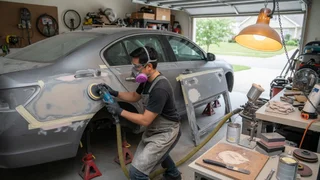
Support the vehicle on jack stands on solid ground; never work under a car held only by a jack. Disconnect the battery before working near airbag sensors or wiring, and follow the manufacturer's waiting period before handling restraint system components, if you work near them at all. Wear eye protection when removing clips, cutting plastic or working near broken glass and lenses. Let the engine cool completely before opening the cooling system; hot coolant is under pressure. Do not open A/C lines or loosen refrigerant fittings without recovery equipment. Use a respirator and good ventilation when sanding filler or spraying primer and paint.
Insurance and Cost Considerations
If an insurance claim is involved, talk to the insurer before starting work. Insurers usually want to inspect damage before repairs begin, and DIY work done first can complicate a claim. For uninsured damage, DIY repair can save labor costs on cosmetic work, but savings shrink quickly once you add paint, calibration, alignment or structural repair. Getting a written estimate from a collision shop, even if you plan to do much of the work yourself, gives you a detailed list of damaged parts and shows which tasks need professional equipment.
Parts choice matters as well. Original-equipment parts are made to the vehicle maker's specifications, while aftermarket parts vary in fit and finish. Fit is especially important for brackets and mounts that hold radar sensors or headlights, because a slight difference in position can affect aim.
Deciding Whether to Do It Yourself
DIY front-end collision repair is a good fit when the impact was low speed, the damage is limited to bolt-on cosmetic parts, mounting points are intact, no warning lights are on, and you have the time and tools for careful disassembly and fitment. It stops being a good fit as soon as you find structural deformation, restraint system or driver-assistance warnings, refrigerant leaks or suspension damage. Many owners split the work: they handle trim, lighting and bolt-on panels themselves and send the car to a shop for calibration, alignment, A/C service, paint or structural repair.