Direct and Indirect TPMS: How They Work and How to Identify Your System
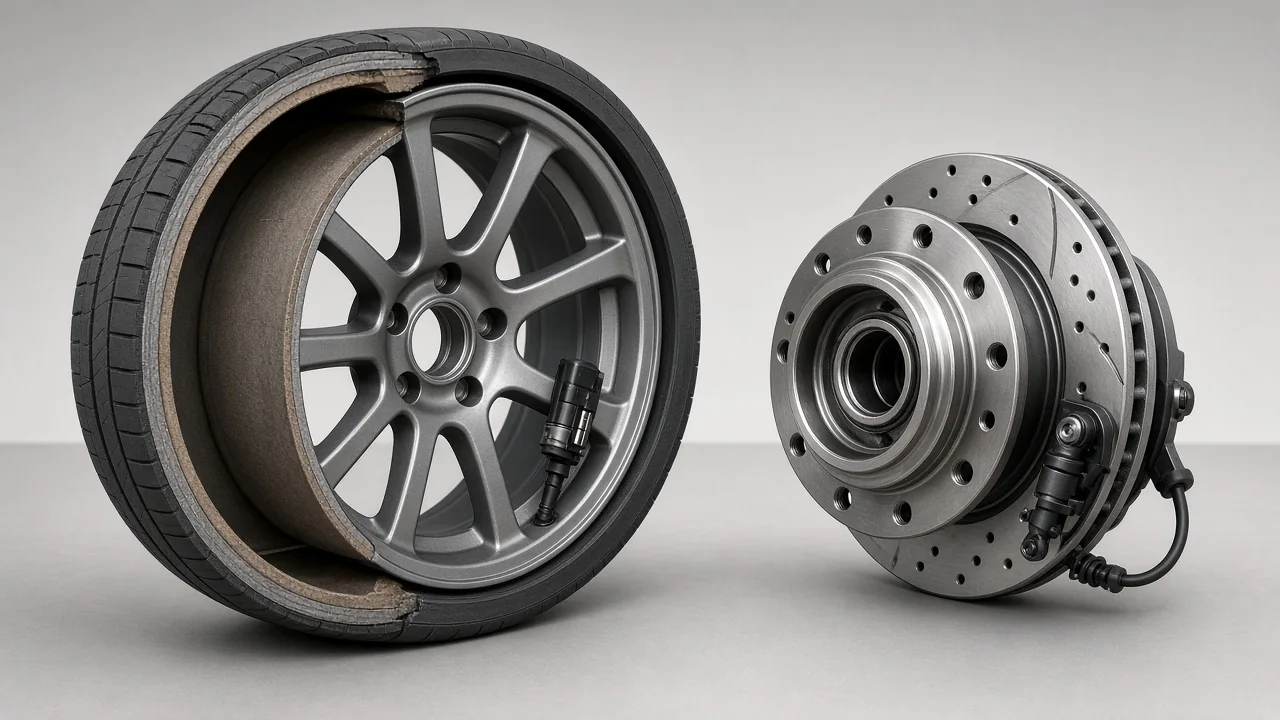
A tire pressure monitoring system watches inflation so a driver can respond before a soft tire becomes a handling problem. Direct TPMS uses a wheel-mounted direct TPMS sensor at each tire. Indirect TPMS infers loss from wheel-speed sensor data instead of measuring air. Knowing which design is installed explains what a TPMS warning light can mean and why a gauge check against the door-jamb tire placard still matters.
How Direct TPMS Measures Tire Pressure
Direct TPMS places a pressure-measuring unit at the wheel so the vehicle can receive inflation data rather than infer it. Each direct TPMS sensor samples the air in that tire and transmits a radio message with the reading and an identifier the electronics can match to a wheel. When a reported pressure falls below the warning threshold, the system can illuminate the TPMS warning light so the driver knows to check the tires with a gauge.
Whether the driver sees a single warning or a pressure for each tire depends on the instrument cluster and software, not on the mere presence of direct TPMS sensors. Some vehicles show four values; others only light a telltale when any tire is low. Transmissions also occur under defined conditions such as motion, wake intervals, or a pressure change, so the displayed figure is not a live, continuous measurement. Treat the reading as a recent sample, then confirm cold tire pressure with a gauge before deciding the tire is actually underinflated.
What a Direct TPMS Sensor Contains
A typical direct TPMS sensor houses a pressure-sensing element, a small transmitter, a unique identifier, and a sealed pressure sensor battery that is not meant to be serviced as a separate cell. The sensing element converts internal tire pressure into an electrical signal. The transmitter then sends that value with the identifier so the vehicle can distinguish one wheel from another. Because the battery is usually potted inside the housing, the unit is replaced as an assembly when it no longer communicates or the vehicle reports a sensor malfunction.
Mounting varies. Many direct TPMS sensors clamp to the valve stem and sit inside the rim; others band to the drop center or use a different fixture. A metal valve stem can appear on both sensor-equipped and conventional wheels, so stem style alone does not prove which system is installed. If the pressure sensor battery is depleted or the housing is damaged, the module may lose that wheel's message and set a malfunction indication. That communication loss is not proof the tire is low, and a low tire is not proof the sensor failed.
What Direct TPMS Sensors Need After Wheel Service
After a tire is dismounted or a wheel is replaced, a new direct TPMS sensor must use the radio protocol and identification scheme the vehicle expects. A unit that cannot be recognized may leave a blank pressure or a malfunction lamp even if the tire is correctly inflated. Sensor programming writes the identifier and protocol into the replacement. A sensor relearn is a separate vehicle-side step that teaches which identifiers belong to which positions. Some applications need both; others need only one.
Rotation, a spare swap, or even a successful repair can move sensors to new corners, so the displayed positions will be wrong until the vehicle updates them. Follow the owner's manual for the prescribed recognition or position-update sequence rather than assuming a key-cycle will finish the job. When a pressure is missing after service or a malfunction warning remains, have a shop verify that the unit is transmitting and is the type specified for that vehicle, rather than guessing from similar-looking hardware.
How Indirect TPMS Uses Wheel-Speed Signals
Indirect TPMS does not place a pressure sensor in the tire. It reads existing ABS wheel-speed sensor signals and runs a vehicle-specific algorithm looking for rolling-radius or rotational-speed patterns that often appear when a tire loses air. A softer tire typically rolls at a slightly different effective circumference, so that wheel's speed can diverge from the others. The control logic treats that divergence as an inference about inflation, not as a measured psi value. Because the method never samples the air, the cluster will not show four true pressures.
That inference only works if the system starts from known-good inflation. Set cold tire pressure to the door-jamb tire placard, then complete the prescribed TPMS calibration so the algorithm learns the current rolling signature. Later generations may detect more subtle or even multi-tire losses than earlier ones, but capability still varies by design. A new tire size, a mismatched spare, or a wheel-speed sensor fault can change the speed pattern the software expects. Those conditions can affect operation; they do not by themselves prove why a warning appeared.
How to Identify the TPMS Installed in Your Vehicle
The reliable way to identify the system is the owner's manual for that model year and equipment package, including the TPMS operating and reset instructions. Direct TPMS and indirect TPMS can share a similar telltale, so the lamp by itself does not reveal the design. A live display of individual tire pressures is strong evidence that wheel-mounted pressure-measuring sensors are present. A warning light with no psi values is inconclusive: the vehicle may still use direct TPMS sensors without showing numbers, or it may use wheel-speed logic only.
A reset or TPMS calibration menu is also not a complete identifier. Indirect TPMS depends on a calibration drive after inflation is set, yet some direct systems include a relearn or reset path after sensor service. Use the manual's wording about sensors, pressures, and relearn versus calibration as the first filter. When the book is missing or the trim level is unclear, confirm through the vehicle's equipment records or a qualified scan that can see sensor identifiers and communication. Do not rely on valve-stem looks or a generic aftermarket label.
What to Do When the TPMS Warning Appears
When the TPMS warning light comes on, move to a safe location and compare each tire with a gauge, using the cold tire pressure printed on the door-jamb tire placard, not the sidewall maximum. Look for obvious damage, a puncture, or a rim that is no longer seating the bead. Direct TPMS and indirect TPMS both alert; neither replaces periodic manual checks, and neither can declare a tire safe to drive. Inflate to the placard if the tire is intact, then follow the manual if a calibration or relearn is required after the correction.
Low-pressure and malfunction indications can look different: a steady lamp may point to inflation, while a flashing lamp or a message may point to communication. Confirm the meaning in the owner's manual rather than assuming a part has failed. Completing TPMS calibration after the pressures are correct teaches an indirect system the new baseline; resetting without fixing a leak will not hold. Stop safely and get help for a visibly flat tire, severe vibration, or odd handling. Recurring warnings deserve professional inspection of the tires, wheels, and monitoring hardware.