TPMS Warning Light Meaning: Why It's On and What to Do
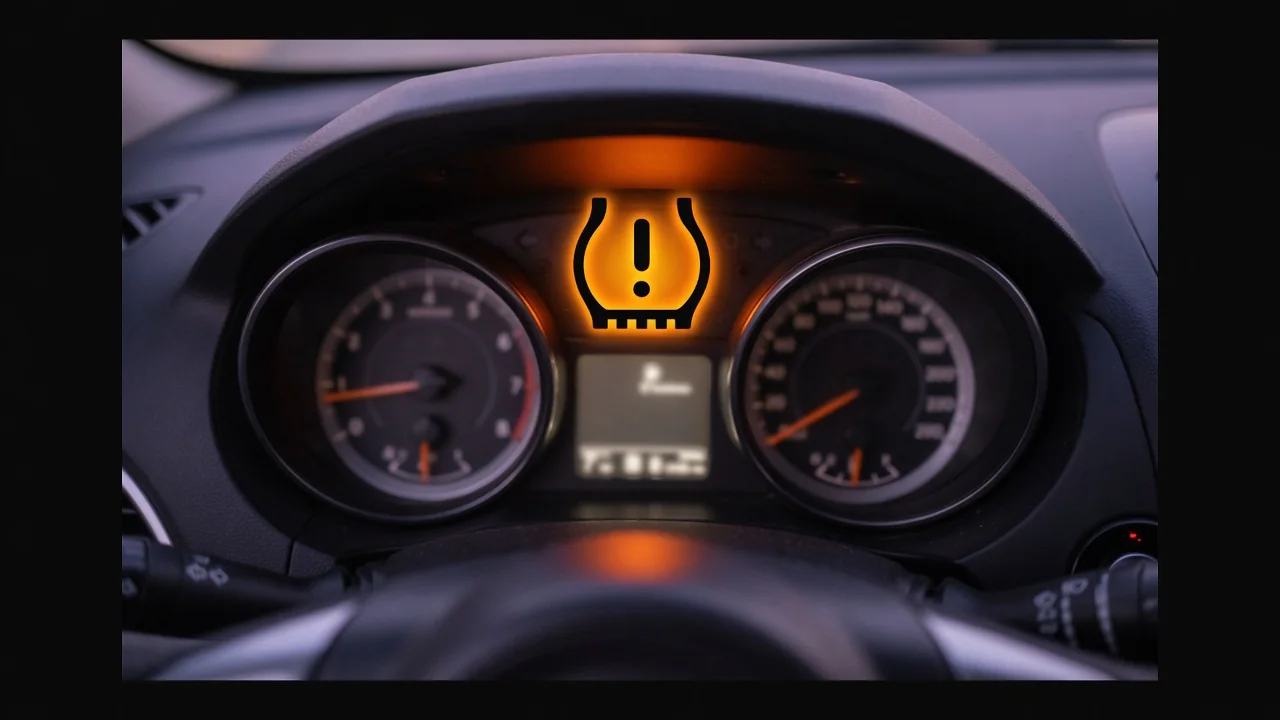
When a small amber tire icon appears on the dashboard, it's natural to wonder whether you need to pull over right away or can wait until the weekend. The tire pressure monitoring system is designed to catch underinflation before it becomes dangerous, but its warning can mean several different things. Understanding what the light is telling you makes the right next step much clearer.
What the TPMS Light Is and How to Recognize the Symbol
TPMS stands for tire pressure monitoring system, a feature that tracks inflation levels and alerts the driver when something falls outside its expected range. The dashboard warning symbol usually looks like a horseshoe-shaped cross-section of a tire with an exclamation mark in the center. Some vehicles pair that icon with a text message. Others show the pressure of each tire on the instrument cluster or center screen, which makes it much easier to find the problem tire.
It helps to think of the indicator as an alert rather than a diagnosis. It reports that a reading, or the monitoring itself, is abnormal. On many vehicles, though, it doesn't identify which tire is affected or explain why the pressure changed. How the warning looks also varies by manufacturer, including the icon's color, the wording, and whether individual tire values appear at all. Your owner's manual is the authority on how your vehicle presents this warning and what each version means.
Solid Light vs Flashing Light: Two Different Messages
A steady, solid light typically means that at least one tire's pressure has moved outside the range the system expects. In most cases, that means the tire is low. A different pattern, where the light flashes for a while after startup and then stays lit, generally points to a fault in the monitoring system itself rather than a pressure reading. In that state, the vehicle may not be able to monitor tire pressure at all until the underlying problem is found and fixed.
Because the flashing pattern, how long it lasts, and what it means all depend on the manufacturer, confirm the behavior for your specific vehicle before drawing conclusions. One easy mistake is to see a solid light after a flashing sequence and assume it's just a low tire, when the cause may be entirely different. Also, if the icon lights up briefly along with other warning lamps when you turn on the ignition, that's a normal bulb check, not an alert. It should go out shortly afterward.
Common Reasons the Light Comes On: Low Pressure and Temperature
The most common reason the light comes on is simply low pressure. Tires lose a small amount of air gradually over weeks, even without a puncture, and that slow decline can eventually push one or more of them below the warning threshold. Temperature plays a big role, too. Air contracts as it cools, so a sudden drop in outside temperature lowers cold tire pressure and often triggers the light on a chilly morning. The warning sometimes clears later in the day as driving and warmer air raise the pressure again.
If the light comes back soon after you add air, suspect a slow leak. A nail or screw in the tread, a leaking valve stem, or a poor seal where the tire bead meets the wheel can all let air escape steadily. Tires that were recently rotated, replaced, or swapped for the season can also affect readings on some systems, and the spare may or may not be monitored, depending on the vehicle. Since many systems don't identify the affected tire, treat all of them as suspects until you actually measure.
Sensor and System Faults That Trigger the Warning
Not every warning involves air pressure. A direct TPMS uses a battery-powered sensor in each wheel, often attached to the valve stem, that sends pressure data to a receiver in the vehicle. A dead sensor battery, a physically damaged sensor, or a sensor that has lost communication can all cause a fault warning. An indirect TPMS works differently and has no sensor hardware in the wheel. Instead, it estimates pressure from wheel speed data, so a tire change or uneven wear can sometimes make it flag a problem.
Other causes are tied to service work or equipment changes. A sensor can be damaged during tire mounting, corrosion can form where the sensor meets the valve stem, and aftermarket wheels installed without compatible sensors can leave the system unable to read correctly. Still, the light alone can't tell you whether a sensor has failed or a tire is actually low. Telling those apart usually takes a TPMS scan tool, so don't buy parts on the assumption that a sensor is bad.
Safe First Checks When the Light Appears While Driving
If the light comes on while you're driving, don't brake hard or swerve. Ease off the accelerator, slow down smoothly, and look for a safe place to stop, such as a parking lot or a wide shoulder well away from traffic. Continuing at highway speed on a tire that may be underinflated builds up heat and raises the risk of tire damage. Once you've stopped, walk around the car carefully. Look for a tire that sits visibly lower than the others, obvious cuts or bulges, embedded objects, or a hissing sound.
A visual check can miss a meaningful loss of pressure, so a tire pressure gauge is the real test. Measure all four tires, ideally while they're cold, and compare the readings with the tire pressure placard on the driver's door jamb or the figure in the owner's manual. Don't use the maximum pressure molded into the sidewall. If any tire is well below spec or visibly damaged, don't drive far; put on the spare or call roadside assistance. After you correct the pressure, the light may need some driving time to clear, and reset steps vary by vehicle.
When the Light Stays On and Professional Testing Is Needed
If every tire has been confirmed at the correct cold pressure and the dashboard light stays on, the problem is likely a sensor, the receiver, or another part of the monitoring system rather than the air in the tires. Other signs also call for prompt attention: a warning that returns within a few days, one tire that keeps losing pressure, or a flashing sequence at startup. Each of these points to a problem that topping off the tires won't permanently fix.
There are real limits to what a driver can figure out at home. Checking sensor battery condition, sensor ID registration, and signal faults takes a tire shop or technician with a TPMS scan tool. Don't ignore a light that won't go out. A system in a fault state can't warn you about a real pressure loss, and underinflated tires hurt handling and braking and wear out faster. Any work that involves removing a wheel, dismounting a tire, or replacing a sensor belongs with a properly equipped shop.