Digital Car Key Technology: UWB, NFC, Bluetooth and CCC Standard
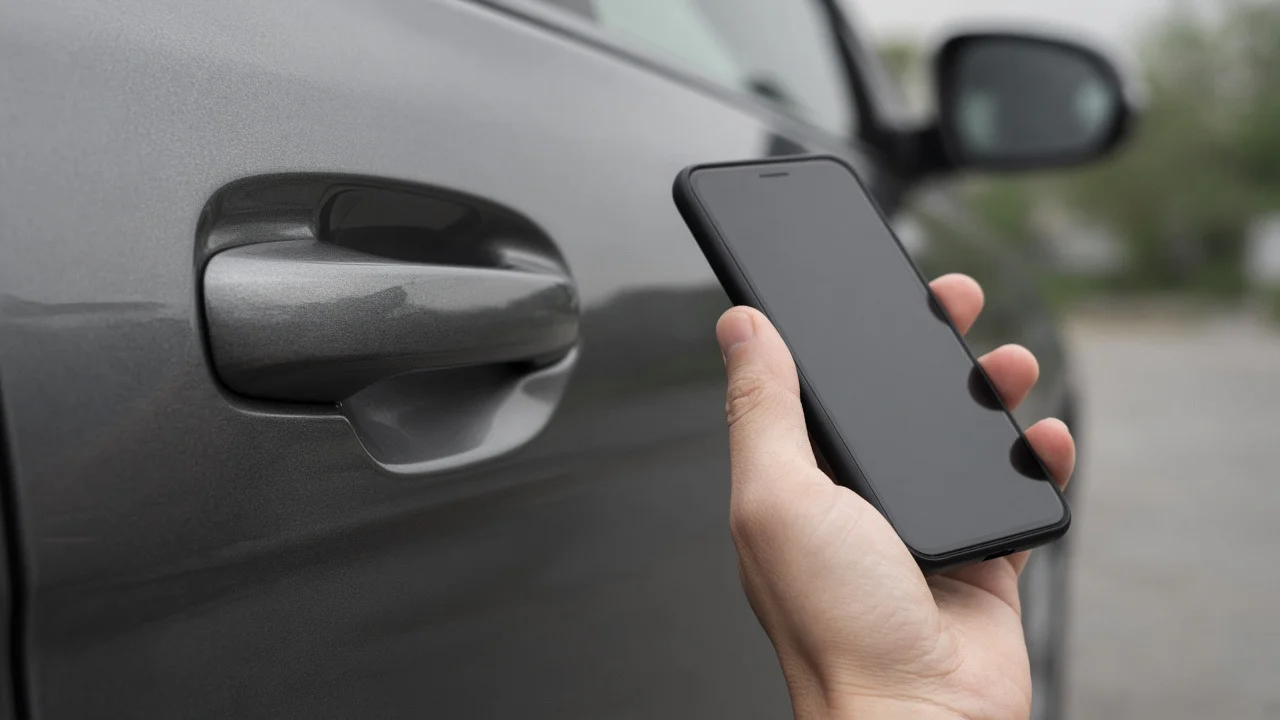
Digital car key technology turns a compatible smartphone or wearable into a secure vehicle credential, reducing dependence on a mechanical key or conventional remote transmitter. The approach combines Bluetooth, near-field communication, and ultra-wideband ranging so the car can wake, authenticate, and locate an authorized device before unlocking. Industry coordination through the Car Connectivity Consortium’s digital key framework helps different phones and vehicles share a consistent handshake model. The essential question is what the technology does and how its main wireless layers differ in range, positioning, and fallback behavior.
Essential answer
A digital car key is a phone-based access credential that uses cryptographic identity, not a physical blade, to prove that the device belongs near the vehicle. Bluetooth commonly handles the initial wake-up and medium-range connection because it is widely available and energy efficient. NFC provides a short-range tap-to-unlock fallback, while ultra-wideband adds precise distance and direction measurement. Together they let the car decide whether the phone is outside the driver door, near the trunk, or still inside the cabin.
The Car Connectivity Consortium digital key specification supplies a common security and pairing framework for this access method. Its goal is to let a credential be provisioned to a phone and then shared with another user through a controlled invitation instead of handing over a mechanical key. An immobilizer exchange still underlies the start authorization in many implementations, but the phone can now carry the proof of ownership. Vehicle-specific behavior depends on the manufacturer’s implementation, so the presence of one radio type does not by itself describe the complete unlock experience.