Diesel Injector Leak-Off Test Kits: Choosing a Compatible Kit
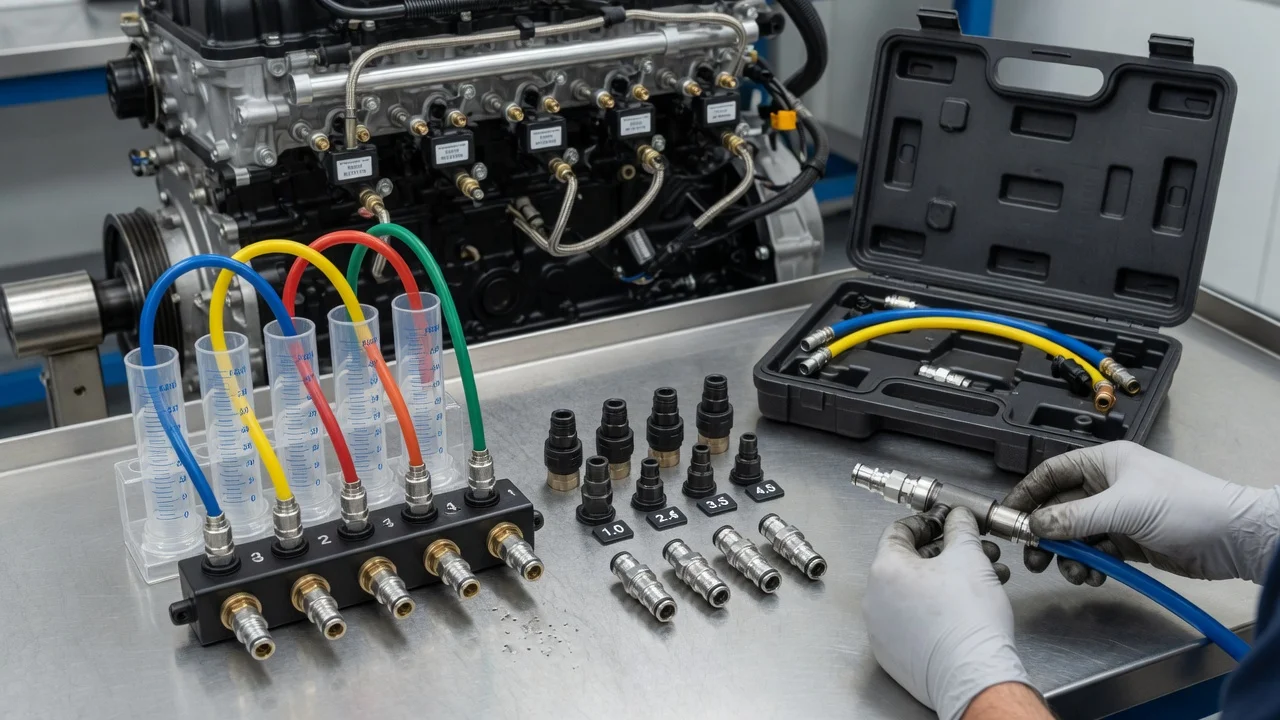
A diesel injector leak-off test kit measures how much fuel each injector sends back through its return line. This gives you a side-by-side view of injector wear on a common rail engine. The kit itself is simple, but one that does not match your return connectors or cylinder count is useless on your engine. This guide explains what the test answers, how to confirm fitment and which features genuinely matter before you buy.
Define the job the product must do
Common rail injectors use a small amount of fuel to operate their internal control valve, and that fuel returns to the tank through the leak-off circuit. As valve seats and seals wear, the return volume from that injector rises. Excessive return can rob the rail of pressure, which can cause long cranking, hard starting, rough idle, low rail pressure codes or smoke. A leak-off test kit collects each injector's return in its own graduated tube so you can compare cylinders under identical conditions.
Before choosing a kit, be clear about the symptom you are chasing. A no-start or long-crank complaint usually calls for a cranking test, where return fuel is collected while the engine turns over. A running engine with rough idle or misfire suits a timed idle test. Both tests use the same basic equipment, but cranking tests produce small volumes, so the scale must be readable at the low end. Also consider where you work. A driveway job on a V8 pickup has different needs from a shop that tests compact four-cylinder engines every week.
Rule out simpler causes first. A clogged fuel filter, air in the supply line or a weak lift pump can lower fuel pressure and mimic injector faults. The high-pressure fuel pump and rail pressure regulator also return fuel. The kit isolates injector return only, so it answers one question well rather than diagnosing the whole fuel system.
Check compatibility
The connection to the injector return port is the main fitment question. Bosch, Denso, Delphi and Continental injectors use different return designs. These include push-on plastic connectors with retaining clips, small barbed nipples, threaded or banjo-style fittings on some designs, and the distinct return arrangements of certain piezo injectors. Identify the injector manufacturer and type for your engine, or inspect the existing return line. Then confirm the kit includes an adapter made for that exact port, not just a hose that might stretch over it.
Count the cylinders. Many kits supply four or six tubes, while V8 diesels need eight, either from one larger kit or from two smaller kits. Engine configuration also affects hose length. On a V engine the injectors sit under each cylinder head, sometimes beneath intake plumbing, so short hoses may not reach a stand placed safely away from hot parts. Check that the hose inside diameter matches the return nipples and that the hose is rated for diesel fuel, because generic vinyl tubing can harden or swell.
Also consider how the return circuit is sealed during the test. Once the injectors are disconnected from the return gallery, the open return line may need a block-off plug so it does not spill fuel or draw in air. Many kits include an assortment of plugs, so confirm that one suits your engine's line size.
Features that affect the choice
Readability is the feature that most affects your results. Tubes or bottles with clear, fine graduations let you compare small differences between cylinders. This matters most on cranking tests and on injectors that return very little fuel. A stable rack or hanging bracket that holds every tube level at the same height keeps readings comparable and reduces spills. Caps or drain taps make it easier to empty the tubes and move the kit without fuel sloshing out.
Adapter quality matters more than the piece count printed on the box. A large kit full of fittings for injectors you will never service adds bulk without adding capability, while one missing adapter makes the kit useless on your engine. Practical signs of build quality include fuel-resistant hoses, connectors that grip firmly and parts you can replace individually. Treat labels such as 'universal', 'professional' or 'fits all common rail' as marketing until the adapter list confirms your injector type.
Some packages bundle extras such as rail pressure gauges or adapters for high-pressure testing. Those are separate tools with different safety requirements. Buy them only if you understand the procedure and the pressures involved, and do not let a bundle distract you from whether the core leak-off parts fit your engine.
Limitations and ownership costs
A return-flow test shows which injector leaks back more than the others. It does not measure spray pattern, delivered quantity, opening behavior or electrical faults. Compare your results with the vehicle manufacturer's specification for your engine and test method. Also check the injector correction or balance values in a scan tool, which serve a role similar to per-cylinder fuel trim on gasoline engines. Some fuel additives are marketed as a cure for high leak-off, but they are not a proven repair for worn injector valves. A confirmed fault calls for injector service or replacement.
Setup takes time and care. Common rail systems run at extremely high pressure, and the leak-off kit connects only to the low-pressure return ports. Never loosen high-pressure injector lines or fittings while the engine is running or cranking. For any work on the high-pressure side, follow the manufacturer's service procedure rather than improvising a pressure release. Return fuel can be hot, so keep tubes away from exhaust parts, wear eye protection and fuel-resistant gloves, and have absorbent material ready.
Ownership costs are modest but real. Factory plastic return connectors and their clips often become brittle and crack on removal, so budget for the replacement connectors, clips or O-rings specified for your injectors. Kit hoses eventually harden or cloud and need replacing, tubes need cleaning, and collected diesel must be stored and disposed of properly. After reconnecting the return lines, clean up any spilled fuel and do a leak check with the engine idling.
Build a practical shortlist
Start with your engine's injector manufacturer, injector type (solenoid or piezo), cylinder count and engine configuration. Eliminate any kit whose adapter list does not name your return connection or whose tube count is too low. Compare the remaining kits on scale graduations, tube capacity, hose length and fuel rating, stand or hanger design, the block-off plugs included, and whether replacement hoses and adapters are sold separately.
Then plan what you will need alongside the kit. That includes replacement return connectors or clips for your injectors, a scan tool that reads rail pressure and injector corrections, and the manufacturer's test procedure and specification. If two kits meet all of these points, choose the one with the clearer scale and sturdier rack over the one with the longer accessory list. A compatible, readable kit used methodically gives more reliable answers than a bigger kit that only roughly fits.