Diagnose P0014 camshaft timing over-advanced
A check engine light with P0014 means the powertrain control module sees the exhaust camshaft on bank 1 responding too far ahead of the crankshaft’s expected relationship. The condition often appears as “B camshaft position timing over-advanced bank 1” in scan data, and cold start behavior can make the fault more noticeable because oil flow, actuator movement and warm-up fueling interact differently. This article explains what the code indicates, why “over-advanced” does not automatically condemn a camshaft phaser or solenoid, and which observable checks help narrow the diagnosis before replacing parts.
Essential answer
P0014 is a diagnostic trouble code for the exhaust camshaft timing system on the cylinder bank that contains cylinder one. The engine controller commands variable valve timing through oil pressure, and it compares commanded cam position with actual position reported by a sensor. When the reported exhaust cam angle stays farther advanced than commanded beyond a calibrated window, the controller sets the fault. Because the target and tolerance vary by manufacturer and calibration, the code identifies a control deviation rather than one defective component.
On some vehicles the driver first sees the code only during a cold start, when oil is thicker and the variable timing system must reach stable pressure quickly. The phrase “B camshaft position timing over advanced bank 1” usually describes this exhaust-side response. The freeze-frame record can show whether the fault occurred at low temperature, high load, idle or another repeatable condition. That context matters because cleaning the wrong part or replacing a working actuator without confirmation can leave the same check engine light active.
Diagnosing a problem
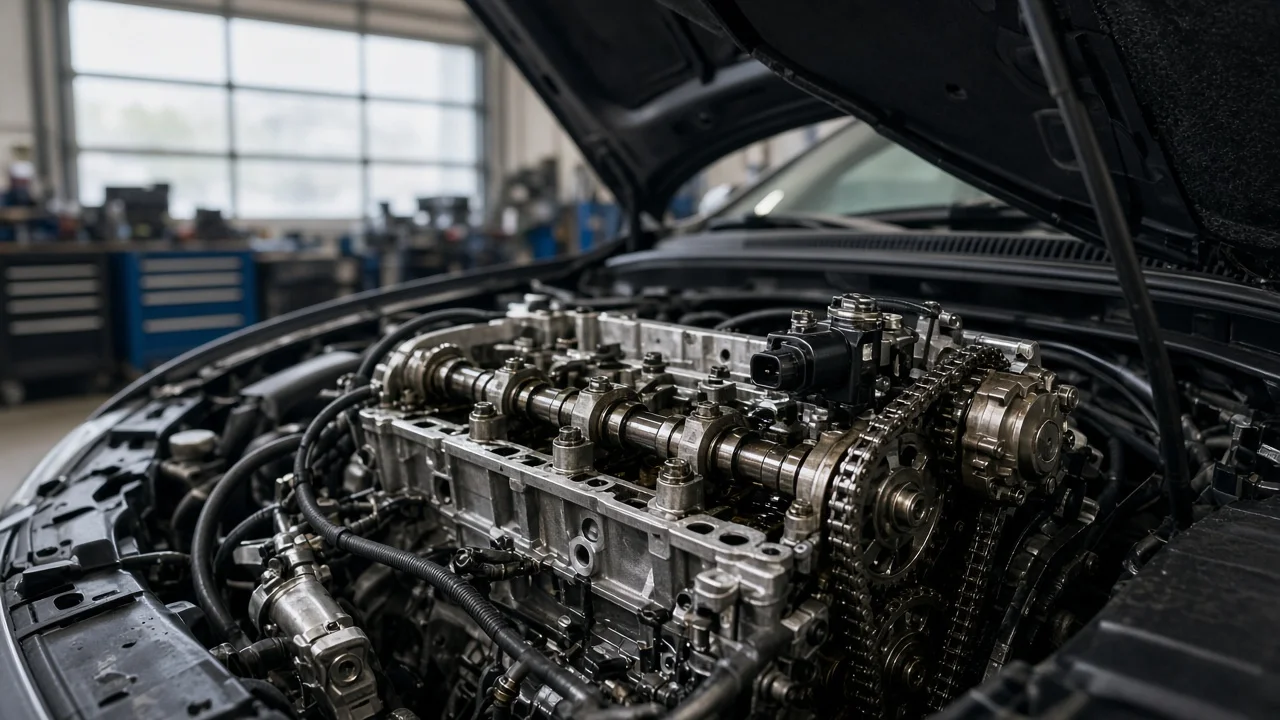
Because a fault code is evidence to interpret rather than proof that a phaser has failed, start by checking the variable valve timing oil control circuit. Low or aerated oil, sludge, a restricted oil passage, or a sticking control solenoid can slow the cam’s return from an advanced position and create the over-advanced reading. Live data can show whether the actual cam angle follows the commanded target smoothly or remains advanced. If the sensor value is noisy or flat while the engine runs, the position signal and connector should also be inspected before condemning the actuator.
Service information for the specific engine should be used to identify the correct oil specification, test routine and component layout. A confirmation test may include commanding the cam angle through a range and watching response time, or comparing bank 1 exhaust cam behavior with the opposite bank when equipped. Noisy timing chains, unusual rattles or repeated cold-start faults deserve quicker attention because loss of oil-control function can affect driveability. If the vehicle has low oil level, oil pressure warnings, or obvious mechanical noise, stop further driving and arrange diagnosis.