Diagnose the Check Engine Light on a Range Rover Evoque
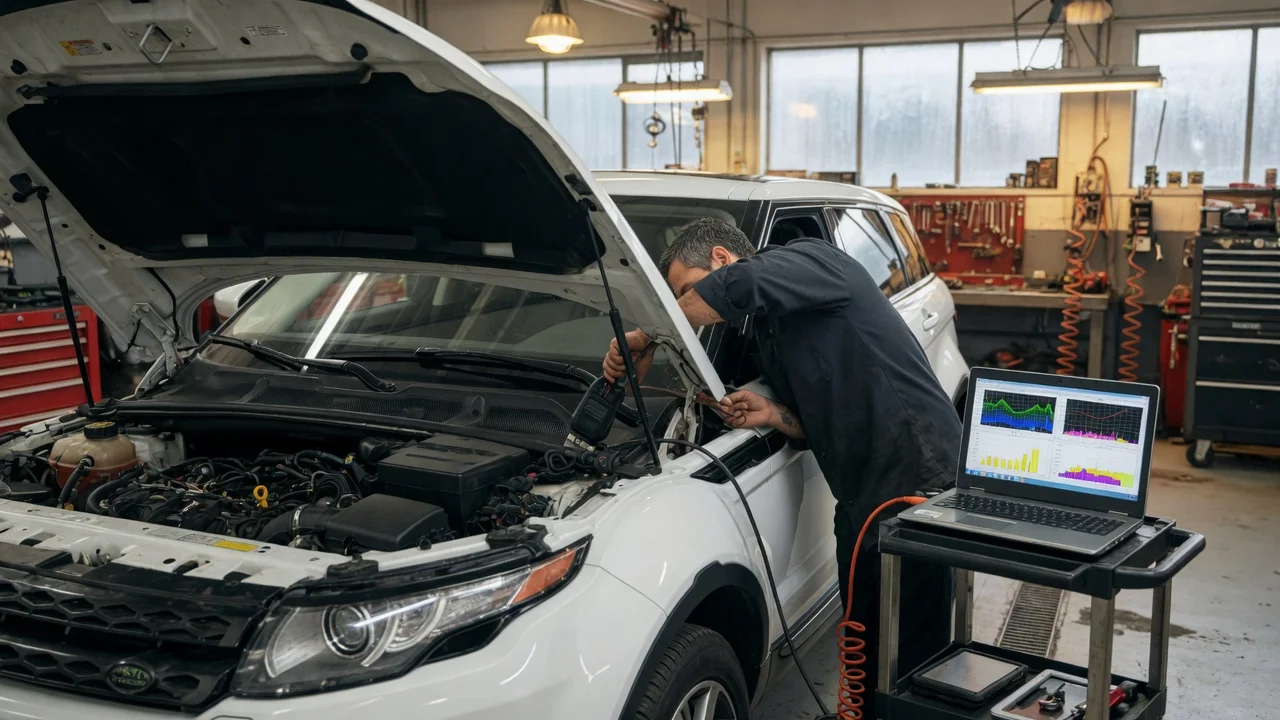
The Short Answer
An illuminated check engine light on a Range Rover Evoque means the engine control module has detected a fault in the powertrain or emissions system and stored a diagnostic trouble code. The light alone does not identify the problem. The next step is to note whether the light is steady or flashing, check how the vehicle is driving, and read the stored code with an OBD-II scan tool. A flashing light, or a light accompanied by obvious drivability problems, calls for reducing load immediately and arranging diagnosis before further driving. A steady light with normal driving is usually less urgent but should still be investigated promptly.
The likely causes depend heavily on which Evoque you have. The first generation was sold from about 2011 to 2018, and the second generation followed from 2019. Engines include turbocharged petrol and diesel units, and later models add mild-hybrid and plug-in hybrid versions. Each powertrain has systems the others lack, such as a diesel particulate filter on diesels or a high-voltage system on the plug-in hybrid, so the same warning can point in different directions depending on the vehicle.
What the Light Is and Is Not Telling You
The check engine light, formally called the malfunction indicator lamp, is part of the on-board diagnostics standard known as OBD-II. It is triggered when the engine computer sees a reading outside expected limits, such as a misfire, a sensor signal out of range, or an emissions component not performing as intended. It is distinct from other warnings on the Evoque's instrument cluster, such as red oil pressure or coolant temperature warnings, which indicate a more immediate risk and generally mean stopping the engine as soon as it is safe.
Message wording in the driver display varies by model year, software version and market, so treat any accompanying text as a clue rather than a diagnosis. The stored code is the more reliable starting point, but a code describes what the computer observed, not which part failed. For example, a code reporting low catalytic converter efficiency can result from a worn converter, a faulty oxygen sensor, an exhaust leak or an engine problem upstream.
First, Decide Whether to Keep Driving
Flashing check engine light: under the OBD-II convention, this indicates a misfire severe enough to risk overheating and damaging the catalytic converter. Reduce speed and load, avoid hard acceleration, and arrange diagnosis before continuing any distance. Steady light with rough running, heavy power loss, stalling or hesitation: drive gently only as far as necessary, or arrange recovery. Steady light accompanied by a red warning, high coolant temperature, low oil pressure, smoke, a burning smell or a fuel smell: stop when safe and switch off the engine. Steady light with no change in how the vehicle drives: generally safe to drive carefully for a short period while you arrange to read the code, but do not ignore it, as a minor fault can mask a second one. Reduced-power or limp mode message: the system is protecting the engine or drivetrain; limit driving and have the code read.
How to Read the Fault Code
Every Evoque sold in markets that require OBD-II, or the European equivalent EOBD, has a standard 16-pin diagnostic port, typically located in the driver's footwell area below the dashboard. The exact position can vary by generation, so check the owner's handbook if it is not obvious. An inexpensive generic OBD-II reader will show standardized powertrain codes, which begin with the letter P.
A generic reader has limits on a Land Rover. It may not show manufacturer-specific codes, codes stored in other modules such as the transmission, hybrid system or body electronics, or freeze-frame and live data in enough detail to pin down the cause. Some faults on the Evoque can only be fully diagnosed with Jaguar Land Rover dealer software or an independent tool with comparable coverage. If a generic reader shows no code but the light is on, or the code does not explain the symptoms, that is a sign more capable equipment is needed.
Record every code before clearing anything. Clearing codes erases the freeze-frame data that shows the engine conditions when the fault occurred, and the light will usually return if the underlying problem remains. Clearing codes shortly before an emissions inspection can also cause the vehicle to fail, because the system's readiness monitors reset.
Common Code Families and What to Check
The table below covers generic OBD-II code meanings and sensible first checks. These definitions are standardized, but they do not confirm a failed part, and no Evoque-specific failure rates were available for this guide. Use the code as a starting point for investigation.
Code example | Standard meaning | What to check next; P0455, P0456, P0457 | Evaporative emissions leak detected or fuel cap loose | Confirm the fuel cap or capless filler is closed and sealing; inspect for damaged seals; recheck after several drive cycles; P0300 to P0304 | Random or cylinder-specific misfire | Note whether it follows one cylinder; inspect ignition coils and spark plugs on petrol engines; check for rough idle, vibration or a flashing light; P0171, P0174 | System running lean | Look for vacuum or intake leaks, cracked hoses, boost leaks on turbocharged engines, or air-flow sensor contamination; P0420 | Catalyst efficiency below threshold | Check for exhaust leaks and oxygen sensor faults before assuming the converter has failed; investigate any misfire history first; P0130 to P0167 range | Oxygen sensor circuit or response faults | Inspect sensor wiring and connectors near the exhaust for heat damage; confirm with live sensor data; P0128 | Coolant temperature below thermostat regulating temperature | Watch the temperature gauge for slow warm-up; a thermostat or coolant temperature sensor fault is possible; P0401 to P0409 | Exhaust gas recirculation faults | Relevant mainly to diesels and some petrol engines; check for carbon buildup, valve or cooler faults, and associated sensor readings; P2002, P2463 and related | Diesel particulate filter efficiency or soot accumulation | Diesel only; see the diesel section below; P0299 | Turbocharger underboost | Check for boost hose leaks, split intercooler pipes and actuator faults; usually accompanied by noticeable power loss
Checks You Can Do Before a Workshop Visit
Fuel cap or filler: confirm it is fully closed. An evaporative leak code from a poorly sealed cap is one of the simplest causes, though the light may take several drive cycles to clear after the fix. Battery and charging condition: low voltage can trigger multiple unrelated codes in modern vehicles with many control modules. If several codes appear at once across different systems, have the battery and charging system tested before replacing parts. On models with stop-start or mild-hybrid systems, battery health is particularly relevant. Visible hoses and connectors: with the engine off and cool, look for disconnected or split intake hoses, loose electrical connectors and signs of rodent damage. Fluid levels: check engine oil and coolant. Low coolant can relate to temperature codes, and contaminated or low oil can affect variable valve timing. Recent work or refuelling: note whether the light appeared after a service, a battery change, refuelling or a long motorway drive. This context helps a technician narrow the cause. How it drives: note any hesitation, rough idle, smoke colour, unusual smells or changes in fuel economy, and whether symptoms occur cold, hot, at idle or under load.
Powertrain-Specific Considerations
Diesel Evoques
Diesel models use a diesel particulate filter that collects soot and periodically burns it off through a process called regeneration. Regeneration needs sustained driving at steady speed; vehicles used mainly for short trips may not complete it. A particulate filter warning, which may appear as a separate symbol from the check engine light, often prompts the driver to drive at sustained speed to allow regeneration. Follow the handbook guidance for your model year. If the check engine light comes on with a particulate filter code, or if the vehicle enters reduced power, further driving to force regeneration may not be appropriate and the vehicle should be diagnosed.
Later diesel models in many markets also use selective catalytic reduction with a diesel exhaust fluid, sold under the AdBlue name. Faults in this system, or a low fluid level, can trigger warnings and, if ignored, may lead to restrictions on restarting the engine. Exact behaviour depends on market regulations and model year.
Petrol Evoques
Petrol models are turbocharged and use spark ignition, so misfire codes commonly lead to inspection of ignition coils and spark plugs. Turbocharged engines also depend on sealed boost plumbing, so lean or underboost codes justify checking intake and intercooler hoses. Direct-injection petrol engines can accumulate carbon deposits over time, which may contribute to misfires, but this should be confirmed by diagnosis rather than assumed.
Mild Hybrid and Plug-In Hybrid Evoques
Second-generation Evoques offered mild-hybrid systems on many engines and, from around 2020, a plug-in hybrid version in many markets. These add electrical components, additional control modules and, in the plug-in hybrid, a high-voltage battery. A check engine light on these models may relate to the hybrid system as well as the combustion engine, and a generic reader may not access the relevant modules. Do not attempt inspection or repair of high-voltage components, which are typically marked with orange cabling; these require trained technicians and appropriate equipment.
When to Hand It to a Professional
The light is flashing, or the vehicle is misfiring, losing power or in reduced-power mode. The code points to internal engine, turbocharger, transmission or hybrid system faults. Several unrelated codes appear together, suggesting an electrical or communication fault between modules. The light returns after a simple fix such as tightening the fuel cap. A generic reader shows no code, or the code does not match the symptoms. The vehicle is still under warranty, where unauthorized repairs could complicate a claim.
Before booking, it is also worth asking a Land Rover dealer to check the vehicle identification number for open recalls or software updates. No recall or service bulletin information was supplied for this guide, so whether any campaign applies to a particular Evoque should be confirmed with the dealer or the relevant national vehicle safety authority.
Limits of This Guide
This guide uses generic OBD-II code definitions and general principles that apply to modern turbocharged petrol, diesel and hybrid powertrains. It does not include Evoque-specific failure frequencies, model-year fault patterns, technical service bulletins or test findings, as none were available. Engine choices, emissions equipment and warning behaviour differ by generation, model year and market, so confirm details against your owner's handbook and a diagnosis performed on your specific vehicle.