Diagnose 2005 Prius ABS and brake lights
The short answer
When the ABS light and the red brake warning light come on together in a 2005 Toyota Prius, the car's brake control system has detected a problem. It may have limited or switched off some braking functions as a precaution. The cause could be minor, such as an applied parking brake, low brake fluid or a weak 12-volt battery. It could also be a fault in the electronically controlled brake hardware. The lights alone cannot tell you which. Do a few basic checks first, then read the stored chassis or ABS fault codes. If the brake pedal feels different from normal, stop driving and get the car inspected.
Scope: this guide covers the 2005 model year, which belongs to the second-generation Prius (2004 to 2009). These cars use an electronically controlled braking system that blends regenerative braking from the hybrid system with conventional hydraulic braking. Other Prius generations and other hybrids use different brake hardware, so their diagnostic steps may not match.
What the two warning lights mean
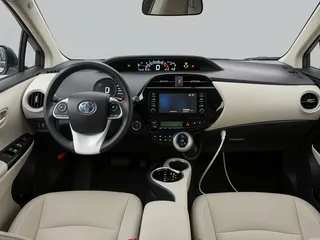
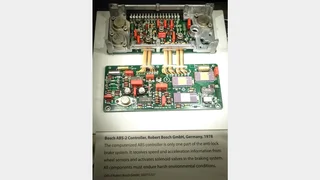
The ABS light covers the anti-lock braking system, which stops the wheels from locking under hard braking. The red brake light can mean the parking brake is engaged, the brake fluid is low, or there is a fault in the brake system itself. On the second-generation Prius, ABS, brake assist and regenerative braking are managed together. A fault in one area can therefore turn on both lights, and sometimes the master warning triangle as well. Seeing both lights together usually means the system has logged a fault, not just a parking brake reminder.
Checks you can do first
Parking brake: make sure it is fully released. A partly engaged parking brake keeps the red brake light on, though on its own it would not normally light the ABS warning. Brake fluid level: with the car parked on level ground, look at the fluid reservoir under the hood. Fluid below the minimum mark can trigger the brake warning. Low fluid may come from worn pads, but it may also point to a leak. Topping up without finding out why the level dropped hides the problem rather than fixing it. 12-volt auxiliary battery: a weak or failing 12-volt battery can produce several unrelated warning lights at once in a Prius, because the control modules need stable voltage. If other warnings appeared at the same time, or the car has been slow to reach Ready, have this battery tested first. Brake pump sound: the brake system's electric pump normally runs briefly when you open the driver's door or switch the car on. If it runs much longer than usual, cycles repeatedly, or makes an unusual noise, the hydraulic pressure system may need attention. Pedal feel: notice whether the pedal feels firmer, softer or travels further than normal. This matters most for deciding whether the car is safe to drive.
Reading the fault codes
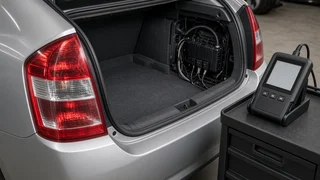
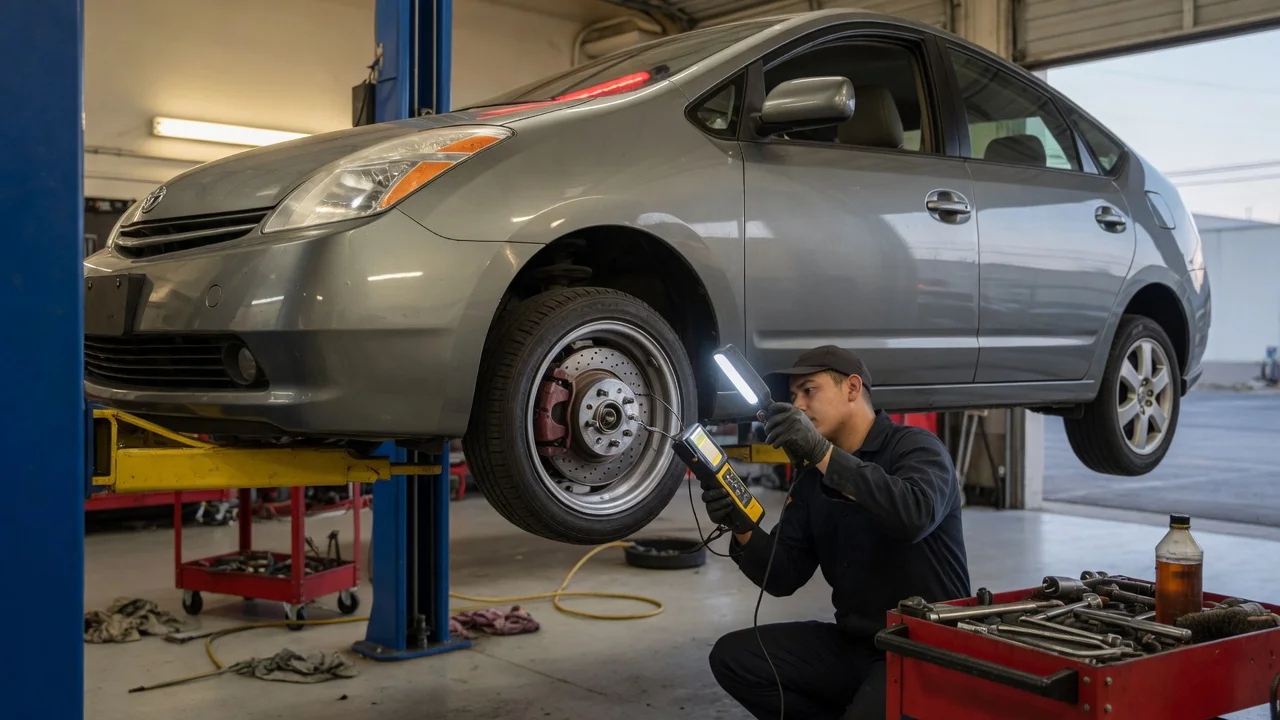
The most useful next step is retrieving the stored codes from the brake and ABS control system. Many basic code readers only read powertrain (engine and emissions) codes and will show nothing for this fault. You need a scan tool that can read Toyota chassis or ABS codes, or a shop with Toyota-capable diagnostic equipment.
Treat any code as a starting point for diagnosis, not as proof that a particular part has failed. A code describes what the control unit detected. That might be low hydraulic pressure, an abnormal wheel speed signal or an electrical fault. The detected condition can come from the named component, its wiring, its connector, the supply voltage or a related part. Check the code's meaning and the test procedure against Toyota service information for the 2005 Prius before replacing anything.
Likely causes and what points to each
Parking brake or low fluid: the red brake light is the main symptom, the fluid level is visibly low or the parking brake was not fully released, and the pedal feels normal. Low 12-volt battery voltage: several warnings appear together, often after the car has sat unused, during cold weather or with slow starting. Lights that clear once the battery is charged or replaced point to this cause, though stored codes may still need clearing. Wheel speed sensor or wiring fault: the ABS light is prominent and the codes point to a particular wheel's speed signal. Damaged wiring, corroded connectors or debris on the sensor can cause the same codes as a failed sensor. Brake pump, accumulator or actuator fault: the pump runs unusually long or often, makes abnormal noise, or the codes point to hydraulic pressure or pump operation. These components belong to the electronically controlled brake system and need professional diagnosis. Fluid leak or hydraulic problem: the fluid level keeps dropping, there are signs of fluid at a wheel or under the car, or the pedal feel changes. Treat this as a safety issue.
When to stop driving
Stop driving and arrange inspection or towing in any of these situations: The brake pedal sinks, feels spongy or feels unusually hard. The car takes noticeably longer to stop. The car pulls to one side under braking. You can see fluid leaking. The warnings come with grinding or other new noises from the brakes. Even when the pedal feels normal, assume ABS and possibly brake assist are not working while the lights are on. Drive gently, leave extra stopping distance, and avoid long trips until the fault has been diagnosed.
Some brake work on this generation of Prius requires specific procedures. Examples include depressurizing the hydraulic system before opening it and bleeding the brakes with a scan tool. Unless you have the factory service information and the right equipment, leave work on the brake actuator, pump or hydraulic lines to a technician experienced with Toyota hybrids.
Gaps in this guide
No specific fault code lists, repair procedures, pressure specifications, repair costs, or Toyota warranty and service campaign details were available for this guide, so none are given here. A Toyota dealer can tell you whether any campaign or extended coverage applies to your vehicle identification number. Check specific code meanings and repair steps against Toyota service information for the 2005 Prius.