ABS Brake Repair: How to Diagnose and Fix Anti-Lock Brake Problems
ABS brake repair usually starts with diagnosis, not parts replacement. When the anti-lock braking system (ABS) warning light comes on, the vehicle's ABS controller has detected a problem and has typically switched the anti-lock function off. On most vehicles the conventional brakes still work, but the wheels can lock under hard braking because the system will no longer modulate pressure. Many ABS faults trace back to a wheel speed sensor, its wiring, or the toothed ring it reads. Others involve brake fluid level, electrical supply, or the hydraulic control unit itself. Retrieving the stored fault code with an ABS-capable scan tool, then confirming the cause with physical checks, is the reliable path to a correct repair.
The Short Answer: What ABS Repair Involves
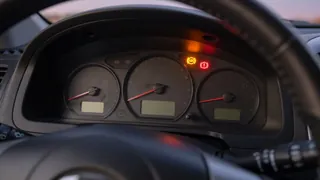
Repairing an ABS system means finding why the controller flagged a fault and correcting that specific cause. The work can be as simple as cleaning a sensor or repairing a chafed wire. It can also be as involved as replacing or rebuilding the ABS module and bleeding the hydraulic unit with a scan tool. One qualification changes the advice significantly: if the red brake warning light is on together with the amber ABS light, or the pedal feels soft, low or inconsistent, the problem may affect the base brakes. In that case the vehicle should not be driven until it has been inspected.
How ABS Differs From the Base Brake System
The base brake system is the hydraulic and friction hardware that stops the car: the master cylinder, brake lines, brake fluid, calipers or wheel cylinders, brake pads and brake rotors (or drums). ABS is a layer added on top of that system. It monitors wheel speed and briefly releases and reapplies pressure at any wheel that is about to lock, which helps the driver keep steering control during hard or slippery stops.
Because ABS shares the same hydraulic circuit, some faults overlap. Worn friction material, pads below their wear limits, or warped rotors are base brake issues and normally do not trigger an ABS light on their own. Low brake fluid, a damaged sensor during a rotor or hub replacement, or air trapped in the ABS unit after a hydraulic repair can affect both systems.
Main Components of an ABS System
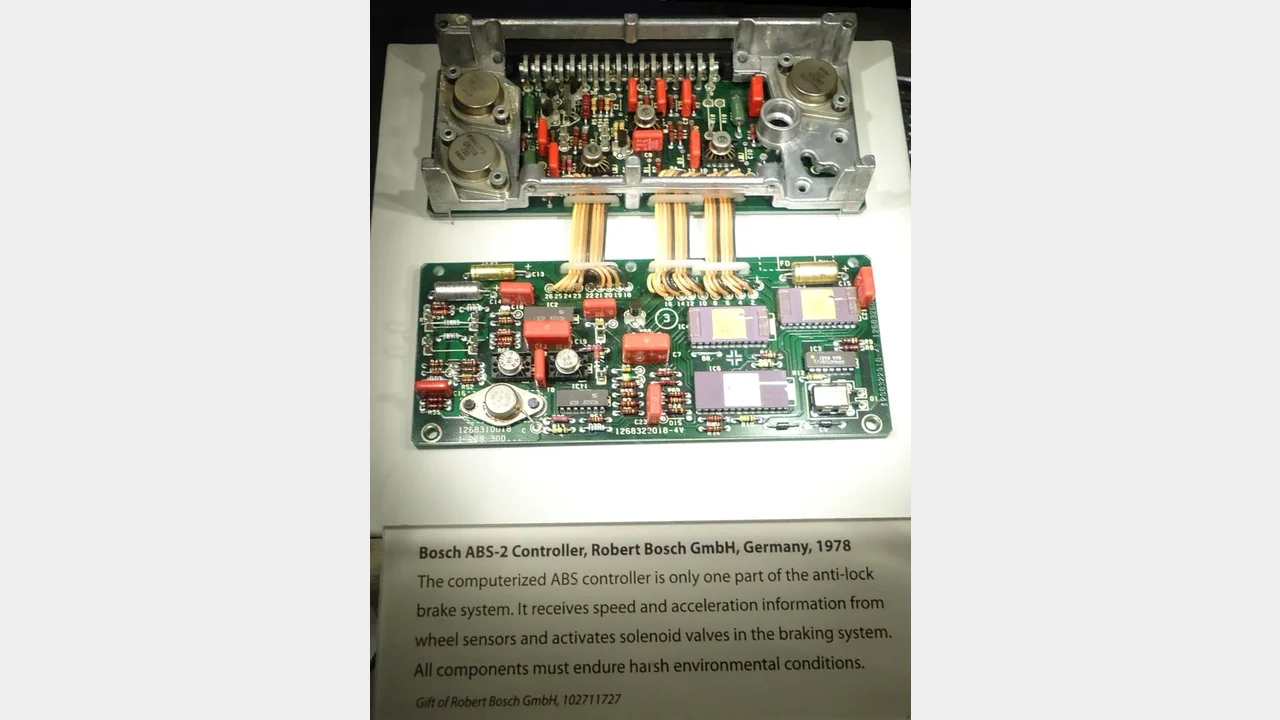
Wheel speed sensors: mounted at each wheel or, on some older designs, at the differential. They generate a signal from a rotating toothed or magnetic ring. Tone rings (reluctor rings) or magnetic encoders: the toothed ring or magnetized seal the sensor reads. On many modern vehicles the encoder is built into the wheel bearing or hub assembly. Hydraulic control unit (modulator): a valve block, usually near the master cylinder, that holds, releases and reapplies pressure to individual wheels. Pump motor: returns fluid and restores pressure during ABS activity. ABS control module: the electronic controller, often mounted directly on the hydraulic unit, that processes sensor signals and stores fault codes. Wiring, connectors, fuses and relays: supply power and carry sensor signals; these are frequent failure points.
Is It Safe to Drive With the ABS Light On?
If only the amber ABS light is on and the brake pedal feels normal, most vehicles retain normal base braking. Anti-lock function, and on many vehicles traction and stability control, may be disabled. Drive gently, allow more stopping distance, and arrange diagnosis soon, especially before driving in rain, snow or ice.
Stop driving and have the vehicle inspected if: The red brake warning light is on, alone or together with the ABS light. The brake pedal sinks, feels spongy, travels unusually far, or needs pumping. The brake fluid reservoir is low or there is visible fluid leakage at a wheel, line or the ABS unit. The vehicle pulls sharply, a wheel locks during normal braking, or the brakes drag. The ABS pump runs continuously or ABS activates on dry pavement at low speed.
Step 1: Read the Fault Code
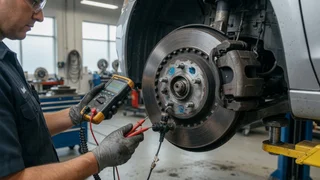
ABS faults are stored in the ABS module. Many basic code readers only access engine and emissions data, so they may show nothing even when the ABS light is lit. A scan tool that supports the ABS or chassis modules for the specific vehicle is needed. Many parts stores and independent shops can perform this scan.
Treat a fault code as a starting point for investigation, not proof that a part has failed. A code such as a wheel speed sensor circuit fault tells you where the controller saw an implausible or missing signal. The cause could be the sensor, the connector, the wiring harness, the tone ring, excessive bearing play, or the module input. Note whether the code is current or historic, and record any freeze-frame data before clearing anything.
Step 2: Match the Symptom to Likely Causes
Symptom or code type | Plausible causes | What to check next; Single wheel speed sensor circuit fault | Broken or chafed sensor wire, corroded connector, failed sensor | Inspect wiring along the suspension, check the connector, measure sensor resistance or signal per the service procedure; Wheel speed signal erratic or implausible | Debris or rust on sensor tip, cracked or rusted tone ring, worn wheel bearing, wrong part fitted | Remove and clean sensor, inspect ring for cracks or missing teeth, check bearing play, confirm part fitment; ABS light after brake or hub work | Sensor damaged or not seated, encoder ring damaged, magnetic encoder installed backward, connector left unplugged | Recheck sensor installation, connector and hub orientation; Multiple sensor codes at once | Low battery or charging voltage, poor module ground, module fault, damaged shared harness | Test battery and charging system, inspect module power and ground connections; Pump motor or valve fault | Blown fuse or relay, poor connection, failed pump motor, internal hydraulic unit fault | Check ABS fuses and relays, inspect module connector, scan-tool function tests; ABS light with low fluid warning | Worn pads lowering fluid level, external leak | Inspect pad thickness and look for leaks before topping up; ABS activates at low speed on dry roads | Contaminated or failing sensor, damaged tone ring, mismatched tire sizes | Compare live wheel speed data, inspect sensors and rings, confirm matching tire sizes
Step 3: Perform Basic Physical Checks
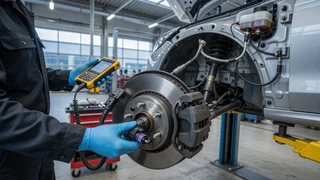
Brake fluid: check the reservoir level and condition. A low level often reflects worn pads, since fluid moves into the calipers as friction material wears. A sudden drop suggests a leak. Fuses and relays: locate the ABS fuses and relay using the owner's manual or fuse box label, and check that they are intact and seated. Battery and charging: low or unstable system voltage can set ABS codes. Confirm the battery and alternator are healthy before condemning ABS parts. Wheel speed sensors and wiring: with the vehicle safely supported, follow each harness from the sensor to the body connector. Look for rubbing, cuts, melted insulation, corrosion and broken clips. Tone rings and encoders: inspect for cracks, rust swelling, missing teeth or metal debris stuck to magnetic encoders. Wheel bearings: excessive play can change the sensor gap and corrupt the signal. Tires: very different tire sizes or circumferences can confuse wheel speed comparisons on some systems.
If the scan tool can display live data, compare all four wheel speeds while driving slowly in a safe area or on a lift. A wheel that reads zero, drops out intermittently or disagrees with the others points to that corner.
Common ABS Repairs
Wheel Speed Sensor Cleaning or Replacement
Sensor problems are among the most frequent ABS faults. A sensor may only need its tip cleaned of rust scale or metallic debris. If it is damaged or tests out of specification, replacement is often a manageable job, though seized sensors in corrosion-prone regions can break during removal and leave material stuck in the knuckle. Confirm vehicle fitment by model year, drivetrain and axle position, because front and rear, and left and right, sensors frequently differ.
Wiring and Connector Repair
Sensor harnesses flex with suspension movement and are exposed to water, salt and heat. A broken wire can produce intermittent codes that come and go over bumps. Repairs should use proper sealed connections. Some manufacturers specify replacement rather than splicing for certain sensor circuits, so check the service guidance for the vehicle.
Tone Ring, Hub or Wheel Bearing Replacement
Cracked or corroded tone rings can cause erratic signals. Depending on the design, the ring may be pressed onto an axle shaft or CV joint, cast into a rotor or hub, or integrated into a sealed wheel bearing assembly. Where the encoder is part of the bearing, the fix is usually a hub or bearing replacement. Some magnetic encoders only work when installed in the correct orientation.
ABS Module and Hydraulic Unit Repair
Internal module or hydraulic unit faults are less common than sensor and wiring issues, but they do happen. Options can include a new unit, a remanufactured unit, or a module repair service, depending on the vehicle. Many replacement modules must be programmed or configured to the vehicle, and the hydraulic unit usually requires a specific bleeding procedure afterward. This is typically professional-level work.
Bleeding Brakes on an ABS-Equipped Vehicle
Routine brake fluid changes and caliper replacements can often be bled conventionally, as long as air never enters the ABS unit. If the master cylinder runs dry, the hydraulic unit is replaced, or air is suspected inside the modulator, many vehicles require a scan tool to cycle the ABS valves and pump during bleeding. Skipping that step can leave air trapped in the unit, producing a soft pedal that may worsen later during an ABS stop. Use the brake fluid type specified on the reservoir cap or in the owner's manual.
Clearing Codes and Verifying the Repair
After the repair, clear the codes with the scan tool. Some systems turn the light off automatically once they see valid wheel speed signals above a certain speed. Then road test the vehicle and confirm the ABS light stays off and all wheel speeds read consistently. If the same code returns, the root cause was not resolved. Clearing codes without repairing the fault only hides the problem temporarily.
DIY or Professional Repair?
An owner with basic tools, safe lifting equipment and an ABS-capable scan tool can often handle fuse checks, sensor cleaning, connector inspection and straightforward sensor replacement. Hub replacement is within reach for experienced home mechanics but can require significant force and correct torque values. Module replacement, programming, scan-tool bleeding and diagnosis of intermittent electrical faults are generally better left to a qualified technician. Any repair that opens the hydraulic system affects the base brakes, so it should only be attempted by someone confident in bleeding and leak-checking brakes correctly.
Key Takeaways
An amber ABS light usually means anti-lock function is disabled while base brakes remain available; a red brake light or abnormal pedal means stop and inspect. Read the ABS codes with a scan tool that supports the ABS module, and treat each code as a lead rather than a verdict. Check fluid level, fuses, battery voltage, sensor wiring, tone rings and wheel bearings before replacing expensive parts. Confirm vehicle fitment for any sensor, hub or module, since parts vary by model year, drivetrain and axle position. Module replacement and ABS hydraulic bleeding often require programming or scan-tool procedures best handled by a professional.