CV Axle Boot Leaking Grease: How to Find the Cause
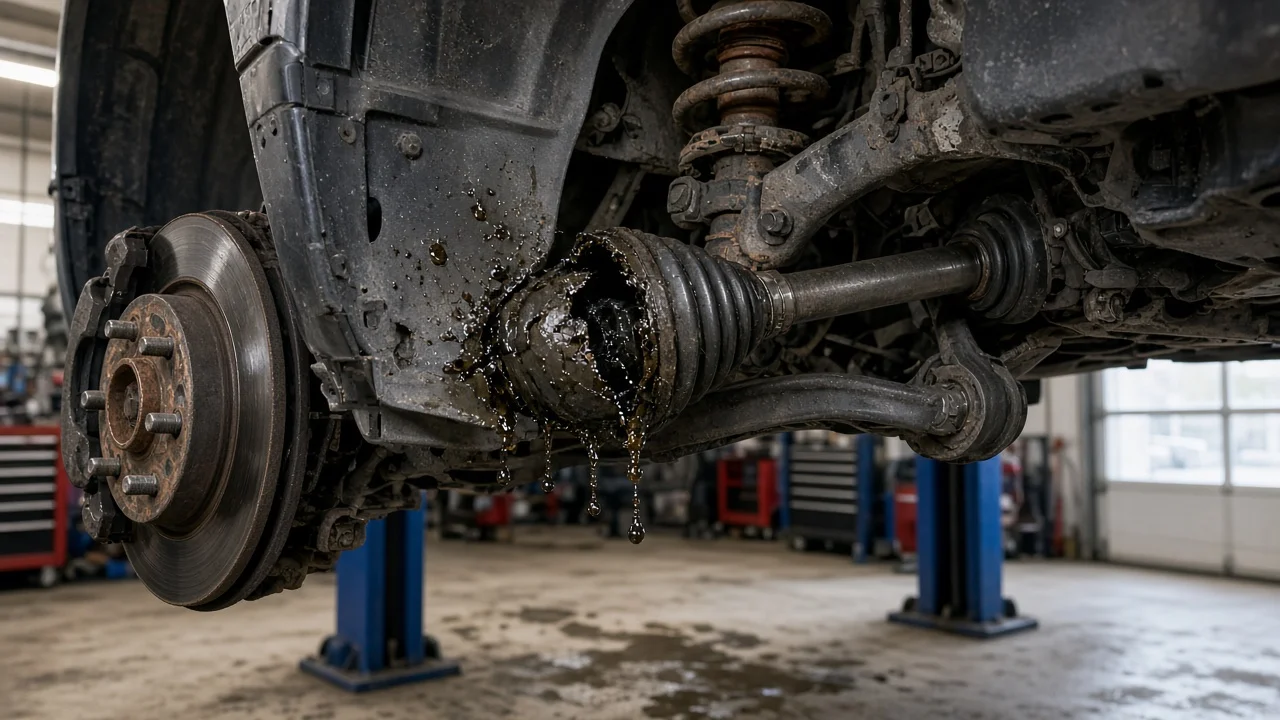
Grease flung across the inside of a wheel or onto suspension parts usually points to a leaking CV axle boot. The boot is not the only possible source, though, and the condition of the joint behind it matters as much as the leak itself. This guide covers how to record the symptoms, separate the likely causes, check things in a sensible order and decide what to do next, so you can tell a repair shop exactly what you found.
Establish the symptoms
Start by writing down what you see and hear, and when. A leaking boot typically leaves dark, thick grease slung in a spray pattern on the inner rim, brake dust shield, control arm, tie rod or wheel well liner. Note which side of the vehicle is affected. Residue nearer the wheel suggests the outer joint, and residue nearer the transmission or differential suggests the inner joint. Fresh grease is wet and tacky, while old residue is crusted with dirt, which helps you judge how long the leak has been going on.
Next, record any related signs. These include clicking or popping during tight turns under power, a clunk when shifting between drive and reverse, or a vibration that grows with acceleration. For each one, note the speed, steering angle and load at which it appears. Also list recent changes, such as suspension or alignment work, a new axle or boot, ride-height modifications, off-road use or a curb strike. Recent work and your service history often explain a failure faster than any visual check.
Distinguish plausible causes
The most common explanation is a split or cracked boot. Boots age, harden and crack at the folds, and road debris can puncture them. A visible tear, usually in a deep fold, with grease spread outward from it supports this cause. A boot that looks intact but is slick on the outside weakens it and points elsewhere.
A loose, broken or poorly crimped clamp lets grease escape at the boot ends even when the rubber is undamaged. Signs of this include grease concentrated at the large or small end of the boot, a clamp that turns by hand, or a recent boot or axle replacement. A boot that is the wrong part, installed twisted or seated incorrectly can also leak or wear early, which is why recent repair history matters.
Not every greasy underside comes from a CV boot. A leaking transmission or differential axle seal produces thinner oil that often drips onto the ground and may lower the fluid level. It collects around the inner joint, where the axle enters the housing. Shock absorbers, power steering components and engine oil leaks can also coat nearby parts. If the residue is thin and oily rather than thick and paste-like, or the boots are dry, a fluid leak is the stronger candidate.
Checks in a useful order
Begin with observations that need no lifting. Park on level ground, set the parking brake, switch the engine off and let hot components cool. Turn the steering to full lock in each direction to expose the outer boot behind the wheel. Then use a flashlight to inspect the boot surface, both clamps and the surrounding parts. After the vehicle has been parked for a while, check the ground underneath it, since drips suggest fluid rather than grease. Wear gloves and rub a little residue between your fingers to judge its consistency.
A closer inspection requires raising the vehicle on a proper lift or on rated jack stands on solid ground. Never work under a car supported only by a jack. With the wheel off the ground, rotate it slowly while flexing each boot fold, because cracks often stay hidden until the rubber is stretched. Confirm that the clamps are secure, check the inner boots as well as the outer ones, and feel for excessive movement at each joint. If a fluid leak is possible, check the transmission or differential level using the method and fluid type in the manufacturer specifications for your vehicle configuration.
Some checks belong with a qualified technician. These include a road test to reproduce clicking or vibration, judging whether play in a joint is beyond normal, inspecting an axle seal, and checking the brakes if grease has reached the rotor, caliper or pads. A shop can also verify the correct replacement part, since axle and boot designs vary with drivetrain, transmission and engine options.
Interpret the findings
A torn boot with grease sprayed around it confirms the source of the leak, but it says nothing about the condition of the joint. Once a boot opens, grease escapes and water and grit can get in. If the joint is quiet and smooth with no noticeable play, and the damage looks recent, a technician may recommend a boot kit with cleaning and fresh grease. If the joint clicks, binds or shows contamination, replacing the axle assembly is usually the better choice. The right option for your car depends on the inspection, not on a general rule.
An intact boot with grease at its ends points to the clamps or the installation. If the axle was replaced recently, the installer's or part warranty may apply. Clicking with no visible grease suggests joint wear rather than a leaking boot and needs its own diagnosis. Thin oil around the inner joint combined with a low fluid level indicates a seal leak, which a boot repair will not fix. Replacing the seal often requires removing the axle, so the two jobs may be combined. Before ordering parts, confirm the side, the joint and the exact vehicle configuration.
Urgency and next action
Stop driving and arrange an inspection or tow if you hear loud clunking or grinding, feel strong vibration under acceleration, or see the axle or boot hanging loose. The same applies if grease has reached the brake rotor or pads, because that can reduce braking performance. A noticeable transmission or differential fluid leak also justifies parking the vehicle until the level and source are checked, since running low can cause internal damage. A boot that has only just started to seep is less urgent, but the leak will not stop on its own. No one can promise how far the vehicle can be driven before the joint is affected.
When you book the repair, give the shop the year, make, model, engine, transmission and drivetrain, ideally with the VIN so the parts are matched correctly. Describe which side and which joint is leaking, share photos of the boot and residue, and list any noises along with the conditions that trigger them. Mention recent work and your typical operating conditions, such as towing or rough roads. If your maintenance schedule includes a periodic undercarriage inspection, note when it was last done. This information lets the technician confirm the cause quickly and quote the right repair.