Cummins Engine Oil Rifle Pressure: What the Specification Means and How to Find the Correct Figure
The Short Answer
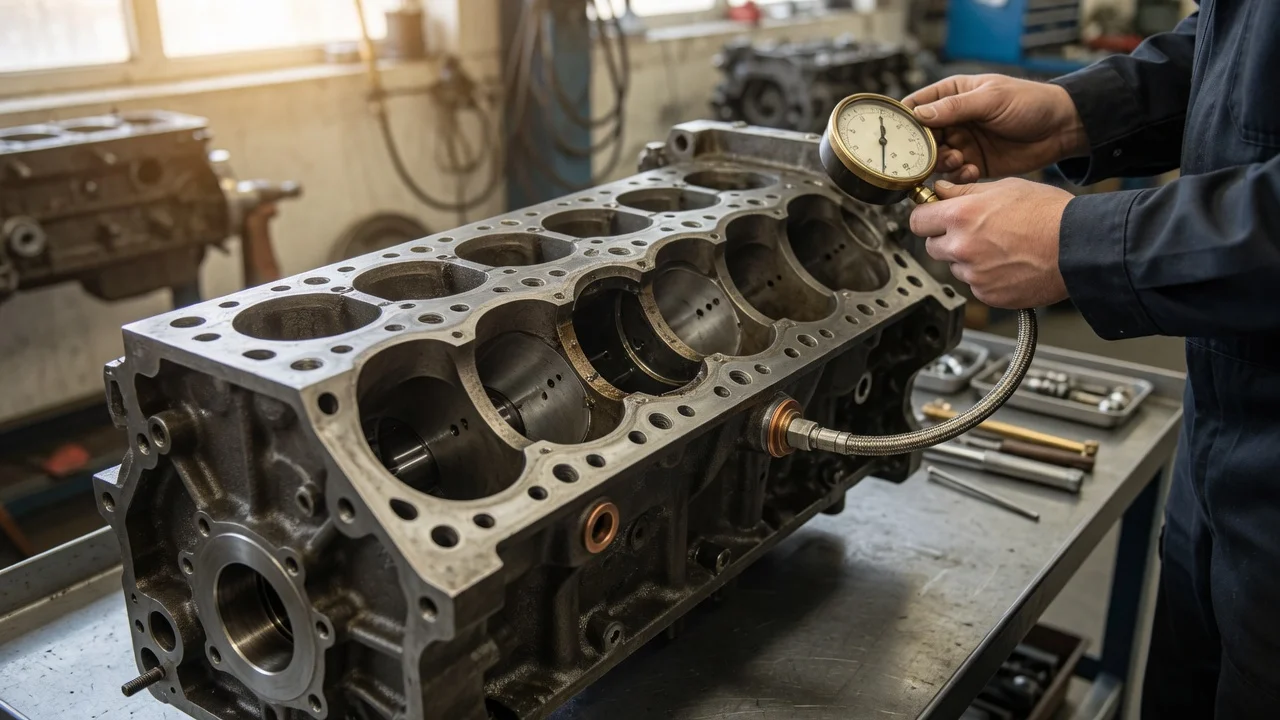
Oil rifle pressure is the lubricating oil pressure inside the engine's main oil gallery. The rifle is the long drilled passage that feeds pressurized oil to the crankshaft main bearings and, from there, to other lubricated parts. When Cummins service material lists an oil pressure specification, it usually refers to pressure at this gallery rather than at the pump outlet or the filter head.
No single rifle pressure figure applies to every Cummins engine. The correct value depends on the engine family, displacement, generation, application and engine speed at which pressure is checked. The authoritative figure for a given engine is in the Cummins service documentation for that engine's model and serial number.
What Changes the Answer
Engine family and generation: Cummins builds many engine lines, from light-duty pickup engines to heavy-duty truck, industrial, marine and power-generation engines. Lubrication system design and pressure targets differ between them. An engine model name can cover several generations with different specifications, so the model year or serial number matters. Engine speed: oil pressure specifications are commonly stated at more than one condition, such as low idle and rated speed. A reading that is acceptable at one speed may not be acceptable at the other. Oil temperature and condition: oil pressure varies with oil temperature and viscosity. Specified values assume defined test conditions, and a reading taken under other conditions cannot be compared directly. Measurement point: a dash gauge or electronic sender may not read at the same location as the service manual's test port. A gauge reading does not automatically correspond to the documented rifle pressure.
Where to Get the Correct Figure
Start with the engine dataplate. It gives the engine serial number and model designation needed to identify the correct service information.
Use those details to look up the oil pressure specification in the Cummins service or troubleshooting manual for that engine, or ask an authorized Cummins service location. Check whether the figure is a minimum, a normal operating range or a regulated value. Also note the engine speed, oil temperature and test port location it applies to.
How to Interpret a Pressure Reading
Diagnostic procedures generally call for confirming a suspected pressure problem with a calibrated mechanical gauge at the specified test port. A dash gauge or sensor reading alone is not enough, because senders and gauges can fail or read inaccurately.
If a correctly taken reading falls below the published minimum for that engine and condition, follow the manual's troubleshooting steps before continuing to operate the engine. Low lubricating oil pressure can lead to bearing and other internal damage. The possible causes and the order in which to check them are specific to each engine family and are covered in its troubleshooting procedure.
Limits of This Guide
No verified Cummins specification data was available when this article was written. For that reason, it gives no numerical oil rifle pressure for any engine, model year or application. Any pressure value found elsewhere should be checked against the official service information for the specific engine before it is used for diagnosis or repair.