Cooling System Pressure Test for Blown Head Gasket
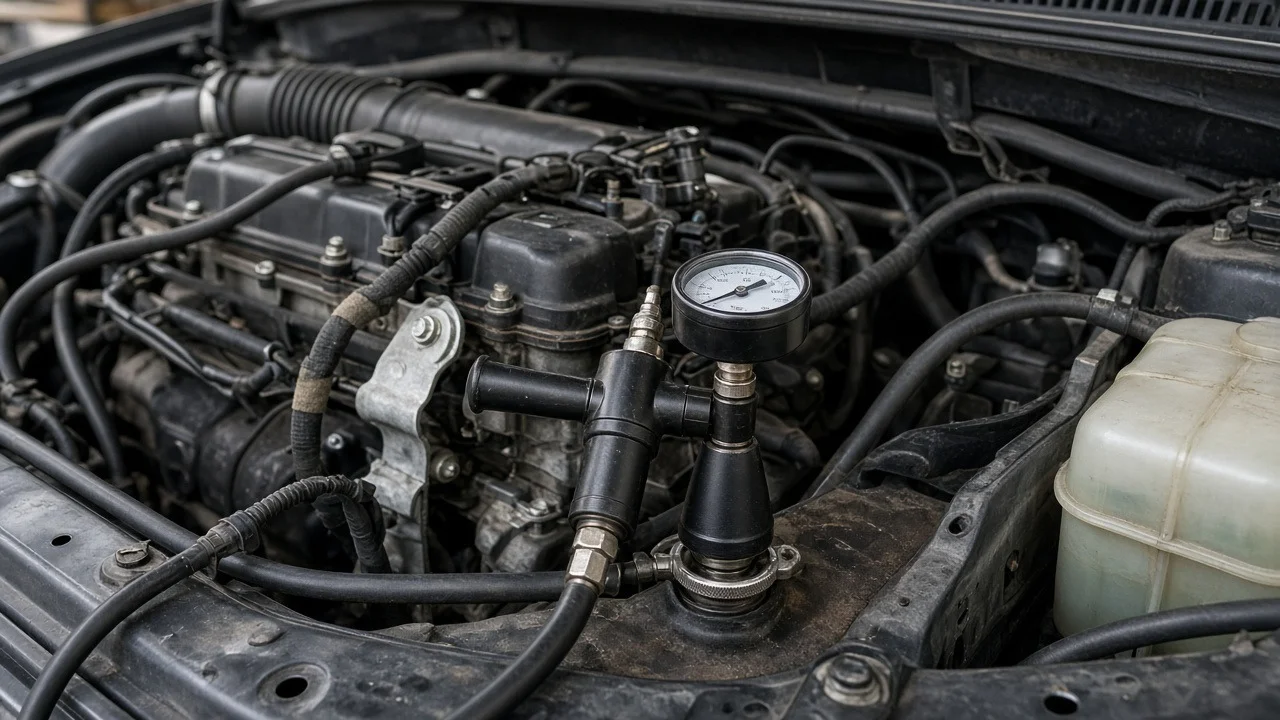
A cooling system pressure test can show whether combustion pressure is entering the coolant, but it cannot prove a blown head gasket by itself. The procedure uses a hand pump and adapter in place of the pressure cap to pressurize the cooling circuit, then watches the gauge for drop. This is different from testing the cap or using a chemical block tester. It is most useful when combined with symptoms such as unexplained coolant loss, overheating, exhaust smell in the radiator, or bubbles in the surge tank.
Essential answer
A cooling system pressure test is a supporting diagnostic, not a direct head gasket test. You pump the cooling circuit to a safe test pressure and observe whether the needle falls. A drop can mean an external leak, a heater core leak, a radiator leak, or combustion gases escaping past a failed gasket. The test narrows the search for a leak, but it does not identify a combustion leak unless you also watch for pressure building rapidly on a warm or running engine.
Because the pressure cap is removed for this test, the tool is often called a cooling system pressure tester. The adapter seals at the filler neck and the pump simulates normal system pressure. Air pockets in the cooling circuit can make the reading unstable, and thermostat position can affect how pressure moves between the radiator and engine block. A steady drop with no visible coolant suggests an internal leak, which may be a blown head gasket or another sealing fault.