Choosing a Coolant Leak Pressure Test Kit
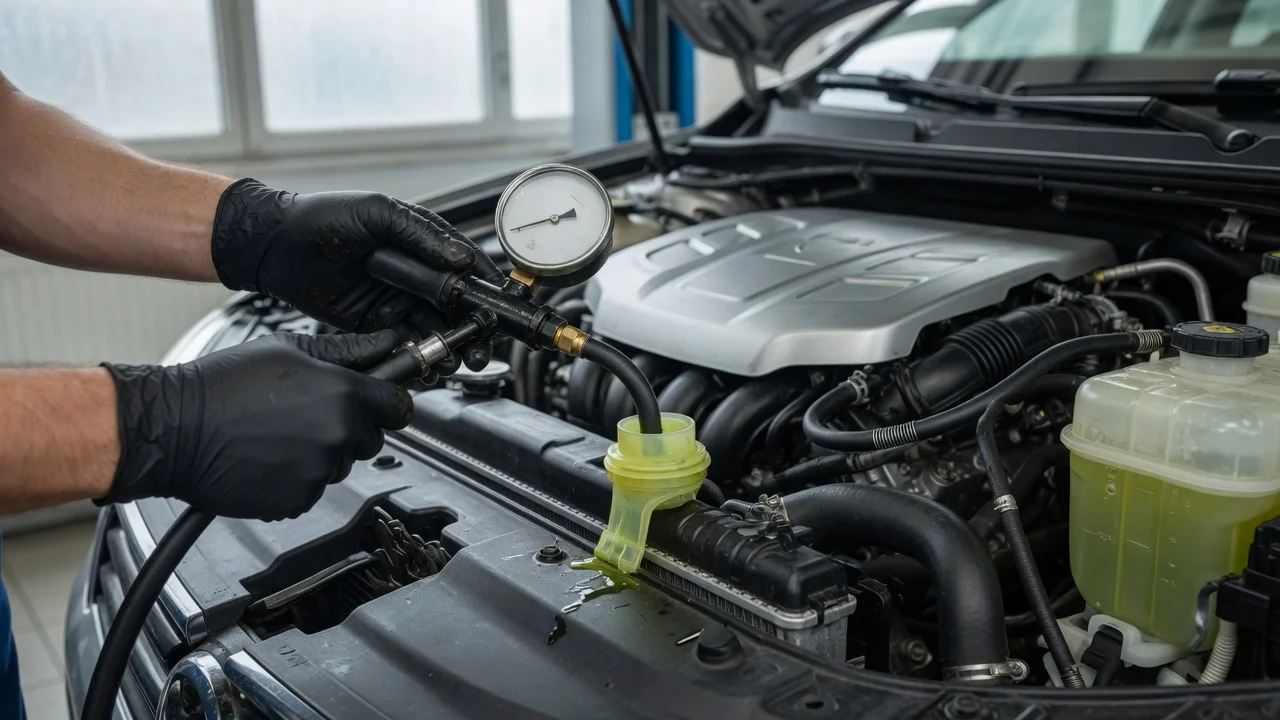
What a coolant leak test kit does
A coolant leak test kit is a diagnostic tool set used to pressurize a cooling system and help locate leaks. The basic idea is to simulate the pressure the cooling system develops when the engine is at operating temperature, but without the heat, moving parts, or need to run the engine. A typical kit includes a hand-operated pressure pump, a pressure gauge, an adapter that fits the radiator or coolant reservoir opening, and a hose connecting them.
In a cooling system, pressure raises the boiling point of the coolant. Many systems are designed to hold a specified working pressure, often controlled by the radiator cap. A pressure tester lets you pump the system to a safe test pressure and then watch the gauge. If pressure falls, it points toward a leak; if pressure holds for the test period, the leak may be limited to a part that only opens or moves under different conditions, such as a thermostat, water pump, or heater core.
The term coolant leak test kit is also used in some shops for other equipment, such as a combustion-leak tester or a tracer-dye kit. Those are different tests. A pressure test checks the cooling system for external leaks and pressure loss. A combustion-leak tester checks for exhaust gas in the coolant, which can point to a head gasket problem. The selection advice here applies specifically to pressure-testing kits.
How to use a coolant system pressure tester
The test is normally performed on a cool engine to reduce the risk of burns and to avoid pressure from heat affecting the reading. Install the correct adapter on the radiator neck or coolant reservoir, attach the pump, and pump slowly to the pressure marked on the radiator cap or specified by the vehicle manufacturer. Watch the gauge for the recommended interval and inspect the visible parts of the system: hoses, hose connections, radiator tanks, radiator core, water pump area, heater hoses, and the heater core if accessible.
Do not exceed the specified test pressure. Overpressurizing can damage an older radiator, a plastic tank, a heater core, or a weak hose. Before testing, also check the coolant level and the condition of the radiator cap. A cap that does not hold its rated pressure can cause coolant loss even if the rest of the system is sound.
Radiator, cooling system, and cap adapter kits
Cooling system test kits differ mainly in the adapters they include. Some kits are sold for a single vehicle line or a small group of radiator-cap sizes. Others include a broader adapter set covering common domestic, Asian, and European fittings. The adapter must fit the opening and seal well enough to hold test pressure. A poor seal at the adapter can look like a cooling-system leak when the gauge falls.
Many full kits also include a cap-testing function. A radiator cap tester checks whether the cap opens and seals near its rated pressure. This is useful because coolant loss can come from a weak or damaged cap rather than a leak in the hoses or radiator. A cooling-system tester, a radiator cap tester, and a combustion-leak or block tester are separate tools, even when they appear together in a larger master kit.
What to compare when choosing a kit
Feature|Why it matters; Adapter range|Determines which radiator and reservoir openings the kit can seal; Gauge range and clarity|Needs to cover typical cap ratings, usually at least the common cooling-system test pressures; Pump design|A hand pump should build pressure steadily and hold it without excessive effort; Cap-testing ability|Useful for diagnosing the radiator cap as a possible source of coolant loss; Hose and fitting quality|Leaks at the tester itself can cause false readings; Case and organization|Helps keep adapters matched to the correct fittings
A basic single-vehicle adapter can be enough for one known car, but it is not a general coolant leak test kit. For a home vehicle owner, a mid-size kit with the adapter for the target vehicle and a cap-testing feature is often the practical choice. A professional or multi-vehicle household may benefit from a larger set, but extra adapters do not improve the test if the correct one is already included.
Compatibility and uncertainty
Physical fit is only part of compatibility. The adapter must match the shape and diameter of the filler neck or reservoir opening, and the kit gauge must have a usable range for the vehicle's rated cap pressure. Because cap styles and filler necks vary by make, model, year, and engine, no single pressure-test kit should be assumed to fit every vehicle. Check the adapter list for the exact vehicle configuration before relying on a kit.
A pressure test can confirm a leak or show a stable system, but it does not identify every possible coolant-loss cause. Some leaks occur only when the engine is hot, when a coolant passage is under different stress, or when the heater core leaks into the cabin. If the pressure test is inconclusive but coolant loss continues, an ultraviolet dye test or further inspection may be needed.