Kohler Engine Blown Head Gasket Symptoms
The short answer
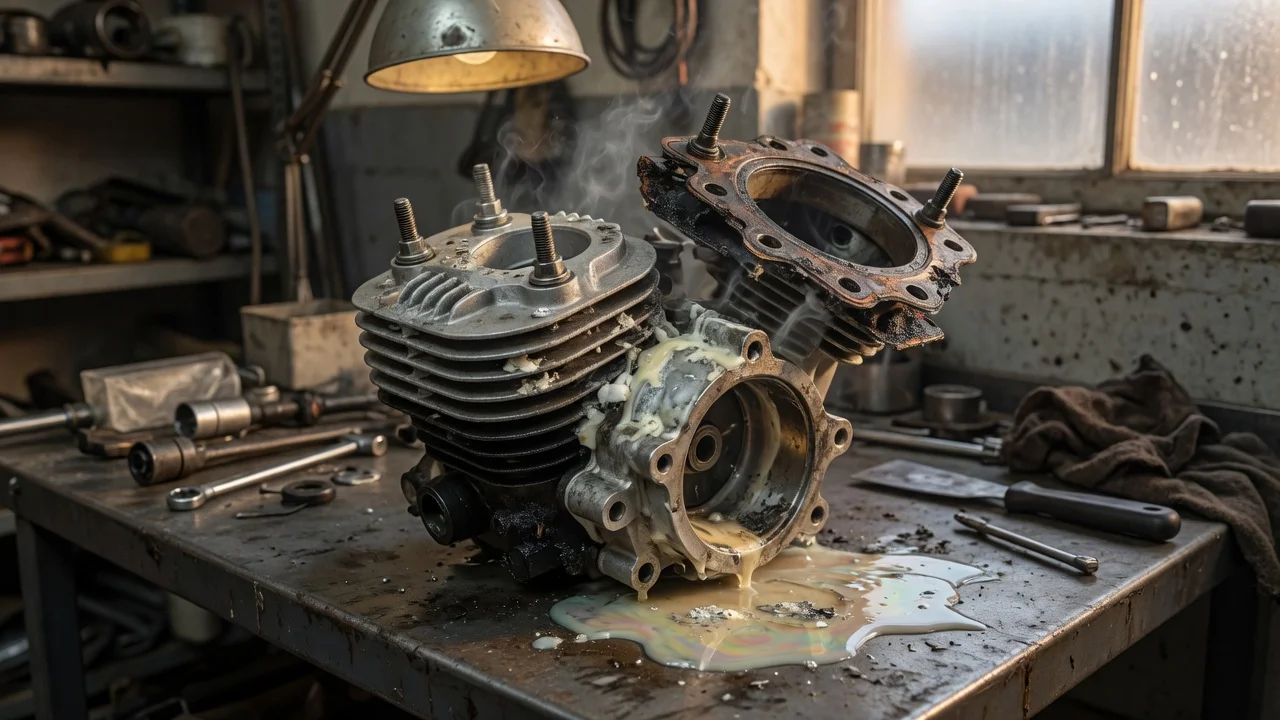
Most Kohler engines in lawn tractors, zero-turn mowers, generators and similar equipment are air-cooled. On these engines, a blown head gasket usually shows up as lost compression and escaping combustion gas, not coolant problems. Typical signs are hard starting, low power, rough running and a puffing or hissing sound near the cylinder head. You may also see oily, sooty residue around the joint between the head and the cylinder.
Some Kohler engines are liquid-cooled, including certain Aegis models and Kohler diesels. These can also show the coolant-related symptoms familiar from car engines. Before interpreting symptoms, confirm which engine you have from the model, specification and serial numbers on the engine's identification label. Test procedures and specifications depend on that exact engine.
Symptoms on air-cooled Kohler engines
• Hard starting, or an engine that cranks easily but will not fire properly. • Noticeable loss of power, especially under load such as mowing thick grass or climbing a slope. • Rough running or misfiring on the affected cylinder; on a V-twin, the engine may feel like it is running on one cylinder. • A rhythmic puffing, ticking or hissing sound at the cylinder head as gas escapes with each combustion stroke. • Oily, black or sooty streaks around the head-to-cylinder joint, sometimes with visible wetness while the engine runs. • Smoke from the area of the cylinder head rather than only from the muffler. • Overheating, either as a result of the leak or as the condition that caused the gasket to fail.
Additional symptoms on liquid-cooled models
These signs apply only to Kohler engines with a radiator and coolant. They do not apply to the much more common air-cooled engines.
• Coolant loss with no visible external leak. • Bubbles in the radiator or coolant reservoir while the engine runs, caused by combustion gas entering the cooling system. • Milky or light-brown, frothy engine oil, which suggests coolant mixing with oil. • White exhaust smoke with a sweet smell that persists after warm-up. • Overheating, or pressure building in the cooling system soon after starting.
Symptoms are not proof: what else can cause them
Each symptom above has other possible causes, so treat what you observe as a clue, not a diagnosis. Low compression and power loss can come from a sticking or burned valve, incorrect valve clearance on overhead-valve (OHV) engines, or worn piston rings. Oil around the top of the engine may come from a leaking valve cover gasket rather than the head gasket. Smoke can come from worn rings, valve guide wear or an overfilled crankcase. On liquid-cooled models, coolant loss can also come from a leaking hose, water pump or radiator, and milky oil can occasionally be condensation from short run times.
Checks that help distinguish the causes
Work from simple, non-invasive checks toward tests that need tools. Let the engine cool first, and disconnect the spark plug lead before turning the engine by hand or working near moving parts.
1) Inspect and clean the cooling path. On air-cooled engines, debris packed in the cooling fins, shrouds or rotating screen can cause overheating, a common reason gaskets fail. Clearing it will not repair a failed gasket, but it addresses a likely root cause. 2) Locate any leak precisely. Clean the head, cylinder and valve cover area, run the engine briefly, and look at where fresh oil or soot appears. Residue at the head-to-cylinder joint points toward the head gasket. Residue at the valve cover seam points toward the valve cover gasket. 3) Read the spark plug. A plug that is very different from the other cylinder's plug on a twin can show which cylinder has a problem. It cannot identify the cause by itself. 4) Perform a cylinder leak-down test. Many Kohler engines use an automatic compression release, which lowers compression readings during cranking. For this reason, Kohler service literature generally favors a leak-down test over a simple compression test. With the piston at top dead center on the compression stroke, apply regulated air to the cylinder and listen for where it escapes (see the table below). 5) If you remove the head, check the head and gasket surfaces. Look for a burned-through or torn gasket, and check the head for warping with a straightedge against the service manual's flatness limit. A warped head may need resurfacing or replacement along with the gasket. 6) For liquid-cooled models only, run a combustion leak (block) test. This uses a chemical tester that changes color when exhaust gases are present in the coolant. A cooling-system pressure test can also help separate an internal gasket leak from an external leak.
Where air escapes during a leak-down test | What it suggests; Around the head-to-cylinder joint | Head gasket leak, or a warped head or cylinder surface; From the carburetor or intake | Intake valve not sealing; From the muffler or exhaust | Exhaust valve not sealing; From the oil fill, dipstick tube or crankcase breather | Worn or stuck piston rings, or cylinder wear; As bubbles in the radiator or reservoir (liquid-cooled only) | Combustion leak into the cooling system, often the head gasket
Some leakage past the rings is normal on any engine, so the amount of leakage matters as well as its location. The acceptable leakage limit and the test procedure depend on the specific engine and tester. Take them from the service manual for your engine's specification number. This guide does not give a universal value. If the leak-down result is unclear, check valve clearance (where adjustable) and retest before concluding the head gasket has failed.
A note on EFI fault codes
Some Kohler engines use electronic fuel injection (EFI), and their control systems can store fault codes. A code tied to misfire, lean or rich running, or engine temperature may accompany a head gasket failure. The same code can also come from a sensor, wiring, fuel delivery or air leak problem. Look up the code's definition and test conditions for your specific EFI system. Treat the code as a pointer toward which mechanical checks to run, not as proof that the head gasket needs replacement.
What remains uncertain without engine-specific data
This guide does not provide compression or leak-down limits, head bolt torque values, tightening sequences or head flatness specifications. These vary by Kohler engine family and specification number, and none were available here. Get them from the correct Kohler service manual before you test or reassemble. A head gasket replacement done without the correct torque sequence is likely to fail again.