Oil additive for a head-gasket leak
What is the direct answer?
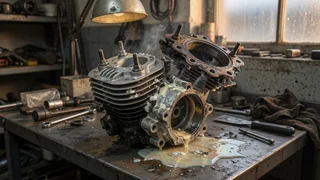
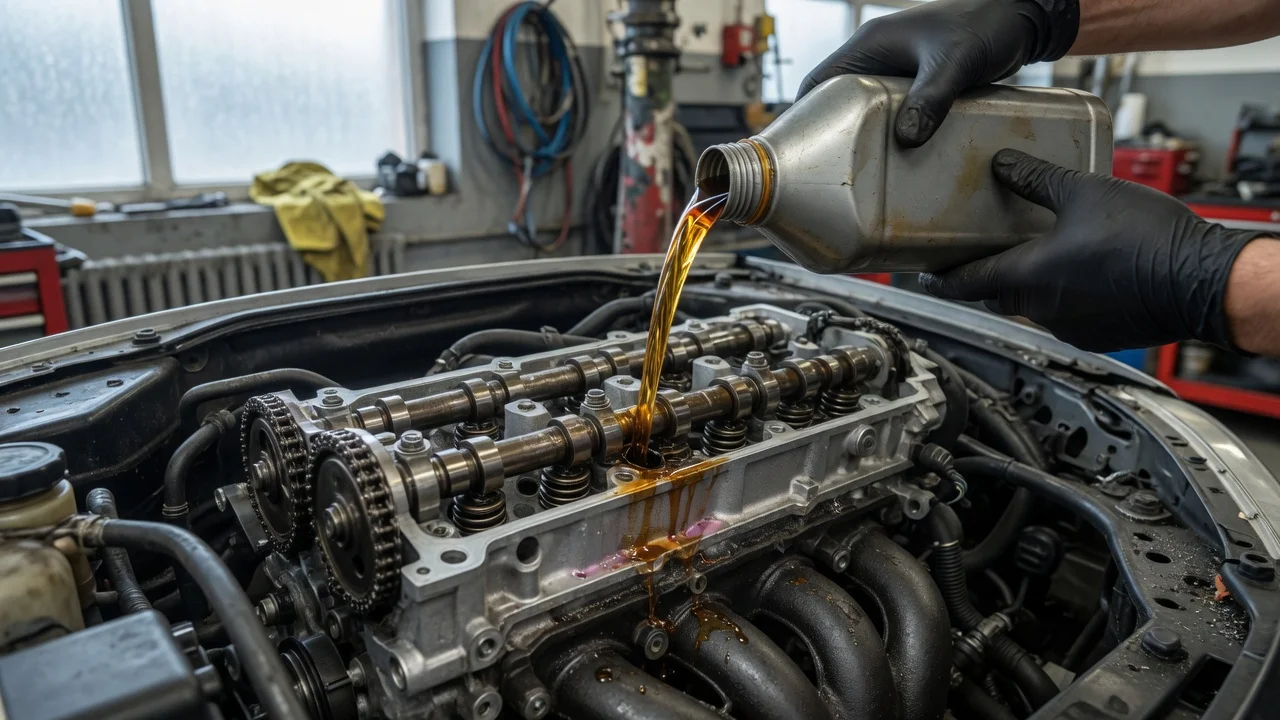
An engine-oil additive is not a reliable treatment for a leaking head gasket. Most products sold to seal a head-gasket leak are added to the cooling system, not the crankcase. Oil stop-leak formulas are made to swell rubber oil seals and gaskets in the lubrication system. A cylinder-head gasket is a different joint, usually a composite or multi-layer steel (MLS) sandwich between the cylinder head and the engine block, and a leak there is a coolant, combustion-gas, or compression problem that oil chemistry does not seal.
The search phrase itself mixes two product classes. If the goal is to stop coolant loss, white exhaust, overheating, or mixing of oil and coolant, the relevant temporary products are coolant-side sealers. If the goal is to slow an oil drip from a rubber seal, an oil additive may be aimed at a different leak entirely. Treating a failed head gasket with an oil additive leaves the leak path open and can make later diagnosis harder if oil and coolant have already mixed.
Why an oil additive does not seal this joint
The head gasket seals combustion chambers, oil galleries, and coolant passages at the same time. A leak can therefore show up as compression loss between cylinders, exhaust gas in the coolant, coolant in the oil, oil in the coolant, or an external weep at the head-to-block parting line. Which path is open depends on the engine design, gasket type, and where the gasket failed. That mix of fluids and gases is why a single oil-side additive cannot be treated as a universal fix.
Oil stop-leak additives typically work by swelling elastomers such as valve-cover gaskets, oil-pan gaskets, and shaft seals. A head gasket is not that kind of part. MLS gaskets rely on coated steel layers and clamping force from the head bolts. Composite gaskets rely on fiber and metal construction. Neither is restored by oil that is circulating inside the crankcase. If combustion pressure or coolant is crossing the gasket, the oil never reaches the leak in a form that can close it.
How to tell a head-gasket leak from an oil-seal leak
A head-gasket problem and an ordinary oil leak can be confused because both can leave oil on the outside of the engine. They are not the same failure. Coolant in the oil often looks milky or tan on the dipstick or under the oil filler cap. Oil in the coolant can leave a film in the reservoir. Persistent overheating, unexplained coolant loss with no obvious puddle, white exhaust after warm-up, bubbles in the coolant with the engine running, or a cylinder that is down on compression all point toward the head gasket or a related sealing surface, not a rubber oil seal.
An oil-seal leak usually leaves clean engine oil at a pan rail, valve cover, timing cover, or crankshaft seal, without coolant loss or overheating. In that case an oil additive is still only a possible temporary measure for a swollen rubber seal, and it still does not repair a gasket that has torn, cooked, or lost clamp load. Vehicle-specific symptoms vary with engine layout, whether the head is aluminum or iron, and whether the leak is internal or external. Those details have to be read from the actual engine, not assumed from a product label.
What a coolant sealer can and cannot do
Coolant-side head-gasket sealers are a separate class of product. They circulate with the coolant and attempt to lodge in a leak path that is wet with coolant. Some engines and some small external weeps respond for a time; many combustion-to-coolant failures and any leak that has already warped the head, cracked a casting, or mixed a large amount of oil and coolant do not. There is no public, vehicle-by-vehicle success rate that can be stated here, and labels that promise a permanent repair overstate what a chemical can do to a mechanical joint that has lost clamp load.
If oil and coolant have already mixed, a sealer does not restore lubrication. Milky oil means the bearings and camshaft may already be at risk. In that condition the oil should be treated as contaminated, the engine should not be run hard, and a chemical additive in either the oil or the coolant is not a substitute for finding whether the gasket, the head, or the block is the source.
What to do next
Confirm the leak type before adding anything to the oil. Check the dipstick and oil filler cap for a milky film, the coolant reservoir for oil film or unexplained loss, and whether the engine overheats or loses coolant with no puddle. Do not pour an oil stop-leak product in as a head-gasket treatment. It does not address the gasket face, and contaminated oil plus an additive package can complicate a later flush and inspection. If coolant and oil have mixed, plan on draining both, inspecting for a failed gasket or a warped or cracked head, and repairing the joint. The lasting repair is mechanical: replace the head gasket, and machine or replace the head if it is not flat or is cracked. A coolant sealer is only a possible short-term holding action on a small coolant-side leak, and only after the cooling system is known to be otherwise intact. It is not a confirmed repair for every engine or every failure mode. Have compression, cylinder leakage, or a combustion-gas-in-coolant test done when the symptoms are mixed or unclear. Those tests separate a head-gasket leak from a radiator, hose, water-pump, intake-gasket, or oil-cooler failure, which can look similar from the driver’s seat.
The material gap is product- and engine-specific performance. No additive concentration, wait time, temperature, or success rate is stated here because those figures are not supplied and they are not universal across engines, gasket materials, or leak paths. If the engine, model year, and exact symptom are known, diagnosis can be narrowed; without that, the sound conclusion stays the same: an oil additive is the wrong tool for a head-gasket leak, and the next step is to identify which fluid path has failed and repair that joint.