Compact Electric Car Models: A Practical Guide to Sedans, Hatchbacks and Coupes
A compact EV is a battery-electric car sized between small city cars and midsize sedans, usually sold as a hatchback or sedan and occasionally styled as a coupe. In the US, the choice is narrower than in Europe or Asia because many small electric models are never offered here, and the lineup changes noticeably from one model year to the next. The most useful way to shop the segment is to start with body style and daily driving needs, then compare the specific model generation, trim level and powertrain variant you can actually buy or find used.
The short answer
Compact electric cars suit drivers who want an easy-to-park, efficient vehicle for commuting and mixed driving, and who can charge at home or work most of the time. They differ from compact gas cars mainly in how they are refueled, how range behaves in different conditions, and how their prices and features are structured across trims. They differ from larger EVs in cabin and cargo space, and often in battery size and therefore range. One qualification matters a great deal: availability, range and features depend on the exact model year, generation and trim, so a statement that is true of one version of a car may not apply to another.
What "compact" actually means
In everyday use, "compact" is a loose marketing and editorial term. The US Environmental Protection Agency uses a more specific definition for cars: size classes are based on combined passenger and cargo volume, and the compact class covers roughly 100 to 109 cubic feet. Below that sit subcompact and minicompact cars; above it are midsize and large cars. Because hatchback cargo space is counted in this total, a hatchback and a sedan with similar exterior dimensions can fall into different classes.
The line also blurs with crossovers. Several electric vehicles marketed as compact SUVs are close in footprint to a compact hatchback but sit taller and are classified as sport utility vehicles. Some recent small EVs deliberately mix the two, with a hatchback shape, raised ride height and crossover styling. If your priority is a low, car-like driving position, it is worth checking how a given model is classified and how it sits in person rather than relying on the word "compact" alone.
Body styles in the compact EV segment
Body style | Typical strengths | Typical trade-offs | Note for US buyers; Hatchback | Flexible cargo area with folding rear seats; short overall length; easy city parking | Rear headroom and cargo floor can be compromised by battery packaging in some designs | The most common compact EV body style historically; Sedan / liftback | Lower, more aerodynamic shape that can help highway efficiency; quieter cabin in many designs | Smaller trunk opening on a true sedan; liftbacks improve access but are less common | Some "sedans" are actually liftbacks with a hatch-style tailgate; Coupe / two-door | Styling and a sportier feel | Rear-seat access and practicality are limited | True compact electric coupes are rare in the US; "four-door coupe" usually describes a sloping-roof sedan; Raised hatchback / crossover-styled | Higher seating, easier entry, rugged styling | Taller shape can cost some efficiency compared with a low sedan | Often marketed as a small SUV even when the footprint is hatchback-sized
Examples of compact electric models in the US
The models below illustrate the segment rather than form a complete current lineup. Market specification, production timing and trim availability change often, so confirm what is offered for the model year you are considering.
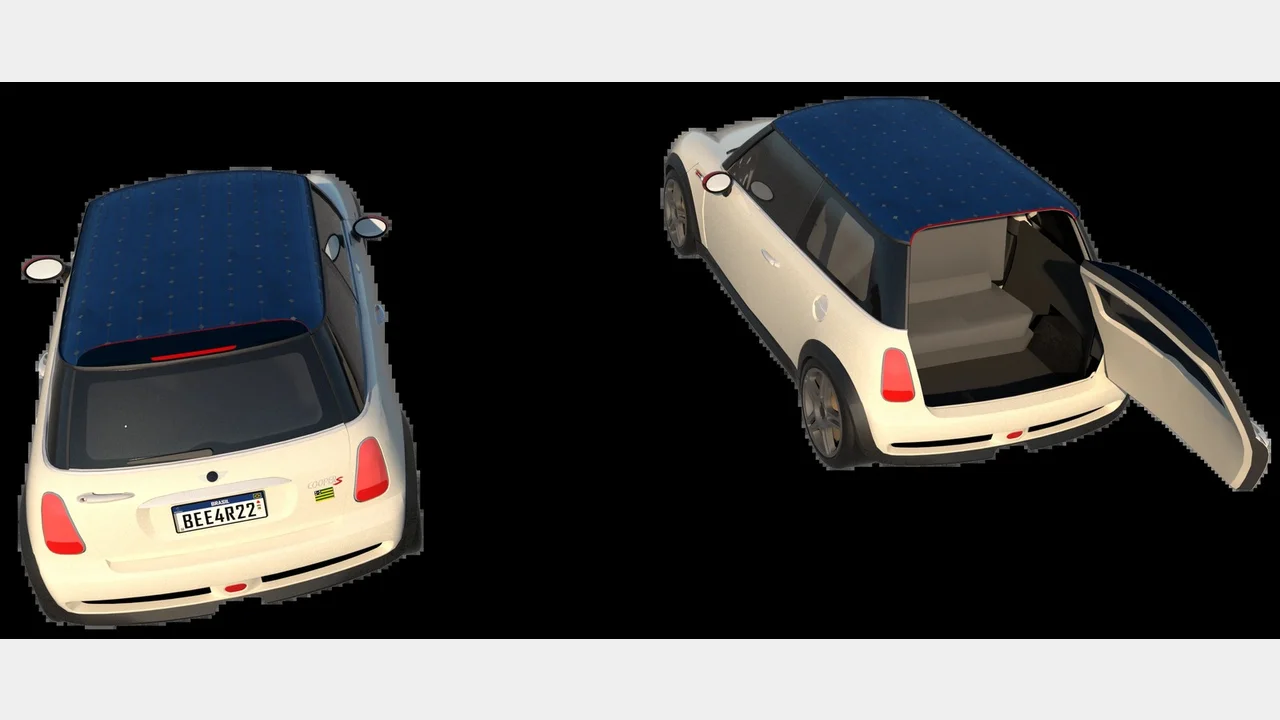
Nissan Leaf: one of the longest-running mass-market EVs, sold in several generations. Earlier generations are compact hatchbacks; the newest generation adopts a more crossover-like hatchback shape. Older versions use a different fast-charging connector than most current EVs and rely on passive battery cooling, which matters when evaluating a used example. Chevrolet Bolt: a compact hatchback whose original generation ended production after the 2023 model year, with a crossover-styled Bolt EUV sibling. Many 2017 to 2022 cars were covered by a battery recall that involved battery replacement, so a used buyer should confirm the recall work was completed. GM announced a new-generation Bolt; check its body style, timing and specifications for the model year in question. Tesla Model 3: a compact sedan in EPA terms, offered in rear-drive and dual-motor powertrain variants across model years. It is one of the most common compact electric sedans on the used market. Mini Cooper Electric: a small, premium-leaning hatchback. Earlier and later generations differ in platform, battery and range, so the model generation matters more than the name. Fiat 500e: a small city hatchback that returned to the US after an absence. It sits at the very small end of the segment and suits mainly urban use. Polestar 2: a liftback with sedan-like proportions, offered in single- and dual-motor versions depending on model year. Volvo EX30: a small premium EV with crossover styling, a useful example of how the compact hatchback and small SUV categories overlap.
Several well-known compact electric hatchbacks sold elsewhere, such as small models from European, Korean and Chinese brands, have not been offered in the US. Reviews of those cars can be informative about the segment but do not reflect the US market specification.
How compact EVs differ from compact gas cars
Energy and refueling: home charging replaces most trips to a station, while road trips depend on public DC fast charging. Range behavior: real-world range varies more with weather, speed and climate-control use than fuel economy does in a gas car. Cold temperatures and sustained highway speeds usually reduce range. Packaging: the battery sits under the floor, which can lower the center of gravity but may raise the floor height and affect rear-seat comfort or cargo depth. Driving feel: electric motors deliver strong response from low speeds, and regenerative braking lets many models slow down with little use of the brake pedal. Maintenance: there are no oil changes, spark plugs or exhaust systems, though tires, brakes, cabin filters, coolant and 12-volt batteries still need attention. Tire wear can be higher because EVs are heavier and quicker off the line.
Powertrain variants and trim levels
Within one model, the powertrain variant often matters more than the badge. Common differences include battery size, motor count and drive layout. A single-motor version is usually front- or rear-wheel drive and tends to be the most efficient; a dual-motor version adds all-wheel drive and more acceleration, often at some cost to range and price. Larger batteries increase range but add weight and cost.
Trim levels typically change more than comfort features. Depending on the model, higher trims may add a heat pump for better cold-weather efficiency, faster onboard AC charging, larger wheels that can reduce range, driver-assistance features and upgraded audio or seating. When comparing two cars, look at the specific trim's charging capability and wheel size, not only its advertised range.
Charging considerations
Level 1 (standard household outlet): slow, but can be enough for short daily commutes with a smaller battery. Level 2 (240-volt home or public charger): the practical everyday option for most owners; the car's onboard charger rating limits how fast it can use a Level 2 station. DC fast charging: used for road trips; peak speed depends on the car's battery and electrical design, and charging slows as the battery fills. Connectors: the US is transitioning to the J3400 (NACS) connector. Many recent and upcoming models use it or offer adapters, many others use CCS, and older Nissan Leaf models use CHAdeMO, which has a shrinking public network.
Buying new versus used
Compact EVs have been on sale long enough that the used market offers several generations. For a used car, the battery is the most important component to evaluate. Ask for a battery health report if the manufacturer or a dealer can provide one, check whether the car has active liquid cooling or passive cooling, confirm any open recalls are complete, and verify the remaining term of the battery warranty for that model year. A car's original EPA range estimate describes it when new, not after years of use.
Incentives have also changed. The federal clean vehicle tax credit for new and used EVs ended for vehicles acquired after September 30, 2025. Some states and utilities still offer rebates or charger incentives, so check what applies where you live.
How to choose a compact EV
Estimate your typical daily mileage and your longest regular trip, then pick a range with comfortable margin for winter and highway driving. Confirm where you will charge most often; reliable home or workplace charging makes almost any compact EV easier to live with. Choose a body style for how you carry people and cargo: hatchback for flexibility, sedan or liftback for highway efficiency, crossover-styled for higher seating. Compare the exact model year, generation, trim and powertrain variant rather than the model name alone. Check the fast-charging connector and peak charging capability if you take road trips. For used cars, prioritize battery condition, recall status and warranty coverage over cosmetic features.
Taken together, the compact electric segment rewards specific comparisons. The same nameplate can differ substantially between generations and trims, and US availability does not always match what is sold elsewhere. Matching body style, range and charging setup to your real driving pattern is the most reliable way to narrow the field.