Club Car Ignition Coil
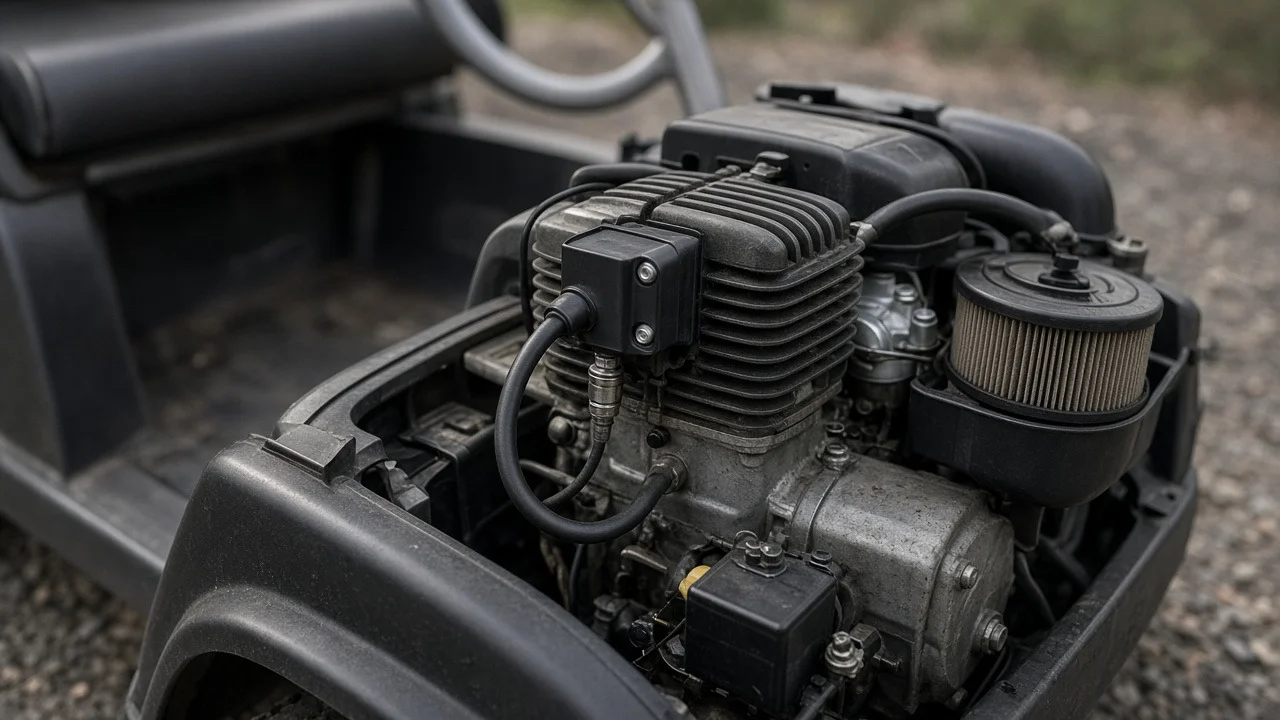
A weak or missing spark on an older Club Car can feel like a dead end, especially when the engine cranks but will not catch. The ignition coil is a common suspect, yet the starting system also depends on the starter circuit, battery state of charge, ignition switch, cranking speed, fuel delivery and basic diagnostic checks. Before buying a replacement, you need to separate a true coil failure from low voltage, a failing trigger, or a fuel problem. That distinction matters because installing a new coil will not fix a machine that is not getting fuel or turning over fast enough to produce a usable spark.
The direct answer
A Club Car ignition coil should be considered failed mainly when testing shows no consistent spark while the engine cranks, but the same test points to adequate voltage reaching the coil primary side. On many older gasoline models, the coil works with a flywheel trigger or igniter, so the condition changes if the trigger signal is absent. A no-start with a healthy crank and wet spark plug can resemble a coil issue, yet it may instead be fuel delivery or a fouled plug that suppresses the spark under compression.
Choosing the right coil also depends on the production year and engine arrangement. A 1987, 1989, 1990, 1991, 1996, 1997 or 2000 Club Car may use different mounting bosses, wire lengths or connector styles, even when the external appearance is similar. Before purchase, compare the removed coil and the plug lead routing with the listing. Matching the coil to the engine family and confirming the spark plug cap and primary terminals are correct reduces the chance of an electrical fitment problem after installation.