Choosing an Adjustable Brake Proportioning Valve
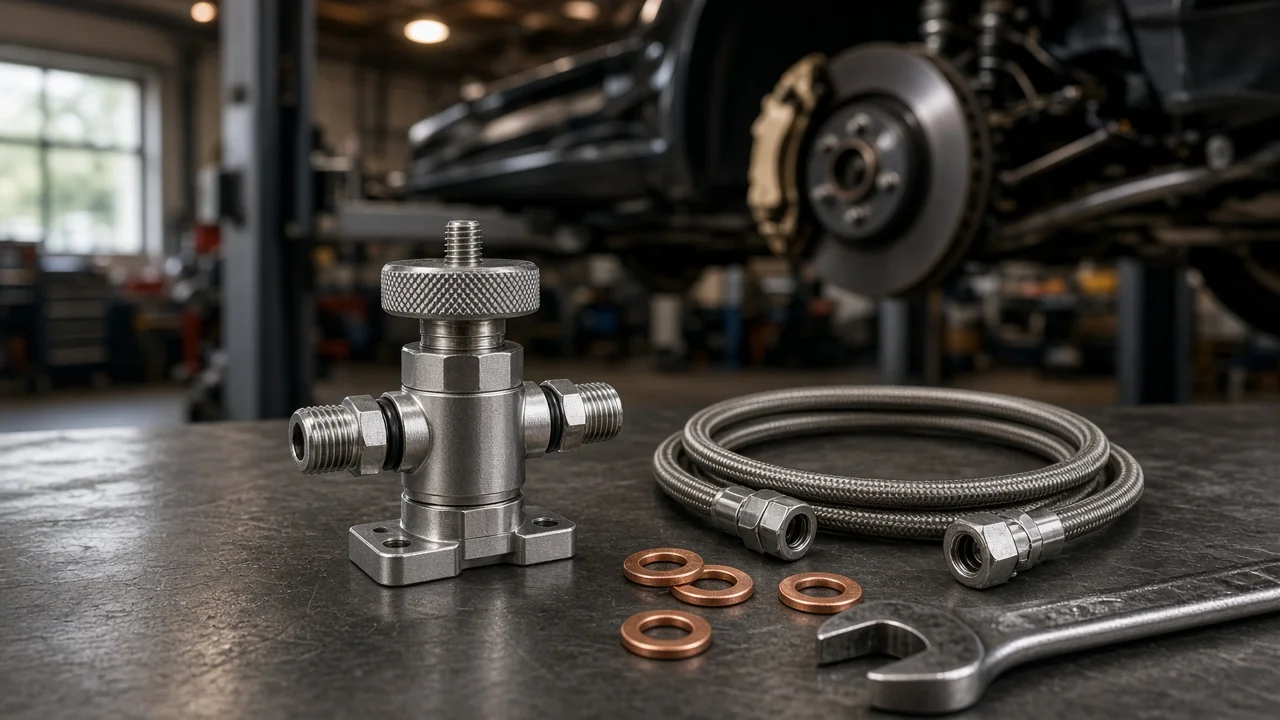
An adjustable brake proportioning valve lets you set how much hydraulic pressure reaches the rear brakes compared with the front. It is common on custom builds, disc brake conversions, race cars and vehicles whose weight or tire setup no longer matches the factory design. Choosing one depends less on brand and more on matching the valve to your brake layout, line fittings and driving. If a rear wheel locks early or braking feels unstable now, stop driving the vehicle and have the system inspected before buying parts.
Define the job the product must do
Under light braking, a proportioning valve passes full pressure to the rear circuit. Above a set point, often called the knee or split point, it slows the rate at which rear pressure rises. During hard stops weight shifts forward and the rear tires lose grip, so too much rear pressure locks the rear wheels first, which can make the vehicle unstable. A manual brake proportioning valve lets you move that point to suit your setup instead of relying on a fixed factory calibration.
Typical reasons to fit one include converting drums to discs, changing caliper or master cylinder sizes, swapping in a different rear axle, a large shift in weight distribution, or track use. It is usually the wrong fix on a stock vehicle that has developed a balance problem. That symptom more often points to worn or contaminated components, a seized caliper or a failed factory valve. Many modern vehicles with ABS also use electronic brake force distribution to manage front-to-rear balance, and adding a manual valve to those systems is generally not part of manufacturer service procedures.
Also decide early whether the car is street-driven or competition-only, where the valve can be mounted, and whether the driver needs to reach it while seated. Modifying the brake hydraulics can affect inspection or registration requirements, so check what applies to your vehicle and location.
Check compatibility
Start with the hydraulic split. An inline adjustable valve is designed to sit in the rear circuit of a front/rear split system. Many front-drive cars use a diagonal split, where each circuit feeds one front and one opposite rear wheel. A single inline valve does not fit that layout correctly, and making one work means rethinking the system rather than adding a part. Older single-circuit systems deserve the same caution.
Next, confirm the port threads and flare seats. Many domestic US vehicles use inverted double flares, while many imports use bubble flares with metric threads. Some valves have pipe-thread ports that need adapters. A mismatched seat can leak even when the fitting feels tight, so match the thread pitch, the seat type and your line diameter exactly rather than relying on adapters that only look close.
Finally, look at what the factory system already contains. Many vehicles use a combination valve that bundles a metering section for disc/drum setups, a proportioning section and a pressure differential switch for the brake warning lamp. Removing it can disable the warning light or the front metering function. Drum brakes on some systems also rely on a residual pressure valve. Confirm that the valve's seals are rated for the brake fluid you use, especially if you run silicone-based fluid. Vehicle-specific service information should guide how the new valve integrates with the existing parts.
Features that affect the choice
The main design choice is knob versus lever. A knob-type brake proportioning valve usually offers fine, gradual adjustment and suits a set-and-forget installation under the hood or along the frame rail. A lever type allows quick, coarse changes from the driver's seat, which racers use when grip changes between dry and wet conditions. Either way, look for a locking nut or detents so vibration cannot slowly change the setting.
Useful evidence comes from specifications, not slogans. Look for a published chart showing output pressure against input pressure at different settings, a stated adjustment range, port thread and seat specifications, seal compatibility, a maximum pressure rating and clear installation and bleeding instructions. Labels such as race-proven, high-performance or pro-grade tell you nothing about where the knee point sits or how much reduction is available. Body material and finish mainly affect weight, mounting and corrosion resistance, not brake balance.
Some units combine proportioning with a warning switch or other functions. They can simplify a build that removes the factory combination valve, but only if each function matches your system's needs.
Limitations and ownership costs
The valve is rarely the whole cost. Budget for fittings or adapters, new hard line or a flexible section, a flaring tool with the correct die, a mounting bracket, fresh brake fluid and a full bleed. Air can collect inside the valve body, so mounting orientation and bleeding technique matter. If you lack the tools, a brake shop's labor may cost more than the part.
An adjustable valve only reduces rear pressure; it adds no stopping power and cannot fix problems at the wheels. It will not correct a pull to one side, because both wheels on an axle receive the same pressure. It also cannot compensate for brake pads worn past their wear limits, brake rotors below minimum thickness, contaminated friction material, sticking caliper slides, air in the lines or a weak master cylinder. Unlike a factory load-sensing valve, it does not respond to cargo, so a truck that carries varying loads may lose an advantage when converted.
Treat the setting as something to recheck. Changing pad compound, rotors, tire size or grip, ride height or weight distribution can all shift the ideal balance. Adjustment testing should happen gradually in a safe, closed area, or at a shop with suitable equipment, never on public roads. Inspect the fittings for leaks and follow the service schedule for fluid replacement.
Build a practical shortlist
Before comparing products, write down your vehicle's facts: front and rear brake types, split layout, master cylinder and caliper sizes if changed, port thread and flare type, line diameter, fluid type, intended mounting location and whether you need to keep a warning switch or metering function. This record defines vehicle fitment far better than a generic application list.
Then check each candidate against the same points. Does it state port specifications and seal compatibility? Is the adjustment knob or lever, and does it lock? Is there a pressure curve or stated adjustment range? Are fittings included or sold separately? Do the instructions cover installation orientation and bleeding? Drop any option that leaves these questions unanswered, and do not let price or brand familiarity outweigh missing specifications.
If you are still unsure whether your vehicle needs an adjustable valve at all, have the existing brake system evaluated first. A correct diagnosis often shows that the cause is a worn or failed component rather than missing adjustability.