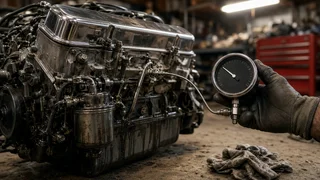
Chevy 350 Engine Oil Pressure
Oil pressure in a Chevy 350 is the blood pressure of the small-block's lubrication system. When the dash gauge reads low, drops at idle, or the warning light flickers, it signals that the oil film protecting bearings, cam lobes, and lifters may be weakening. Some variation is normal as engine speed and oil temperature change, but a sudden or consistent drop deserves attention. Understanding what the gauge means, what typical ranges look like, and which conditions change the reading helps separate harmless warm-idle behavior from wear, oil delivery problems, or a failing sending unit.
Essential answer
The essential answer to a Chevy 350 oil pressure question is that the engine's healthy range depends on engine speed, oil temperature, bearing clearance, and the gauge or sensor itself. A cold engine often shows higher pressure because the oil is thick and resists flow. Once the oil reaches operating temperature, pressure normally falls, especially at idle. A warm idle reading that drops near the low end of the gauge can still be acceptable if pressure rises promptly with rpm and the valvetrain stays quiet.
A reading of roughly ten pounds per square inch for every thousand rpm is a common general rule for older pushrod V8 engines, but it is not a factory specification for every 350 variant. The gauge reading is also not a direct measurement of oil flow. Worn main and rod bearings allow oil to escape more quickly, which lowers pressure, yet a clogged pickup screen, a stuck bypass valve, diluted oil, or a faulty sending unit can produce a misleadingly low or erratic indication before internal damage occurs.