350 engine oil pressure
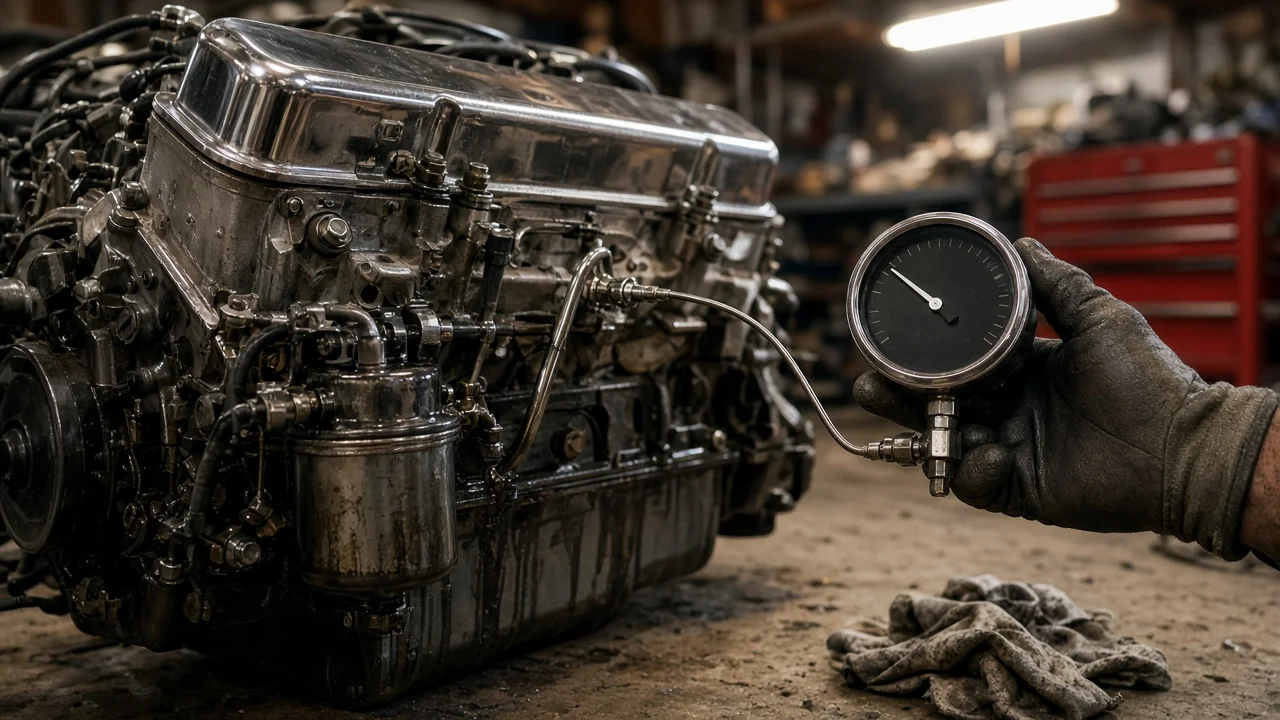
Oil pressure on a 350 engine is a live report about how well the lubrication system is feeding bearings, lifters, and valvetrain surfaces under load. The term most often points to classic small-block V8 applications, including Chevrolet and other pushrod designs, where a mechanical or electric sender translates gallery pressure into a gauge reading. Understanding the difference between a normal warm-idle value and a reading that falls under acceleration or sustained rpm helps an owner separate harmless gauge behavior from changes in bearing clearance or oil supply.
Essential answer
A 350 engine does not have one universal oil pressure specification, because the expected reading changes with oil temperature, pump condition, bearing clearance, and gauge accuracy. Broadly, a healthy warmed-up pushrod V8 may show noticeably lower pressure at idle than at highway rpm, and that spread is more useful than any single number. A drop that is new, sudden, or uneven usually deserves attention before the engine is held at high load.
The subject also includes how the lubrication circuit responds to viscosity and fill quantity. A higher-viscosity lubricant increases resistance to flow and can raise a gauge reading, while low oil level can uncover the pickup and cause unstable or falling pressure. Manufacturer approval, proper lubricant specification, and a correct dipstick level check are therefore part of interpreting the number rather than treating the gauge as a direct measure of engine health alone.