Check Engine Light with Loss of Power: What It Means and What to Do
The short answer
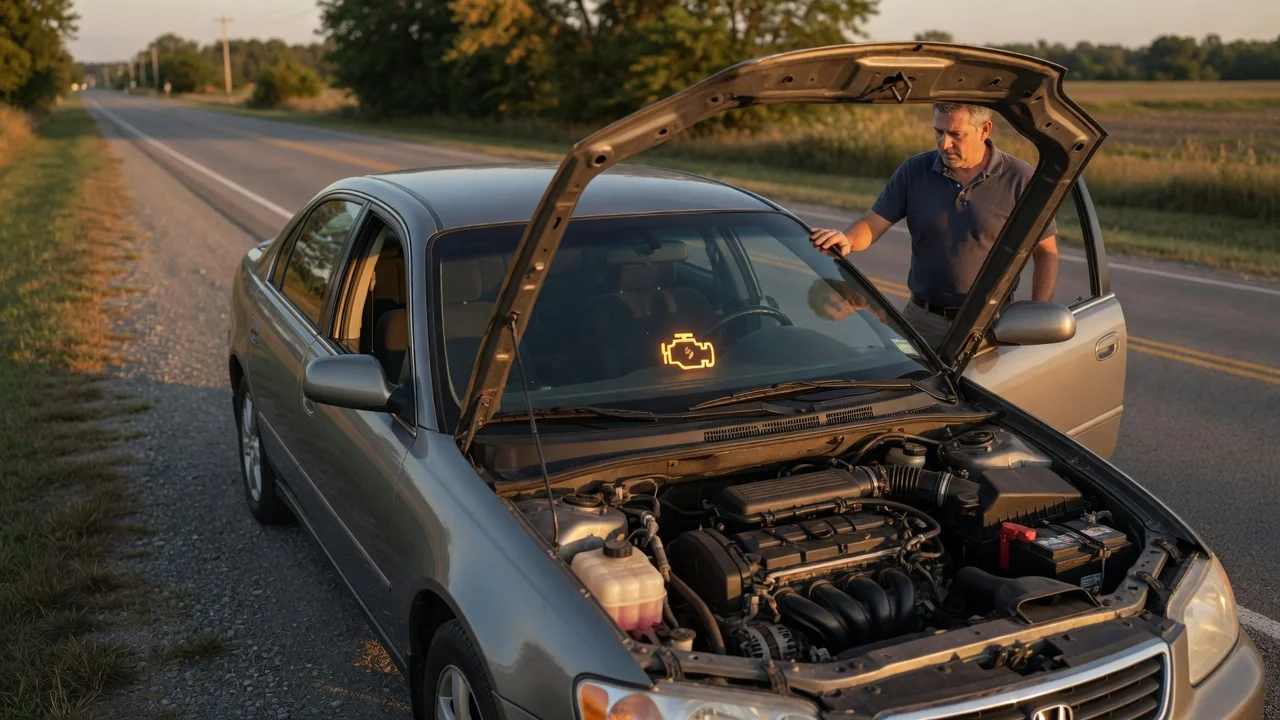
When the check engine light comes on and the vehicle loses power at the same time, the engine control module (the computer that manages the engine) has detected a fault that affects how the engine runs. That fault may be in combustion, air or fuel delivery, the exhaust, or a related system. On many modern vehicles, the computer also cuts engine output on purpose to limit damage. This protective state is often called limp mode or reduced-power mode. The two symptoms together are more serious than a check engine light alone, so have the cause diagnosed promptly rather than driving normally until the light goes out.
Flashing light versus steady light
How the light behaves changes the urgency. On OBD-II vehicles, a flashing check engine light generally signals an active, severe misfire. A misfire means one or more cylinders are not burning fuel properly, and unburned fuel can overheat and damage the catalytic converter. If the light is flashing and the engine is losing power, reduce speed and load, and stop as soon as it is safe. Driving on should be a last resort.
A steady light with noticeable power loss is usually less immediately damaging. It still means the fault is serious enough to change how the engine behaves. Drive gently and only as far as necessary, and have the stored trouble codes read soon.
Why this combination varies by vehicle
Exactly what triggers reduced power, how much power is withheld, and what the warning lights look like all depend on the manufacturer, model year, and powertrain. Gasoline, turbocharged, diesel, and hybrid systems each fail in different ways. Some vehicles show a separate reduced-power or powertrain warning message alongside the check engine light. Others rely on the check engine light alone. Your owner's manual is the authoritative source for what each warning means on your specific vehicle. This guide does not include model-specific data.
Common categories of cause
Without reading the stored codes, the cause can't be narrowed to a single part. Faults that commonly produce both symptoms fall into a few broad groups:
Misfires: worn spark plugs, failing ignition coils, or faulty fuel injectors that stop a cylinder from firing properly. Air intake and sensor faults: a failing mass airflow sensor, which measures the air entering the engine, or a fault in the electronic throttle body, which controls how much air the engine receives. Fuel delivery problems: a weak fuel pump, a clogged fuel filter, or incorrect fuel pressure that starves the engine under load. Exhaust restriction: a clogged catalytic converter that prevents the engine from expelling exhaust efficiently. Turbocharger and boost problems (turbocharged engines): boost leaks, wastegate faults, or turbo failure that cut available power. Diesel emissions systems (diesel engines): a blocked diesel particulate filter or a faulty exhaust gas recirculation (EGR) system, which can trigger reduced-power operation. Transmission faults: on some vehicles, a transmission problem can light the check engine lamp and limit power or hold the transmission in one gear.
What to do next
If power drops suddenly in traffic, signal, move to a safe place, and avoid hard acceleration. Note whether the light is flashing or steady, and whether any other warnings are lit, such as oil pressure or temperature. These change the urgency. If the light is flashing, the engine is running roughly, or you smell fuel or something burning, stop driving and arrange a tow. If the light is steady and the vehicle drives acceptably at gentle throttle, drive cautiously to a place where the codes can be read. Have the diagnostic trouble codes retrieved with an OBD-II scanner. Codes point to the system involved, but they are a starting point, not a final diagnosis. Don't clear the codes before diagnosis. Clearing them erases information a technician can use, and the fault will usually return.
Restarting the engine sometimes brings full power back temporarily, because some vehicles reset reduced-power mode on restart. That does not mean the fault is fixed. The underlying problem remains and the light will typically come back.
Limits of this guide
This article explains the general meaning of the symptoms and safe next steps. It does not include repair costs, failure rates, manufacturer-specific code definitions, or reduced-power thresholds for particular models, because no evidence on those points was available. Identifying the actual cause on your vehicle requires reading its stored codes and inspecting the systems they point to.