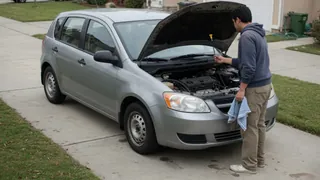
Change Engine Oil Warning: What It Means and What to Check

The short answer
On many vehicles, a "change engine oil" message is a maintenance reminder. It does not by itself mean the engine is damaged or about to fail. It usually comes from an oil life monitoring system or a service interval counter, and it tells you the oil is due, or nearly due, for replacement. The usual fix is an oil and filter change, followed by resetting the reminder.
There is an important exception. If the alert you see is a red oil can symbol, or a message about low oil pressure, treat it as a possible emergency rather than a reminder. The wording, symbols and colours differ by manufacturer, model year and market, so check the owner's manual for your specific vehicle to confirm which warning you have.
Maintenance reminder or oil pressure warning?
Most of the confusion comes from mixing up two different alerts.
Alert type | What it usually indicates | Typical presentation | Urgency; Oil change reminder | Oil life estimate or service interval has run out or is close | Text message such as "change engine oil" or "oil change due", or a wrench or service symbol, often amber or informational | Book an oil change soon; Oil pressure warning | The engine may not be getting enough oil pressure | Red oil can symbol or a "low oil pressure" message | Stop the engine safely as soon as possible; Low oil level warning (fitted on some vehicles) | The oil level sensor reads below its threshold | Often amber, may say "low oil level" or "check oil level" | Check the level and top up before further driving
Treat this table as a general pattern, not a rule for every car. Some vehicles combine these functions, and some lack a separate oil level sensor. The owner's manual is the authority on what each symbol and colour means on your vehicle.
Why the reminder appears
Vehicles generally decide when to show the reminder in one of two ways. The method depends on the manufacturer and model.
Fixed interval: the reminder appears after a set distance or time since the last reset, regardless of how the car was driven. Calculated oil life: an onboard system estimates how much the oil has degraded, using operating data such as engine revolutions, temperatures and trip patterns, and displays a percentage or a reminder when the estimate gets low. On most such systems this is an estimate based on operating conditions, not a direct chemical measurement of the oil.
Either way, the system only knows what it was last told. If the oil was changed but the reminder was not reset, the message can appear even though the oil is fresh. If the reminder was reset without an oil change, it may stay silent when the oil is actually overdue.
What could explain the warning, and what to check next
Work through these checks in order. Each result points toward a different explanation.
1) Identify exactly which warning is showing
Read the full message and note the symbol and its colour. A text reminder or service symbol points to scheduled maintenance. A red oil can or a low oil pressure message points to a possible lubrication problem, so go straight to the section on when to stop driving.
2) Check your service records
Find the date and odometer reading of the last oil change from receipts, a service book or a sticker from the workshop.
Last change was a long time or distance ago: the reminder is probably correct and the oil is due. Oil was changed recently: the reminder was probably not reset after the service. Resetting it is usually all that is needed. No records available: assume the oil is due unless you can confirm otherwise.
3) Check the oil level on the dipstick
If your engine has a dipstick, check the level with the car parked on level ground, following the manual's guidance on whether the engine should be warm or cold and how long to wait after switching off. Some newer vehicles have no dipstick and show oil level through the instrument cluster or infotainment menu instead.
Level between the marks: consistent with a routine reminder. Schedule the oil change. Level below the minimum mark: top up with the oil grade specified in the manual before driving further, then find out why the level dropped. Possible reasons include oil consumption or a leak. Level above the maximum mark: overfilling can also cause problems. Have the excess drained rather than driving a long distance. Oil looks milky or frothy, or smells of fuel: this can indicate contamination by coolant or fuel. It needs professional diagnosis, and an oil change alone will not fix it.
4) Look for signs of a leak
Check the ground where the car is usually parked for fresh drips, and look for oil residue around the drain plug and oil filter, especially if a recent service was done. A loose drain plug or poorly fitted filter can leak after a service. An active leak should be inspected before the car is used normally.
5) Consider a fault code or sensor issue
If the reminder keeps coming back right after a correct reset, or appears alongside other warnings, a scan tool may show stored fault codes. Treat a fault code as evidence to investigate, not as proof that a particular part has failed. A code pointing to an oil level or pressure sensor circuit could reflect a failed sensor, a wiring or connector problem, or a genuine oil level or pressure problem that the sensor is correctly reporting. Confirming which one requires checking the actual oil level and, where relevant, measuring oil pressure mechanically.
When to stop driving or seek professional diagnosis
Stop the engine as soon as it is safe to do so, and do not restart it until the cause is known, if any of the following apply.
A red oil can symbol or a low oil pressure message appears. The engine makes new knocking, ticking or grinding noises. The dipstick shows little or no oil. You see oil pouring or dripping heavily from under the car. The oil warning appears together with an overheating warning or smoke.
Running an engine without adequate oil pressure can cause serious internal damage quickly. If the level is normal but a pressure warning persists, have the vehicle towed or inspected rather than driven, because the problem may lie with the oil pump, pickup, filter or the sensor itself, and only proper testing can tell these apart.
Book a professional inspection, without necessarily stopping immediately, if the reminder will not reset, the oil level keeps dropping between changes, the oil looks contaminated, or a fault code relates to the oil system.
Resetting the reminder after an oil change
Reset procedures vary widely. Depending on the vehicle, the reset may be done through a menu in the instrument cluster or infotainment screen, through a sequence of button presses, pedal and ignition steps, or with a diagnostic tool. Use the procedure in the owner's manual for your model year. Reset the reminder only after the oil and filter have actually been changed. Otherwise the system will lose track of the real oil condition.
What this guide cannot tell you
No vehicle-specific data was available for this guide. It does not give oil change intervals, oil grades, capacities, warning thresholds or reset steps for any particular make, model, engine or market, because these vary and should not be guessed. For those details, rely on your owner's manual or a dealer or qualified technician who can look up your exact vehicle.