Certified Pre-Owned Subaru Outback: How to Find and Evaluate Offers
The short answer
A certified pre-owned (CPO) Subaru Outback is a used Outback that has passed the manufacturer's certification process and is sold with Subaru-backed coverage through an authorized Subaru retailer. To find a good one, limit your search to listings that are explicitly manufacturer-certified. Then confirm the certification in writing, check the vehicle's history and recall status, inspect and test-drive it, and compare the full out-the-door price against both other CPO Outbacks and comparable non-certified ones.
Two conditions change this answer. First, a car described as "certified" by an independent lot or dealer group is not the same as a manufacturer CPO vehicle, and its coverage depends entirely on that seller. Second, CPO program rules differ by country and change over time. These rules include age and mileage eligibility, the number of inspection points, warranty length, deductibles and roadside assistance. No current program terms were supplied for this guide, so confirm the specifics with Subaru or the selling retailer for your market before relying on them.
Key terms
Manufacturer CPO: a used vehicle certified under the carmaker's own program, with coverage backed by the manufacturer rather than only by the dealer. Dealer-certified: a seller's own inspection or warranty package. Its value depends on that seller's written terms. In-service date: the date the car was first sold or put into use. CPO coverage periods are commonly measured from this date rather than from the date you buy, so the remaining coverage on an older car can be short. VIN: the 17-character vehicle identification number used to tie paperwork, history reports and recall records to one specific car. Out-the-door price: the total you pay, including the vehicle price, fees, taxes and any add-ons.
How to tell a genuine Subaru CPO Outback from a look-alike
Many listings use the word "certified" loosely. These cues help you separate a manufacturer-certified Outback from a car that only sounds certified.
Cue | Manufacturer CPO (typical) | Look-alike "certified" listing; Seller | Authorized Subaru retailer | Independent lot, other-brand dealer or online reseller; Naming | Uses Subaru's own certified pre-owned program name | "Dealer certified," "inspected," or a store-branded program; Coverage backer | Subaru, under published program terms | The dealer or a third-party warranty company; Paperwork | Completed manufacturer inspection checklist and program warranty documents tied to the VIN | Generic checklist or a separately sold service contract
The best way to resolve an uncertain listing is to ask the retailer for the completed certification inspection checklist and the warranty documentation, both showing the car's VIN. Then confirm the VIN matches the car. On most vehicles you can read the VIN through the windshield at the lower driver's-side corner of the dashboard. It also appears on a label in the driver's door jamb. Exact label locations can vary by model year and market, so check your owner's manual if you cannot find it.
If the seller cannot produce manufacturer certification documents, treat the car as a regular used vehicle and judge its warranty on its own written terms.
Where to find CPO Outback listings
Subaru's official certified pre-owned search for your country, if one is offered there. Inventory pages of authorized Subaru retailers in your region. Widening the search radius often turns up more trims and model years. General used-car marketplaces, filtered for manufacturer-certified vehicles. Verify each result with the steps above, because marketplace badges may not distinguish manufacturer and dealer certification.
Step-by-step: evaluating a CPO Outback offer
Before you start, gather the listing details and the car's VIN. Have a list of the trims and features you need, a budget based on out-the-door price, and if possible a financing pre-approval to compare against dealer offers.
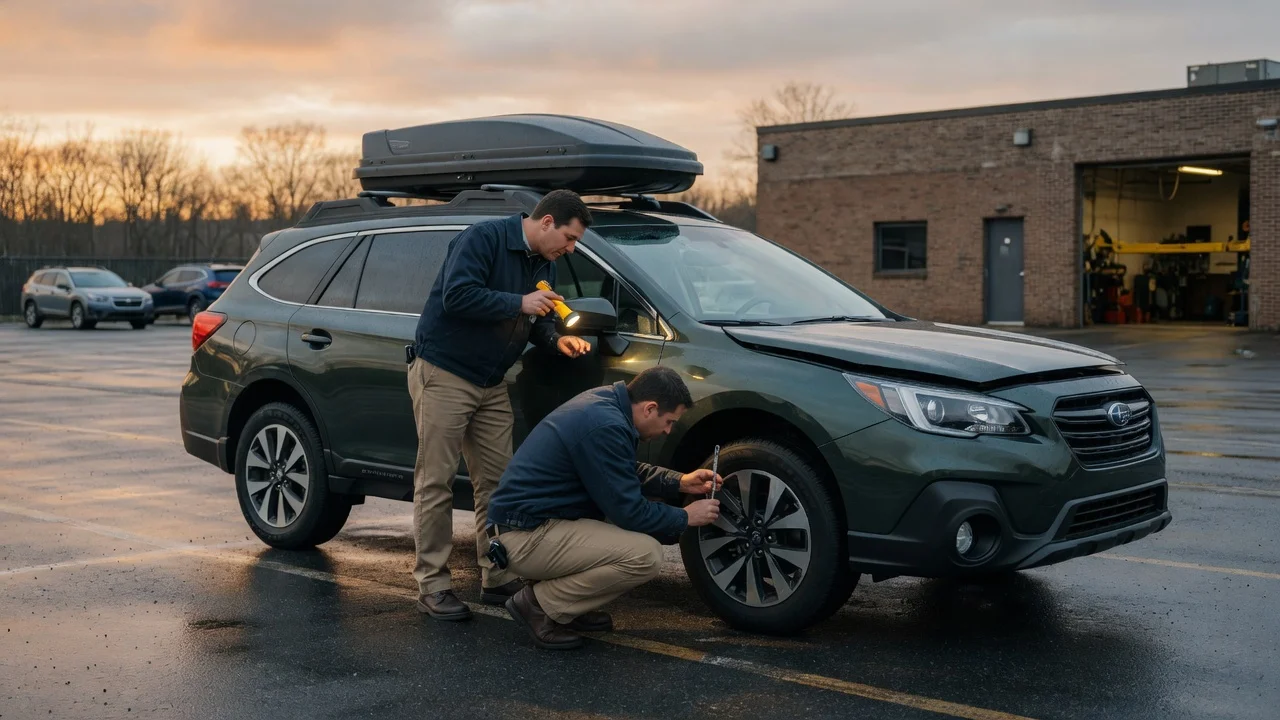
1) Confirm the certification. Get the completed inspection checklist and program warranty documents showing the car's VIN. Stop if the seller will not provide them or the VIN does not match the car. 2) Work out the remaining coverage. Ask for the original in-service date and current mileage, then calculate how much of each coverage period is left. Ask what the warranty covers, whether there is a deductible, whether coverage transfers to a later owner, and whether roadside assistance is included. 3) Review the vehicle history. Read the history report for accident records, title problems such as salvage or flood brands, ownership count, and use type such as rental or fleet. Stop and reconsider if the title is branded or the report conflicts with what the seller told you. 4) Check open recalls. Run the VIN through your national vehicle-safety authority's recall lookup (in the US, NHTSA) or ask a Subaru retailer. Confirm in writing that any open recalls have been completed. 5) Request service records. Look for regular oil changes and scheduled maintenance at the intervals in the owner's manual for that model year. Many Outbacks use a continuously variable transmission (CVT), an automatic transmission that uses a belt-and-pulley system instead of fixed gears. If the car has one, ask whether its fluid has been serviced and compare that with Subaru's schedule for that year and powertrain. 6) Inspect the car in daylight. Look for uneven panel gaps or paint mismatch, which can suggest past repairs. Also check tire wear across the tread, dashboard warning lights after start-up, and signs of fluid leaks under the car. Check that the features you are paying for actually work, such as infotainment, driver-assistance systems and climate controls. A warning light that stays on is a stop condition until it has been diagnosed. 7) Test-drive under varied conditions. Include low-speed maneuvering, steady highway speed and moderate braking, only where it is safe and legal to do so. Note any shudder, hesitation, grinding, pulling to one side, or unusual noises from the transmission or wheels. 8) Consider an independent pre-purchase inspection. Even with certification, a qualified mechanic you choose can give you a second opinion. Ask the seller whether you can take the car to one. A refusal is a meaningful warning sign. 9) Compare the full offer. Get a written out-the-door price. Compare it against other CPO Outbacks of similar year, trim and mileage, and against non-certified equivalents, to judge what the certification is costing you. Compare any manufacturer or dealer CPO financing rate against your pre-approval. Question add-ons such as extra service contracts, protection packages or etching, and decline any you do not want. 10) Check the contract before signing. Make sure the VIN, price, fees, certification status and any promised repairs or recall work appear in the written agreement.
Completion check: the offer is ready to accept when you have written manufacturer certification tied to the VIN, a clear understanding of the remaining coverage, a clean or explained history report, no open recalls, no unresolved warning lights or drive issues, and an itemized out-the-door price that matches the contract.
Leave diagnosis or repair of any fault you find to a qualified technician. This includes warning lights, transmission behavior, brake or steering concerns and driver-assistance faults. Have it done before purchase, or have the repair documented as a condition of the sale.
Gaps to close before you buy
This guide does not state Subaru's current CPO eligibility limits, inspection-point count, warranty terms, deductible, roadside assistance or financing rates, because no verified program documents were supplied. These details vary by market and can change from year to year. Get the current program terms in writing from Subaru or the selling retailer, and check model-year-specific maintenance intervals and recalls for the exact Outback you are considering.