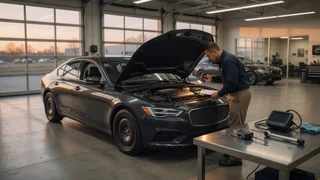
Certified Japanese Autos: What Certification Means and How It Differs
A certified Japanese auto is usually a used vehicle from a Japanese brand, such as Toyota, Lexus, Honda, Acura, Nissan, Infiniti, Mazda, Subaru or Mitsubishi, that has been inspected, reconditioned and sold with extra coverage under a certified pre-owned (CPO) program. The key qualification is who does the certifying. A manufacturer-backed program follows rules set by the automaker. A dealer's or third party's own certification follows whatever standards that seller chooses. The word certified alone does not tell you which one you are getting.
The short answer
In the US market, the most meaningful version of a certified Japanese car is a manufacturer CPO vehicle sold through a franchised dealer of that brand. These programs generally combine eligibility limits on age and mileage, a multi-point inspection, reconditioning to the program's standard, a vehicle history check and a warranty that extends beyond what an ordinary used car carries. The exact terms differ by brand, sometimes by program tier, and they change over time, so the current program details for the specific brand matter more than any general summary.
The phrase is also used in other ways. Some independent dealers and repair shops use "certified" or even "Certified Japanese Auto" in their business names or listings. That can describe a seller's own inspection or a specialty focus on Japanese makes, but it is not the same thing as automaker certification unless the seller is an authorized dealer offering the brand's official program.
What "Japanese" means in this context
Japanese refers to the brand's origin, not necessarily where the car was built. Many Japanese-brand vehicles sold in the US are assembled in North America. For certification purposes, assembly location generally does not matter; eligibility depends on the brand's program rules and the individual vehicle's condition and history.
This is different from JDM (Japanese Domestic Market) imports, which are vehicles originally built and sold for Japan's home market. In the US, those typically arrive through private importers under the rule that allows vehicles 25 years or older to be imported without meeting current federal safety standards. JDM imports are not covered by US manufacturer CPO programs, and any "certified" label on one reflects the importer's or seller's own process.
Manufacturer CPO vs. dealer-certified vs. standard used
Type | Who sets the standard | Typical coverage | Where it is sold | Main caveat; Manufacturer certified pre-owned | The automaker | Program warranty backed by the manufacturer, often with added benefits such as roadside assistance | Franchised dealers of that brand | Terms vary by brand, tier and model year; price is usually higher than a comparable non-certified car; Dealer or third-party certified | The individual dealer or a third-party company | Whatever the seller or warranty provider offers, sometimes a limited or short-term warranty | Any dealer, including independent lots | Inspection depth and coverage can range from thorough to minimal; read the contract; Standard used | No certification standard | Any remaining factory warranty, plus whatever state law requires; often sold as-is | Any dealer or private seller | Condition depends entirely on the individual car and your own inspection
What manufacturer certification usually includes
Japanese brands structure their programs differently, but most share a common set of elements. Treat the list below as what to look for rather than a guarantee of what every program contains.
Eligibility limits: a maximum vehicle age (measured by model year) and a maximum odometer reading. Some brands offer more than one tier, with looser limits and lighter coverage on the lower tier. Multi-point inspection: a checklist covering mechanical, electrical, body and interior items, with parts repaired or replaced if they fail the program standard. Vehicle history report: a check for reported accidents, title problems such as salvage or flood branding, and ownership history. Extended warranty: commonly a powertrain warranty and, in many programs, a comprehensive limited warranty for a shorter period. Coverage length, deductibles and transferability differ by brand. Extra benefits: some programs add roadside assistance, trip-interruption coverage, a short exchange period or complimentary maintenance. These are program-specific. Outstanding recalls: certified vehicles are generally expected to have open safety recalls addressed before sale, but confirming this for the specific vehicle is worthwhile.
How certification affects price and value
A certified Japanese car usually costs more than a non-certified example of the same model year, trim and mileage. The premium pays for reconditioning, the inspection and the manufacturer-backed warranty. Whether that is good value depends on how much the added coverage is worth to you, how long you plan to keep the car and how close the vehicle is to the end of its original factory warranty.
Japanese brands have a general reputation for reliability, and some buyers question whether certification is necessary. That reasoning has limits. Reliability reputations are averages across many vehicles; an individual used car can still have been neglected, damaged or poorly repaired. Certification mainly reduces uncertainty about one specific car and transfers some repair risk to the manufacturer for a set period. It does not change how a model was engineered.
Comparing certified Japanese vehicles
Once you know a vehicle is genuinely certified, compare it on the same factors you would use for any car. Certification makes cars easier to trust, not interchangeable.
Model year and generation: a newer model year may fall within a redesign with different engines, safety technology or infotainment. Check which generation the car belongs to. Market segment and body configuration: compact sedan, midsize SUV, minivan, pickup and so on. Program eligibility usually applies across a brand's lineup, but availability of certified examples varies by segment. Powertrain options: gasoline, hybrid, plug-in hybrid or electric, plus drivetrain (front-wheel, rear-wheel or all-wheel drive). For hybrid and electric models, ask how the high-voltage battery is covered; it may fall under a separate factory warranty rather than the CPO warranty. Equipment level: trim determines features such as driver-assistance systems, upholstery and audio. Two certified cars of the same model can differ substantially here. Regional availability: certified inventory depends on what was sold and leased locally. All-wheel-drive models may be more common in some regions than others, which affects selection and pricing.
Questions to ask before buying
Is this certified under the manufacturer's official program, or is it the dealer's own certification? Which program tier is it, and what exactly does the warranty cover, for how long and from what starting date and mileage? Is there a deductible per repair visit, and is the warranty transferable if I sell the car? Can I see the completed inspection checklist and a list of reconditioning work performed? Can I see the vehicle history report, and does it show any reported accidents or title issues? Have all open recalls been completed? Are high-voltage hybrid or EV battery components covered, and under which warranty? Can I have an independent mechanic inspect the car before purchase?
An independent pre-purchase inspection is still worthwhile, even on a manufacturer-certified car. Inspections are performed by people, and a second set of eyes can catch issues the first one missed or judged acceptable.
Bottom line
A certified Japanese auto can be a sensible middle ground between buying new and buying an ordinary used car, but only if you know what kind of certification it carries. Manufacturer CPO programs from Japanese brands offer defined inspection standards and manufacturer-backed coverage, while dealer or third-party certification can mean much less. Confirm the program, read the warranty terms for the specific brand and tier, then compare vehicles on model year, powertrain, equipment level and condition as you would any other car.