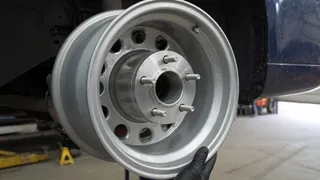
Center bore too big: hub centric rings
A wheel with a center bore larger than the vehicle's hub pilot can still be installed, but the gap at the hub may allow the wheel to center on the lug studs instead of the hub flange. This condition can produce vibration and uneven loading because the mounting surface and wheel geometry are not positively located. Hub centric rings, also called wheel center bore adapters or spacers, are used to fill that radial clearance. They help restore the mechanical fit between the wheel and hub and reduce the chance of runout-related symptoms.
Essential answer
When the wheel center bore is too big for the hub pilot, the wheel does not fit snugly over the raised center flange of the bearing assembly. The lug nuts hold the wheel against the mounting surface, but without a close fit tolerance at the hub, the wheel can shift very slightly as it rotates. A hub centric ring bridges the measured difference between the larger wheel bore and the smaller axle hub. It does not carry vehicle weight, but it provides radial location so the wheel runs true.
A wheel center bore adapter is generally a machined ring pressed or fitted into the back of the wheel before mounting. If the width of the gap is substantial, the part is sometimes described as a wheel center bore spacer. The ring takes up the void so the wheel centers on the hub pilot rather than on the tapered lug seat alone. This can reduce the vibration that comes from a small amount of eccentric mounting and can keep the studs from experiencing repeated side load.