What Is a Hub-Centric Wheel? Center Bore, Hub Support and Fit Explained
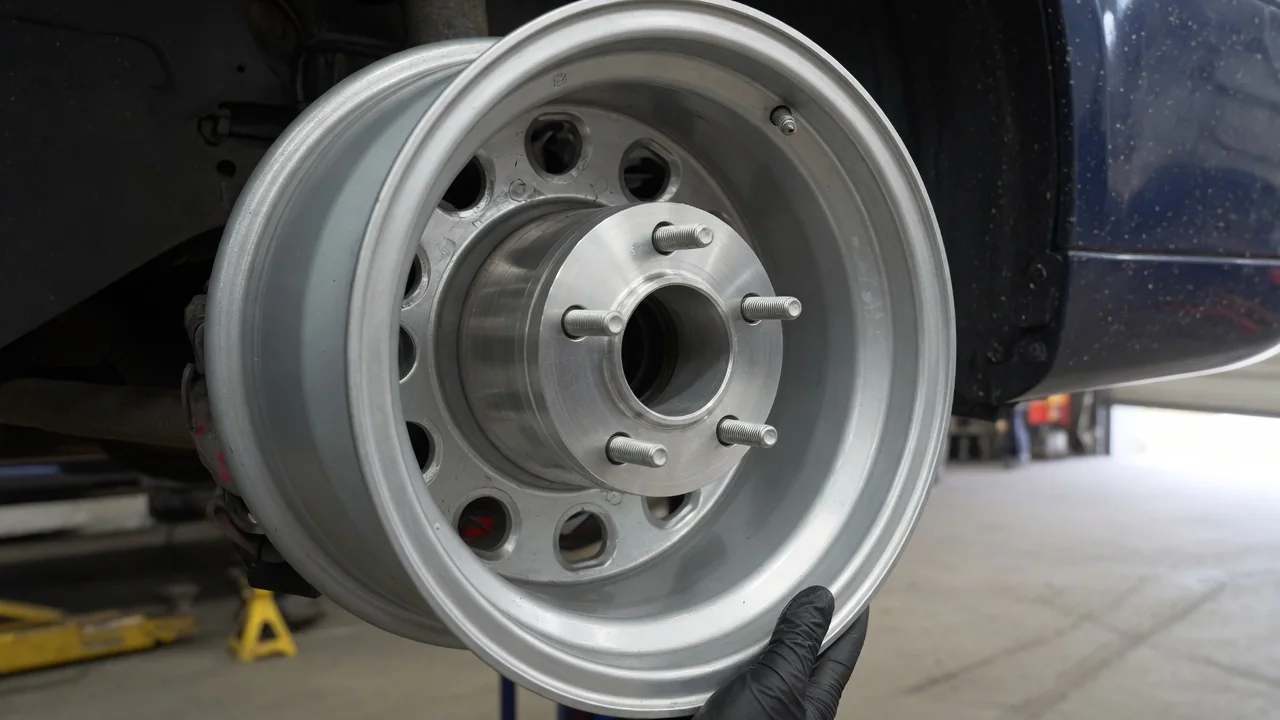
A hub-centric wheel has a center bore sized to fit closely over the raised pilot, or centering flange, on the vehicle's hub. That close fit centers the wheel on the hub before the lug nuts or bolts are tightened. Put simply, the hub centric wheel meaning is a wheel centered by the hub itself rather than by the fasteners alone. The center bore, the role of hub support, and what correct fit looks like explain why the design matters.
Center bore
The center bore is the large opening in the middle of a wheel. Every wheel has one, because the bore must clear the hub so the wheel's mounting face can sit flat against the hub face. On a hub-centric wheel, the bore is machined to closely match the diameter of the hub pilot. It leaves only enough clearance for the wheel to slide on and off. On a lug-centric wheel, the bore is larger than the pilot. That wheel is centered instead by the tapered or rounded seats of the lug nuts or bolts as they engage matching seats in the wheel.
Center bore is measured as a diameter, and pilot diameters differ between vehicles and manufacturers. Because of this, you cannot judge a wheel's bore from its bolt pattern alone. Two vehicles can share the same bolt pattern while using different pilot sizes. Original equipment wheels are generally made with a bore that matches the hub they were designed for. Many aftermarket wheels have a deliberately larger bore so a single design can fit several vehicles, and an adapter ring closes the gap. The back of the bore is often chamfered or relieved so it clears the curved edge where the pilot meets the hub face.
Hub support
Hub support is often misunderstood. The pilot positions the wheel radially, so the wheel's axis of rotation lines up with the hub's axis. It is not usually intended to carry the vehicle's weight by itself. Tightening the fasteners to specification clamps the wheel's mounting face against the hub face. Friction between those clamped surfaces carries most of the vertical load, as well as the forces from braking, acceleration and cornering. The hub-centric fit locates the wheel; the clamp load holds it.
Accurate centering matters because a wheel mounted even slightly off-center does not rotate true. That wobble, called runout, can show up as vibration through the steering wheel, seat or floor, often becoming more noticeable at highway speeds. A close pilot fit also helps during installation. The wheel hangs on the pilot while the fasteners are started, which reduces the chance of it being pulled tight in a slightly shifted position. With a lug-centric design, centering depends on every fastener seating evenly, which is one reason the tightening sequence matters.
None of this makes lug-centric wheels inherently unsafe. Many vehicles and wheels are engineered to center on their fastener seats, and they work as designed when the correct hardware is used. What matters is that the wheel, hub and fasteners all use the centering method the combination was designed for.
Fit
A correct hub-centric fit means the bore slides over the pilot with minimal play. The wheel then sits fully flat against the hub face without touching anything else first. If the bore is smaller than the pilot, the wheel cannot seat properly and should not be installed. Forcing or hammering it on risks damaging the wheel or hub and leaves it unevenly clamped. If the bore is larger than the pilot, the wheel effectively becomes lug-centric unless the gap is filled.
Hub-centric rings fill that gap. A ring's outer diameter matches the wheel's bore and its inner diameter matches the hub pilot, so both dimensions must be correct for the specific wheel and vehicle. Rings are commonly made of plastic or aluminum. A properly fitted ring seats fully inside the bore, still lets the wheel sit flat against the hub face, and makes centering during installation easier. It does not replace correct fastener torque. A ring that is the wrong size, cracked or left out either returns the wheel to lug-centric behavior or prevents it from seating.
Center bore is only one part of wheel fitment. Bolt pattern, offset, lug seat shape, thread size, and clearance to brake and suspension components must also suit the vehicle. The lug seat deserves particular attention. Conical, spherical and flat seats are not interchangeable, and the wrong type can prevent proper clamping however well the bore fits. If you use wheel spacers, choose hub-centric spacers. They have their own pilot, so the wheel stays centered on the spacer instead of relying on the fasteners alone.
Practical implications and limits
If you keep the original wheels, a hub-centric design mostly asks for clean mating surfaces. Rust, dirt or flaking corrosion on the hub face or pilot can stop the wheel from sliding fully onto the pilot or sitting flat. That can cause vibration, or let the fasteners lose clamping force over time. The practical steps are simple. Clean these surfaces before mounting. Tighten the fasteners in the pattern and to the torque given in the vehicle's service information. Recheck torque after the distance the service information specifies, if it gives one. Whether any lubricant may be used on the pilot or threads varies by vehicle, so follow the manual rather than general advice.
There are also limits to what a hub-centric fit can do. It cannot correct a bent wheel, an unbalanced or out-of-round tire, worn suspension or steering parts, or a damaged hub bearing. Any of these can cause vibration similar to an off-center wheel. Nor does it compensate for under-tightened or over-tightened fasteners, which can still distort components or allow the wheel to loosen. If vibration persists after the wheels are mounted correctly, the cause usually lies elsewhere and needs proper diagnosis.
When you choose replacement or aftermarket wheels, check the hub pilot diameter in the vehicle documentation and the center bore in the wheel maker's data, rather than assuming they match. If rings are required, size them for both the exact wheel and the exact hub. These dimensions vary from vehicle to vehicle, so general guidance can explain how hub-centric wheels work but cannot replace the specifications for a particular car.