Caravan Fire: What to Do If Your Travel Trailer Catches Fire
The essential answer
If a caravan catches fire, your first priority is getting every person and pet out and away from it, then calling 911. The trailer and its contents come second. A caravan, also called a travel trailer in the US, is a living space built from lightweight, often combustible materials, and it usually carries propane. Fire and smoke can spread through it quickly, so trying to save belongings or fight anything beyond a very small, just-started fire puts lives at risk.
This guide covers towed caravans and travel trailers, both parked at a campsite and on the road. Much of it also applies to motorhomes, but a motorhome adds its own engine and fuel system. The advice here is general safety guidance. It is not specific to any manufacturer, model year or equipment package, and your trailer's owner's manual and local fire service guidance take priority.
How a caravan fire differs from a car fire
People may be inside, and possibly asleep, so early warning from a working smoke alarm and a known escape route matter more than in a car. Most caravans carry propane (LP gas) for cooking, heating and refrigeration, and the cylinders and lines add an explosion and fire-spread hazard. Interiors contain furnishings, bedding, fabrics and cabinetry that can burn fast and give off toxic smoke. Escape options are limited to the entry door and any emergency exit window. That is why knowing where the exit window is and how it opens matters before you ever need it. If the fire starts while towing, the tow vehicle is attached and close by, so the fire can threaten both vehicles and the occupants of the tow vehicle.
If the fire starts while the caravan is parked
Shout a warning and get everyone out immediately. Stay low if there is smoke, and close the door behind you if you can do so without delay, since this can slow the spread. Move well away, preferably upwind, and keep others back. Call 911 and give your location as precisely as you can, including the campsite name and pitch or site number if you have them. Tell responders that the caravan has propane on board, and mention any other hazards you know about, such as spare fuel or a large battery system. Shut off the propane at the cylinder valve only if you can reach it safely, without going near the fire. Do not go back inside for belongings, pets that have not come out, or anything else. Tell firefighters if anyone or any animal is unaccounted for.
If the fire starts while towing
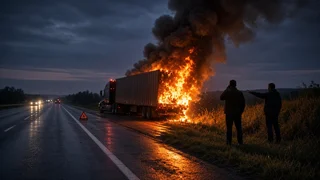
Signal, slow down and pull over to a safe spot as soon as you can, clear of traffic and away from dry grass, buildings or other vehicles where practical. Turn off the tow vehicle's engine and get all occupants out and well away from both vehicles, on the side away from traffic. Call 911 and give your road, direction of travel and the nearest landmark, exit or mile marker. Try to uncouple the caravan only if the fire is clearly small and contained and doing so poses no risk to you. In most cases, distance is safer than an attempt to separate the vehicles. Warn responders about propane and any other fuel or battery hazards.
Should you use a fire extinguisher?
A portable extinguisher is suited only to a small fire that has just started, such as a pan fire on the stove, and only when you have a clear exit behind you and everyone else is already out. Use one rated for the type of fire involved and follow the instructions on its label. If the fire is spreading, has reached furnishings or walls, involves the propane system, or the smoke is building, stop and leave. Never put water on a cooking oil fire.
After the fire is out
Do not re-enter or tow the caravan until the fire service says it is safe. A fire can rekindle, and the structure, wiring, gas system and running gear may be damaged in ways that are not visible. Seek medical attention for anyone who breathed in smoke, even if they seem fine. Photograph the damage once it is safe, and contact your insurer before you arrange repairs or disposal. The documents and steps they require depend on your policy.
Gaps in this guidance
No model-specific data, test findings or statistics were available for this article, so it gives no figures for safe distances, extinguisher sizes, burn times or common causes by trailer type. For those details, rely on your caravan's owner's manual, the labeling on your extinguisher and propane equipment, and guidance from your local fire department.