Car won't start after replacing serpentine belt

A no-start condition immediately after a serpentine belt replacement usually means the repair disturbed something unrelated to the belt's normal accessory-drive job. The belt itself cannot prevent cranking unless it is tangled with the crank pulley or another rotating component. More often, the cause is a weakened battery, a connector that was moved during access, or an electrical issue that happened to appear at the same time. This article explains how to separate harmless coincidence from a real installation error and what checks help identify why the vehicle will not start.
Direct answer
When a car won't start after replacing a serpentine belt, the first step is to identify whether the engine cranks normally, cranks slowly, or stays silent. A normal crank points away from the starting circuit and toward fuel delivery or an unrelated sensor problem. A slow or absent crank usually indicates a low battery state of charge, a poor connection, or a starter circuit issue. Listen carefully because that distinction determines the next diagnostic path and prevents unnecessary part replacement.
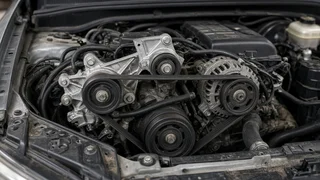
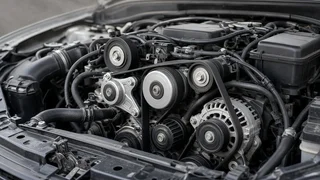
Inspect the area around the crank pulley and belt routing before assuming a major fault. A belt installed off by one groove can bind or interfere with the harmonic balancer, while a tool or connector left loose near the rotating assembly may block movement. If the cranking speed is steady and the engine still does not fire, treat the belt replacement as a likely coincidence and continue with the usual no-start diagnostic checks rather than condemning the new belt.