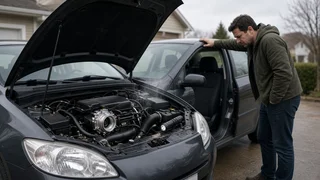
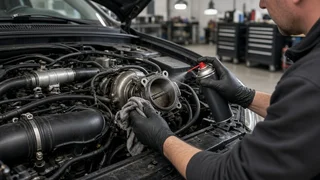
Car won't start after cleaning the throttle body

A no-start condition immediately after throttle body service can feel like a step backward, but the sequence of events usually points to a small number of service-related causes. When the intake passage is opened, cleaned, or disturbed, the engine control system may be reacting to a new airflow signal, an altered throttle plate position, or a temporary fueling correction that no longer matches the actual air entering the engine. Understanding why the vehicle cranks but will not fire helps you separate a simple relearn issue from an actual fault introduced during the cleaning process.
Direct answer
The most common reason a car will not start after cleaning the throttle body is a disruption to the air-fuel relationship the powertrain control module expects at key-on. Cleaning removes the carbon and varnish that had gradually closed off the idle air path, and the throttle plate may now rest in a slightly different position. If the position sensor sends an unexpected control signal, the computer can command a fuel mixture that is too lean or too rich during cranking, preventing a clean start even though the engine has spark and fuel.
A second frequent cause is introduced air leakage. Removing or repositioning intake ductwork can leave a hose loose, a gasket misaligned, or a vacuum line cracked, allowing unmetered air to enter behind the throttle body. The mass airflow or manifold pressure reading then disagrees with the throttle position sensor, and the engine may flood or starve during the first start attempt. Before replacing parts, confirm that the intake passage is sealed, the electrical connector is dry and seated, and the ignition is cycled without extended cranking so the idle adaptation can recover.