Car Make vs Model: What Each Term Means and How to Tell Them Apart
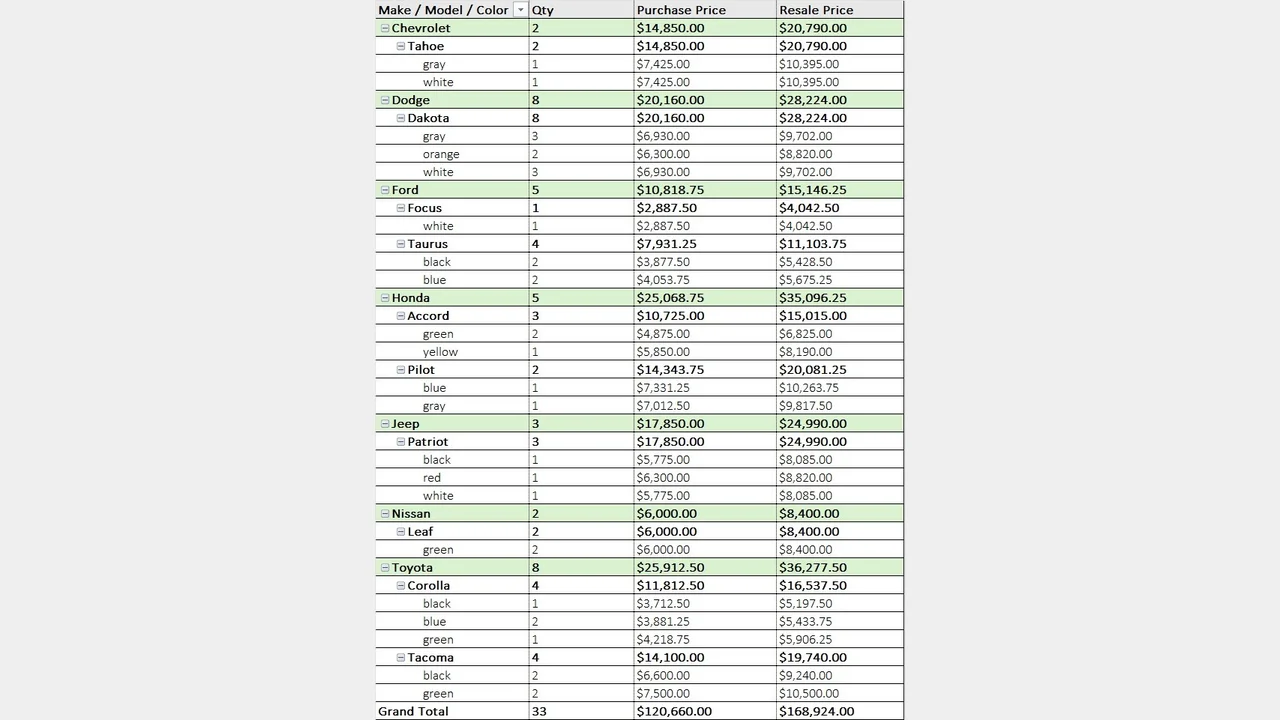
A car's make is the brand name of the company that builds and sells it, such as Toyota, Ford, Honda or Chevrolet. The model is the name of a specific product line within that brand, such as the Corolla, Mustang, Civic or Malibu. Put simply, the make tells you who built the car, and the model tells you which car it is. A single make offers many models, but each model belongs to one make. One qualification matters: make and model alone rarely identify a car precisely enough for buying parts, comparing prices or checking specifications. A Honda Civic from one decade can differ substantially from a Honda Civic from another, and two Civics from the same year can have different engines, body styles and equipment. For those tasks you also need the model year, and often the trim level, generation and powertrain.
What "car make" means
In everyday and official use, the make is the marque or brand name shown on the vehicle and its paperwork. Registration forms, insurance applications, vehicle history reports and loan documents typically ask for make first, then model, then year.
The make is not always the same as the parent company. Large automotive groups often sell vehicles under several brands, and each brand counts as a separate make. For example, General Motors sells vehicles under the Chevrolet, GMC, Buick and Cadillac names; on a registration form, the make would be Chevrolet or Cadillac, not General Motors. Similarly, Toyota and Lexus are separate makes from the same parent company, as are Honda and Acura, and Hyundai, Kia and Genesis are separate makes within one group.
What "car model" means
The model is the product name a manufacturer gives to a particular vehicle line. It usually appears as a badge on the rear of the car and in the vehicle's documentation. Model names can be words (Camry, Explorer, Accord), alphanumeric codes (common with some luxury brands), or a combination.
A model name can stay in use for decades while the vehicle underneath it changes completely. That is why the model name is a starting point for identification rather than the full description.
Car model vs make at a glance
Term | What it identifies | Example; Make | The brand that builds and sells the vehicle | Honda; Model | The specific product line within that brand | Civic; Model year | The year the manufacturer assigns to that version for sale | A particular year's Civic; Generation | A major redesign cycle of the model, often lasting several years | One redesign of the Civic versus the next; Body style | The physical shape of the vehicle | Sedan, hatchback or coupe; Trim level | The equipment and feature package within a model | Base, mid-level or top trim; Powertrain variant | The engine, transmission and drive configuration | Different engine options within one model; Market specification | Version built for a particular country or region | US-market versus other-market versions
The other details that complete a vehicle's identity
Because the make and model are broad labels, several additional terms narrow a car down to an exact version. Not every task needs all of them, but knowing what each one means helps you answer questions from dealers, insurers and parts suppliers accurately.
Model year
The model year is the year the manufacturer designates for a vehicle version. It does not always match the calendar year the car was built; a car can go on sale before the calendar year that matches its model year. When a form asks for "year," it almost always means model year. On US-market vehicles, the model year is encoded in the 10th character of the vehicle identification number (VIN).
Model generation
A generation is a period during which a model shares the same basic design, platform and styling. When a manufacturer releases an all-new version of a model, a new generation begins. Smaller updates within a generation, often called a facelift or refresh, may change styling or features without a full redesign. Generation matters most when comparing used cars, because parts, reliability patterns and features often follow generation boundaries rather than individual years.
Body style
Body style describes the vehicle's shape. Some compact models have been offered in more than one body style under the same name, such as a sedan with a separate trunk, a hatchback with a rear liftgate, or a two-door coupe. These versions share a make and model but can differ in cargo space, rear seating and certain body parts.
Trim level
The trim level is the specific equipment package within a model and year. Trims are usually identified by letters or names after the model, and higher trims typically add features such as upgraded wheels, interior materials, technology or driver-assistance systems. Trim affects price and resale value, and sometimes the engine or suspension as well.
Powertrain variant
The powertrain covers the engine (or electric motor), transmission and drive layout, such as front-wheel drive or all-wheel drive. One model in one year can be sold with several powertrain options, including hybrid versions. Powertrain is often the most important detail when ordering maintenance parts like filters, belts or spark plugs.
Market specification
Vehicles sold under the same make and model name can be built to different specifications for different countries, reflecting local safety rules, emissions standards and buyer preferences. A model sold in the US may differ in engine choices or equipment from a version with the same name sold elsewhere, so specifications from another market do not necessarily apply to a US car.
How to find your car's make and model
Look at the badges: the make's logo or name is usually on the front grille and rear, and the model name typically appears on the rear of the car. Check your registration or title: these documents list make, model and model year. Check your insurance card or policy documents, which usually show the same details. Read the VIN: in the standard 17-character VIN, the first three characters identify the manufacturer, and a free VIN decoder can return the make, model, year and often the engine and trim. Look in the owner's manual, which normally names the model and covers its available versions.
How much detail you need, by situation
Which identifiers you should provide depends on what you are doing. Giving too little detail is the most common cause of wrong parts, inaccurate quotes and mismatched specifications.
Situation | What to provide; Casual conversation or describing your car | Make and model; Registration, insurance or a loan application | Make, model and model year; the VIN is often required as well; Getting a trade-in or used-car value estimate | Make, model, year, trim, mileage and condition; Ordering parts or fluids | Make, model, year, engine or powertrain, and ideally the VIN; Comparing used cars | Make, model, generation, trim and powertrain, plus each car's history; Looking up specifications or recalls | Make, model, year and trim; use the VIN for recall checks on a specific vehicle
Common mix-ups to avoid
Listing the parent company as the make: write the brand on the car, such as Lexus or Cadillac, rather than the corporation that owns it. Treating a trim name as the model: a trim designation follows the model name and describes a version of it, not a separate model. Assuming the same model name means the same car: a model from different generations can share little beyond its name. Confusing model year with build date: the build date is usually printed on a label in the driver's door jamb and can fall in a different calendar year than the model year. Applying specifications from another market: a same-named model sold abroad may not match the US version.
The short version
The make is the brand and the model is the specific vehicle within that brand, so "Toyota Corolla" is a make followed by a model. For everyday purposes those two names are enough. When money, parts or specifications are involved, add the model year and, where relevant, the trim, generation and powertrain, or simply use the VIN, which captures all of them in one code.