Car Maintenance Checklist and Routine Service Tips
Routine car maintenance means inspecting fluids, tires, brakes, filters, belts, the battery and lights at regular intervals, and replacing parts before they wear out. The schedule in your owner's manual is the authority for your specific vehicle. This guide gives a general checklist you can use alongside it, explains which tasks matter most, and offers service tips that apply to most cars, trucks and SUVs on US roads.
The Short Answer: Follow the Manufacturer's Schedule
The single most useful car service tip is to follow the maintenance schedule your vehicle's manufacturer publishes. It is usually in the owner's manual, a separate maintenance booklet, or the vehicle's onboard service reminder. Intervals vary by model year, engine, transmission type, and whether the car is gasoline, diesel, hybrid or fully electric. A general checklist cannot replace that schedule because service intervals differ widely from one vehicle to another.
Most schedules also list two sets of intervals: normal service and severe service. Severe service conditions typically include frequent short trips, stop-and-go traffic, towing, dusty or unpaved roads, and extreme heat or cold. Many everyday drivers actually fall into the severe category without realizing it, so read the definitions carefully before choosing which schedule to follow.
The Most Important Car Maintenance Tasks
If you only keep up with a few items, these protect the engine, your safety and the vehicle's long-term value more than anything else.
Engine oil and filter changes: oil lubricates and cools moving engine parts, and degraded or low oil is one of the most common causes of serious engine damage. Tire pressure, tread depth and condition: tires affect braking, handling, fuel economy and blowout risk. Brake inspection: pads, rotors and brake fluid wear over time, and brake performance is a core safety system. Coolant level and condition: the cooling system keeps the engine from overheating and, with the right mixture, from freezing. Battery health: a weak battery is a frequent cause of no-start situations, especially in cold weather. Lights and wipers: being able to see and be seen is basic road safety and a common inspection item.
General Car Maintenance Checklist by Frequency
The table below groups common tasks by how often owners typically check them. Treat the frequencies as general guidance for inspections you can do yourself; replacement intervals for parts and fluids should come from your vehicle's schedule.
Frequency | What to check | Why it matters; Every fuel stop or weekly | Warning lights on the dashboard, visible tire damage, exterior lights | Catches problems early before they become breakdowns; Monthly | Tire pressure including the spare if equipped, engine oil level, windshield washer fluid, coolant level in the reservoir | Low pressure and low fluids are common and easy to correct; Every oil change or per schedule | Oil and filter, tire rotation, brake pad visual check, belts and hoses, wiper blades | Bundling inspections with oil service keeps them from being forgotten; Seasonally or twice a year | Battery terminals and test, air conditioning and heating, tire tread depth, wiper condition before rainy or snowy months | Seasonal temperature changes stress batteries, tires and climate systems; As specified by the manufacturer | Engine air filter, cabin air filter, spark plugs, transmission fluid, brake fluid, coolant replacement, timing belt if equipped | These parts wear on longer cycles that vary significantly by vehicle
Motor Maintenance: Oil, Filters and the Engine Bay
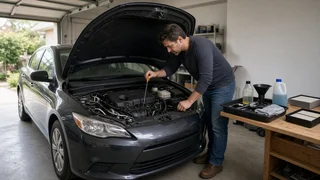
Motor maintenance starts with oil. Check the level with the dipstick on a level surface, following the manual's guidance on whether the engine should be warm or cold. Some newer vehicles have no dipstick and report oil level electronically instead. Use the oil viscosity and specification listed for your engine; the wrong grade can affect protection and, in some cases, warranty coverage.
Oil change intervals have generally lengthened as engines and synthetic oils have improved, and many modern vehicles use an oil life monitor that calculates the interval from actual driving conditions. If your car has one, it is designed to be followed. Older rules of thumb may not apply to your vehicle, so rely on the manual rather than habit.
The engine air filter keeps dust out of the intake, and a heavily clogged filter can reduce performance. The cabin air filter cleans the air coming through the vents. Both are often simple to inspect, and replacement intervals tend to be shorter if you drive in dusty areas. While the hood is open, look for cracked or frayed belts, swollen or leaking hoses, corrosion on battery terminals, and any fluid drips under the car.
Tires and Brakes
Check tire pressure when the tires are cold, using the pressure printed on the placard inside the driver's door jamb, not the maximum pressure molded into the tire sidewall. The tire pressure monitoring system warns of significant underinflation, but it is not a substitute for regular manual checks.
Tread depth can be checked with an inexpensive gauge or by looking at the tread wear indicator bars molded into the grooves. Uneven wear, such as more wear on one edge, often points to alignment or inflation problems. Rotating tires on the schedule your manual recommends helps them wear evenly.
For brakes, warning signs include squealing or grinding noises, a pulsing pedal, a soft or sinking pedal, the car pulling to one side when braking, or a brake warning light. Brake fluid absorbs moisture over time, which is why many manufacturers specify periodic replacement even if the level looks fine. Any brake symptom deserves prompt professional inspection.
Fluids Beyond Engine Oil
Coolant (antifreeze): check the level in the overflow reservoir with the engine cool. Never open a hot radiator cap, because the system is pressurized. Transmission fluid: some vehicles allow a dipstick check, while many modern transmissions are sealed and require a shop. Service needs vary greatly by transmission type. Brake fluid: the reservoir level should sit between the marked lines; a dropping level can indicate pad wear or a leak. Power steering fluid: applies only to vehicles with hydraulic power steering; many newer cars use electric steering with no fluid. Windshield washer fluid: easy to top up and important for visibility, especially in winter.
Battery, Electrical and Lights
Battery life depends on climate, driving habits and battery type. Slow cranking, dimming lights at idle, or a battery warning light are signs to have it tested. Many parts stores and repair shops can test a battery quickly. Keep terminals clean and tight, and make sure the battery is securely mounted.
Walk around the car periodically with the lights on, or ask someone to help, to confirm headlights, high beams, brake lights, turn signals, reverse lights and hazard lights all work. Replace wiper blades when they streak, chatter or leave unwiped areas.
How Maintenance Differs for Hybrids and EVs
Hybrids still have a gasoline engine, so they need oil changes and most conventional engine maintenance, though the engine may run less often. Fully electric vehicles have no engine oil, spark plugs or exhaust system, which removes several items from the list of car maintenance tasks. However, EVs still need tire care, brake inspection, cabin air filter changes, coolant service for battery and electronics thermal systems where specified, wiper and light checks, and attention to the 12-volt auxiliary battery. Regenerative braking can reduce brake pad wear, but brake components still need periodic inspection because parts that are used less can corrode.
Practical Car Service Tips
Keep records: save receipts or log the date, mileage and work done for every service. Records help with warranty claims and resale value. Do not ignore warning lights: a steady check engine light warrants a diagnostic scan soon, while a flashing check engine light usually signals a more urgent problem and calls for reducing driving until it is checked. Listen and pay attention: new noises, smells, vibrations or changes in how the car drives are often the first sign of a developing issue. Check for recalls: open safety recalls are repaired at no cost by franchised dealers, and you can look up your vehicle by its VIN through the national recall lookup provided by federal highway safety authorities. Understand warranty rules: in the US, you generally do not have to use the dealer for routine maintenance to keep your warranty, but you do need to perform the required services and keep proof that they were done. Be cautious with upsells: services like fluid flushes may or may not be in your manufacturer's schedule. Ask the shop to show where a recommended service appears in the schedule or what inspection finding justifies it. Know your limits: tasks like checking fluids, tire pressure and wiper blades are straightforward for most owners. Brake work, timing belts and anything involving airbags or high-voltage hybrid and EV components are best left to trained technicians.
Building Your Own Checklist
The most effective checklist for car maintenance is one built around your own vehicle. Start with the manufacturer's schedule, decide honestly whether your driving fits the normal or severe category, and add the simple monthly checks above. Set reminders by date and mileage, whichever comes first, and keep your service records in one place. Combined with prompt attention to warning signs, this routine covers the essentials of general car maintenance and helps your vehicle stay safe and reliable over the long term.