Car Lock Repair: What Can Go Wrong and How to Narrow It Down
The short answer
Car lock repair means restoring a vehicle's ability to lock and unlock securely, whether the fault is in the key, the lock cylinder the key turns, the latch that holds the door shut, the linkage between them, or the electric parts that drive power locks. The right fix depends on which of those parts has failed. Some problems are cleared by cleaning, lubricating, or replacing a fob battery. Others call for a new actuator, latch, or cylinder, and some, especially those involving transponder keys or the ignition, need an automotive locksmith or dealer with the equipment to code keys to the vehicle.
One qualification matters more than any other. Lock designs vary widely by make, model year, and trim. A car with a traditional metal key and a car with keyless entry and push-button start share few repair steps. The guidance below describes general principles. Specific procedures, part numbers, and costs depend on your exact vehicle and were not available for this guide.
Which parts make up a car's locking system
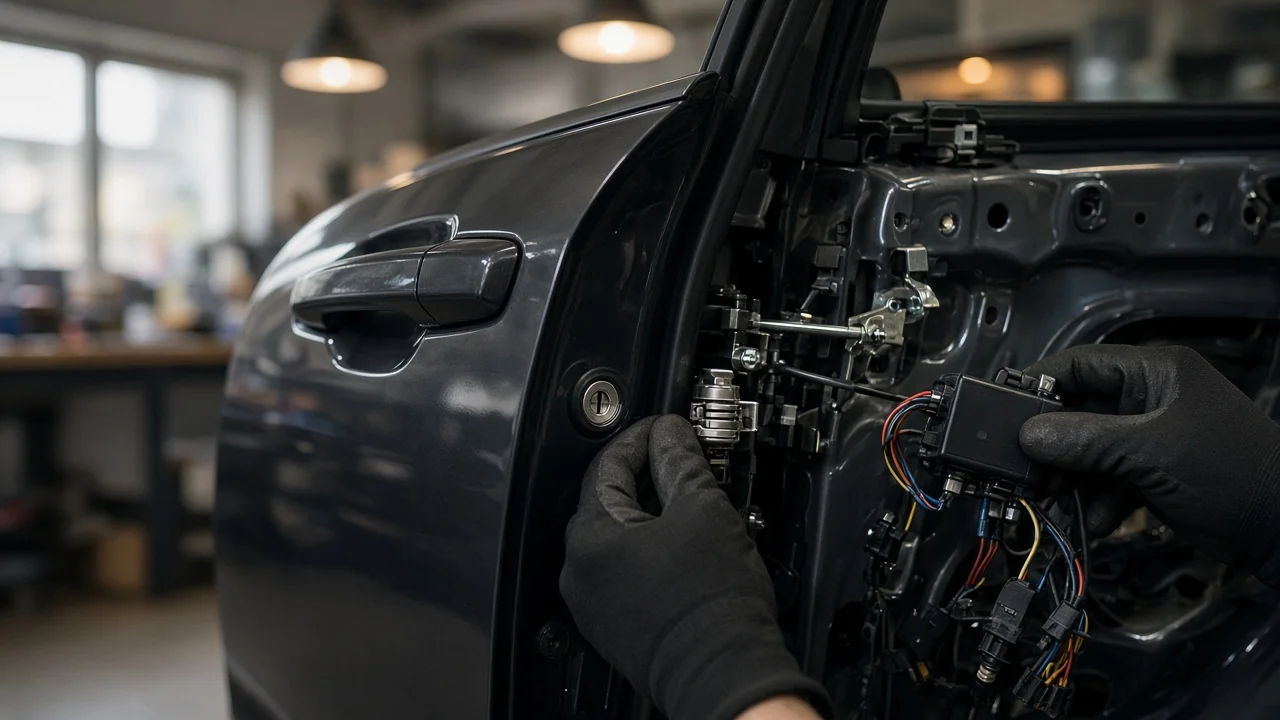
Key or key fob: the physical key, a remote that sends a lock or unlock signal, or both. Many keys also contain a transponder chip that the immobilizer must recognize before the engine will start. Lock cylinder: the mechanism the key turns, found in the driver's door on many vehicles, and sometimes in the trunk, tailgate, or ignition. Latch: the mechanism inside the door that grips the striker on the body and keeps the door closed. Linkage: rods or cables that connect the handles, cylinder, and lock buttons to the latch. Power lock actuator: a small electric motor, often built into the latch assembly, that locks and unlocks the door when commanded. Switches, wiring, and fuses: the interior lock switches and the circuit that carries power to each actuator. Ignition lock and steering lock: on vehicles with a keyed ignition, the cylinder that turns the key and the mechanical lock that holds the steering wheel when the key is out.
Mechanical faults compared with electrical faults
Most lock problems fall into one of two groups. Mechanical faults involve physical wear, dirt, corrosion, ice, or a broken part. Electrical faults involve power, signals, or a failed motor. Sorting the symptom into the right group is the most useful first step.
Fault type | Typical parts involved | Common signs; Mechanical | Key, lock cylinder, latch, linkage, steering lock | Key sticks, will not turn, or turns without effect; handle feels loose or disconnected; door will not latch; Electrical | Fob, actuator, switches, wiring, fuses, battery | Power locks fail on one door or all doors; fob does not respond; buzzing or clicking without locking; locks behave erratically
Diagnosing common symptoms
The checks below help narrow down a likely cause. They point toward a fault rather than confirm one. If a diagnostic scan tool reports a fault code related to body or lock functions, treat it as a lead to investigate, not as proof that a specific part has failed. The code may reflect wiring, a connector, or a related module rather than the part it names.
The key sticks, will not turn, or will not go in
Try a spare key. If the spare works smoothly, the original key is likely worn or bent, and a replacement key may be all that is needed. If both keys stick, the cylinder may be dirty, dry, corroded, or worn. Cleaning and lubricating the cylinder with a product suited to locks may help. Lubricant guidance varies, so follow the vehicle manufacturer's recommendation or a locksmith's advice; heavy oils can attract grit. In freezing weather, ice inside the cylinder is a common cause. A lock de-icer or gentle warming may free it. Do not force the key. A key can snap inside the cylinder, which usually turns a simple problem into a locksmith visit. If the cylinder shows scratches, gouges, or a damaged face, it may have been tampered with. That points to a security problem, covered below.
The key turns, but the door does not lock or unlock
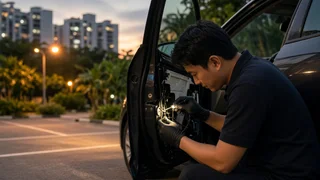
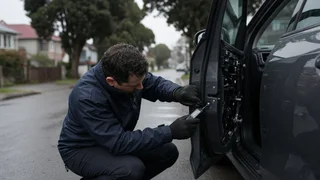
When the key turns freely without moving the lock, the connection between the cylinder and the latch has likely failed. A rod or clip inside the door may have come loose or broken, or the cylinder's internal tailpiece may be worn. If the interior lock button and power locks still work, the latch itself is probably functioning and the fault is likely between the cylinder and latch. Reaching these parts usually means removing the inner door panel.
One door does not respond to the power locks
Listen at the door while operating the lock switch. A buzz, click, or grinding sound suggests the actuator is receiving power but cannot move the mechanism, which often indicates a worn actuator or a binding latch. Silence suggests either a failed actuator motor or no power reaching it. Check whether the door's own interior switch, the master switch, and the fob all fail to move that door. If every command fails on only that door, the problem is likely local to that door rather than the central system. Inspect the rubber wiring boot between the door and the body. Wires that flex every time the door opens can break inside this boot. If the lock works intermittently, a fading actuator or a damaged wire is more likely than a fuse.
No doors respond to the fob or the switches
If the fob fails but the interior switch works, try the spare fob. If the spare works, the original fob's battery or the fob itself is the likely cause. Replacing the fob battery is the simplest first step. If both fobs and the interior switch fail, check the fuse for the power lock circuit, using the owner's manual to locate it. Check the vehicle's battery condition. A weak battery can cause power locks and other electrical systems to behave erratically. If fuses and battery are fine and nothing responds, the fault may be in wiring or a control module, which generally calls for professional diagnosis. If a fob stops working after a battery change, some vehicles require the fob to be reprogrammed; the procedure varies by vehicle.
The ignition key will not turn or will not come out
If the key will not turn, the steering lock may be holding the cylinder under tension. Gently turning the steering wheel in each direction while turning the key often releases it. If the key will not come out, confirm that an automatic transmission is fully in Park. Many vehicles will not release the key otherwise. Try a spare key to separate a worn key from a worn cylinder. If the key turns but the engine will not start and a security light is on, the immobilizer may not be recognizing the key's transponder. That is a key-coding issue rather than a mechanical lock fault. If none of these steps help, avoid forcing the key. A worn ignition cylinder generally needs professional replacement, and replacement may involve coding to the vehicle.
The door will not latch or will not stay closed
A door that will not latch may have a seized or broken latch, a misaligned striker on the door frame, or debris in the latch. Check the latch jaw for visible obstructions and compare its movement with a working door. A latch that is stuck in the closed position can prevent the door from shutting. Because a door that does not latch can open while the vehicle is moving, this symptom needs prompt attention.
When to stop and get professional help
A door that will not latch securely: do not drive with it, because it may open in motion. A key that has broken off inside a cylinder: attempting extraction without the right tools can damage the cylinder further. Signs of forced entry or tampering, such as a punched or gouged cylinder, a damaged door handle, or a broken window: document the damage and consider reporting it before repair, as the vehicle's security has already been compromised. Ignition or immobilizer problems that prevent starting: these usually require key coding equipment. Repairs that involve removing door panels on vehicles with side airbags or airbag wiring in the door: follow the manufacturer's service procedure or leave the work to a qualified technician. Any fault where the cause remains unclear after basic checks, or where a scan tool reports codes that do not match the observed symptom.
Choosing who should do the repair
An automotive locksmith typically handles keys, lock cylinders, lockouts, and in many cases transponder key programming. A dealer service department has manufacturer-specific tools and information, which can matter for newer vehicles, keyless systems, and module programming. A general repair shop can often replace actuators, latches, and wiring. A body shop may be the right choice when lock damage comes from a collision or forced entry that also affected the door or frame. Capabilities differ between businesses, so confirm that a provider can work on your specific make, model year, and key type before booking.
What this guide does not cover
No verified data was available on repair costs, parts prices, labor times, or model-specific procedures, so none are given here. Those details depend on the vehicle, the part, the region, and the provider. For figures that apply to your car, request a written estimate that identifies the diagnosed cause and the parts to be replaced, and check the owner's manual or the manufacturer's service information for procedures specific to your model year.