Car door latch stuck: how to fix
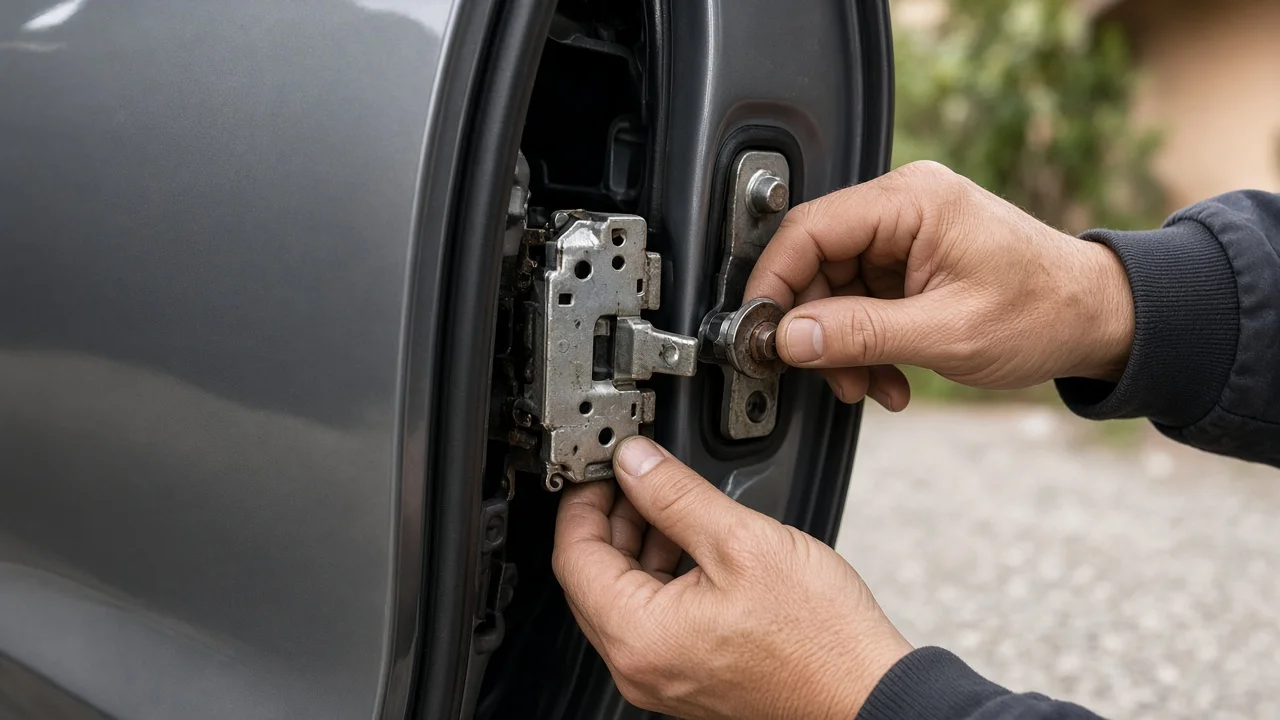
A door that refuses to open is more than an inconvenience; it is a safety and access problem with several possible mechanical or environmental causes. When the latch mechanism will not release, the issue may involve a broken internal spring, a disconnected rod, a frozen cable, or simple misalignment between the striker and the latch. The fix depends on whether the handle feels loose, stiff, or normal while the mechanism remains stuck. Working methodically protects the door, the lock assembly, and the interior trim as you restore reliable entry.
Direct answer
Freeing a stuck car door latch usually starts with trying the interior and exterior handles while applying light inward or outward pressure on the door. If the handle moves normally but the mechanism does not release, suspect a detached operating rod or a failed internal latch component. If the handle feels stiff or frozen, cold weather, corrosion, or a failed actuator may be binding the linkage. A door that latches but will not open often requires inspecting the connection between the handle and the latch, not automatically replacing the entire mechanism.
A key condition that changes the fix is whether the latch is in a locked, unlocked, or partial position. Attempting to unlock the door with the key or power lock switch may be enough to reset a binding mechanism. If the door has been in a collision or the body lines at the hinge edge have shifted, the striker may be holding the latch claw under load. In that case, lifting or supporting the door while operating the handle can temporarily release the tension and allow the mechanism to cycle.
How to proceed
Begin by removing any obvious obstruction at the door edge and checking the weather seal, which can freeze or stick to the body and create misleading resistance. Operate the interior handle while pressing the door from inside with steady shoulder pressure, then try pulling the exterior handle while another person pushes the door inward. Avoid jerking the handle, since that can bend the operating rod or damage the plastic retaining clips inside the door. If the lock knob or power lock switch can be cycled, do so while gently wiggling the handle.
If the door still will not open, inspect the accessible end of the latch at the door jamb with a flashlight. Look for a striker that is loose or visibly misaligned, and check whether the latch claw is frozen around it. Lubricating the latch through the gap with a suitable spray lubricant may free a corrosion-bound pawl. When interior trim removal becomes necessary, disconnect the battery if the door contains an airbag and expect hidden fasteners. A problem involving a broken internal spring, a failed actuator, or a bent linkage deeper inside the door is best left to a qualified service technician.
Understanding a problem
A latch mechanism combines a rotating claw that grips the striker and a pawl that holds the claw closed. When you pull a handle, a rod or cable moves the pawl against spring pressure. A stuck condition usually means that the pawl is not moving far enough, a rod has come loose, or the claw is bound against the striker. Handle feel is a useful clue: a loose handle with no resistance often indicates a detached rod, while a stiff handle suggests binding in the linkage or a failed actuator that is not moving freely.
Weather-related sticking is common at the door perimeter, yet it can mimic a latch failure. Ice at the weather seal or a frozen cable can prevent movement even when the latch internals are healthy. Alignment problems at the hinges or striker can also load the mechanism so heavily that the pawl cannot pivot. Before assuming an expensive latch replacement, differentiate between a mechanical failure inside the latch and an external condition that prevents normal handle travel or door movement.