Car Dashboard Warning Lights and Symbols: What They Mean and What to Do
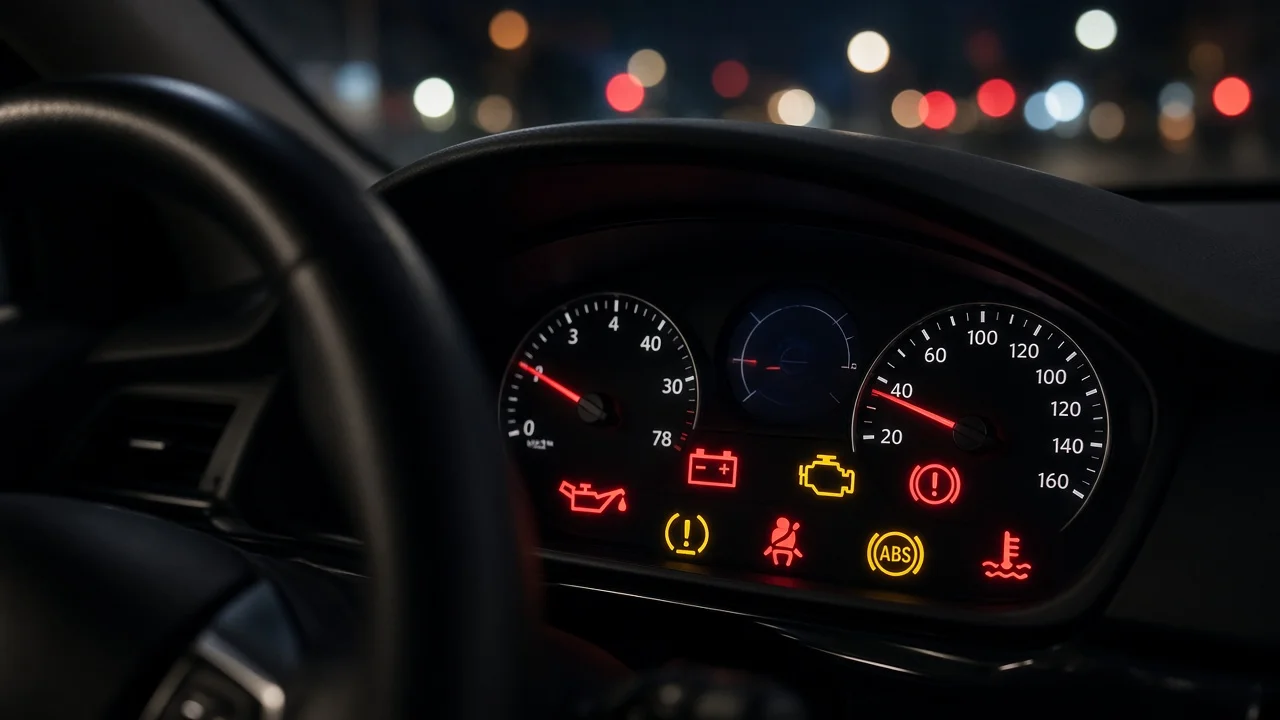
A car dashboard icon is a small symbol in the instrument cluster that reports either an operating status, such as headlights on or cruise control active, or a fault the vehicle's computers have detected. Color is the fastest guide to urgency. Red usually means stop or act immediately. Amber or yellow means a fault needs attention soon. Green or blue means a system is simply switched on. Many symbols are similar across brands, but their exact shapes, names and behavior vary by manufacturer, model year, powertrain and market. The owner manual for your specific vehicle is the definitive reference.
How to read dashboard lights by color
Color | Typical meaning | What to do; Red | Serious fault or safety-critical condition | Stop safely as soon as practical and investigate before driving further; Amber / yellow | Malfunction or service need detected | Check soon and avoid ignoring it; driving may be possible with caution; Green | System active and working as intended | No action needed; Blue | Information, most often high beams on | No action needed beyond normal use; White or gray | Status or setting information on many vehicles | Informational
Behavior matters as much as color. A light that flashes usually signals a more urgent condition than the same light shown steadily. Most warning indicators also illuminate briefly when you switch on the ignition as a bulb and system self-check, then go out once the engine starts. A light that stays on after startup, or appears while driving, is the one to act on.
Common car symbols and names on the dashboard
The symbols below are widely used, and many follow international symbol conventions, but labels differ. Some vehicles show a text label, such as BRAKE or CHECK ENGINE, instead of or alongside an icon, and newer cars often add a display message explaining the warning.
Red warning lights: stop and check
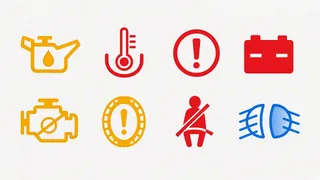
Oil pressure: an old-style oil can, sometimes with a drip. Indicates low oil pressure. Continuing to drive can seriously damage the engine. Stop and switch off the engine. Engine coolant temperature: a thermometer partly submerged in wavy lines. Indicates the engine is overheating. Stop safely and let the engine cool; do not open a hot radiator or coolant cap. Brake system: a circle with an exclamation mark inside parentheses, or the word BRAKE. May mean the parking brake is engaged, brake fluid is low, or there is a brake system fault. If it stays on with the parking brake released, have the brakes checked before relying on them. Charging system: a battery outline with plus and minus marks. The battery is not being charged, often due to an alternator, belt or wiring problem. The car may run only until the battery is depleted. Airbag / supplemental restraint system: a seated person with a circle in front. A fault may prevent airbags from deploying in a crash. Not usually a reason to stop immediately, but it is a safety issue to fix promptly. Seat belt reminder: a seated figure wearing a belt. A belt is unfastened.
Amber warning lights: check soon
Check engine (malfunction indicator lamp): an engine outline. This is the engine symbol in the car dashboard most people ask about. It means the engine or emissions control system has logged a fault. Steady usually means check soon; flashing usually means an active misfire that can overheat and damage the catalytic converter, so reduce load and stop driving as soon as it is safe. Tire pressure monitoring (TPMS): a horseshoe-shaped tire cross-section with an exclamation mark. One or more tires is significantly underinflated. Flashing at startup and then staying on often indicates a TPMS system fault rather than low pressure. Anti-lock brakes: the letters ABS in a circle. ABS may be disabled; normal braking usually still works, but anti-lock function may not. Traction or stability control: a car with wavy skid lines. Flashing briefly means the system is actively working on a slippery surface. Steady may mean the system is off or faulty. Power steering: a steering wheel, often with an exclamation mark. Steering assistance may be reduced, making the wheel heavy to turn. Low fuel: a fuel pump symbol. Fuel is low; the arrow beside it on many cars shows which side the filler door is on. Washer fluid: a windshield with a spray pattern. Fluid reservoir is low. Maintenance or service due: a wrench, or a text message. A scheduled service interval has been reached, not necessarily a fault.
Diesel, hybrid and electric vehicle symbols
Glow plug (diesel): a coiled wire symbol. Normally lights while the glow plugs preheat; wait for it to go out before starting. Flashing or staying on can indicate a fault. Diesel particulate filter (diesel): a box with dots inside. The filter is becoming clogged and may need a regeneration drive or service. Diesel exhaust fluid (diesel): often a fluid drop or nozzle icon, sometimes labeled DEF. Fluid is low; many vehicles restrict engine power or restarts if it runs out. Ready (hybrid and electric): a green READY indicator or similar. The vehicle can move even though no engine sound is present. Reduced power or turtle symbol (hybrid and electric, some vehicles): output has been limited, often due to low battery charge or a system temperature or fault condition. High-voltage system or EV battery warning: designs vary widely by manufacturer. Treat a red version as a stop-and-check warning and consult the owner manual.
Green and blue indicators: status only
These confirm that a feature is switched on: low-beam headlights, high beams (usually blue), fog lights, turn signals, cruise control and various driver-assistance features. They are labels for operating status, not faults. A turn signal arrow that flashes much faster than normal, however, often means a bulb on that side has failed.
What to do when a warning light comes on
Start by identifying the symbol and its color, then match the urgency of your response to what you see. The steps below help narrow down causes without guessing.
Note the color and whether the light is steady or flashing. Red or flashing generally means reduce speed and stop where safe. Read any accompanying display message. Many vehicles describe the fault in plain text, which removes ambiguity about the icon. Watch for related symptoms: steam, burning smells, unusual noises, loss of power, a heavy steering wheel, a soft brake pedal or a temperature gauge climbing. Symptoms combined with a red light are a reason to stop and arrange assistance. Make the simple observable checks the warning points to, once the vehicle is safely parked: engine oil level on the dipstick, coolant level in the reservoir once cool, tire pressures with a gauge, brake fluid level, and whether the parking brake is fully released. For a steady check engine light with no symptoms, confirm the fuel cap is tight and clicked shut. On many vehicles a loose cap can trigger an evaporative emissions fault; the light may take several drive cycles to clear after correction. Look up the symbol in the owner manual for your exact model, since a similar-looking icon can mean different things across brands.
Using a diagnostic check to find the cause
Cars and light trucks sold in the US since the mid-1990s have a standardized OBD-II diagnostic port, typically under the dashboard on the driver's side. An inexpensive scan tool or a repair shop can read stored diagnostic trouble codes, which explain why the check engine light and some other warnings came on. Some auto parts retailers offer basic code reading, though availability varies by location.
Treat a fault code as evidence to investigate, not as proof that a specific part has failed. A code reports what the computer detected, such as a sensor reading outside its expected range, and the root cause may be wiring, a vacuum leak, a connector or a different component upstream. Replacing the part named in the code description without further testing can waste money. Also note that generic OBD-II scanners mainly read engine and emissions codes; faults in airbag, ABS, body or hybrid systems often require a more capable manufacturer-level scan tool.
Clearing codes turns the light off but does not fix the problem, and it erases information a technician could use. If a fault returns after clearing, the underlying condition is still present.
When to stop driving or get professional diagnosis
Stop as soon as safely possible: red oil pressure, red coolant temperature, red brake warning that stays on with the parking brake released, a flashing check engine light, or any warning accompanied by smoke, steam, burning smells or loss of braking or steering. Arrange prompt professional inspection: charging system warning, airbag fault, ABS combined with a brake warning, power steering warning, or high-voltage system warnings on hybrids and EVs. Schedule a diagnostic check soon: a steady check engine light with no symptoms, TPMS fault indication, stability or traction control fault, or diesel emissions system warnings. No repair needed: green and blue status indicators and routine service reminders, aside from booking the scheduled maintenance.
Why symbols differ between vehicles
Core warnings such as oil pressure, coolant temperature, charging and the check engine light look broadly similar on most cars, but manufacturers add their own icons for driver-assistance systems, drive modes, hybrid and electric powertrains and brand-specific features. Digital instrument clusters can also change appearance by display mode, and some vehicles replace icons with text. Because of this variation, a general guide is a good starting point for recognizing car dashboard labels, but the owner manual for your model year and trim is the authoritative source when a symbol is unfamiliar or the guidance here does not match what you see.