Car dashboard warning icons meaning

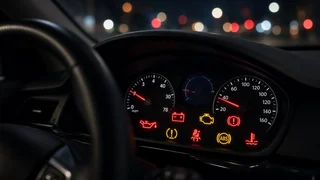
A glowing dashboard icon car warning can turn an ordinary drive into a moment of uncertainty. These dashboard icons car systems display are not decoration; they are the instrument cluster’s way of communicating operating status before a small issue becomes a larger repair. Understanding the meaning behind a car icon dashboard warning helps you decide whether to continue driving, check a system, or stop safely. This guide explains what those car icons dashboard signals represent, how the warning indicator network functions, and how to interpret the message without guessing.
Meaning
In automotive terms, a dashboard icon car symbol is a visual language from the vehicle’s onboard computer and sensors. Each illuminated graphic represents a monitored system, ranging from seat belts and exterior lamps to engine management and braking assist. The symbol may appear as a steady light, a flashing alert, or a color-coded display message within the instrument cluster. Recognizing these symbols turns an abstract pictogram into useful information about the car’s current condition.
Not every dashboard icon signals immediate danger. Some are routine status indicators confirming that a feature, such as high beams or cruise control, is active. Others are warning indicators that require attention because a measured value has moved outside normal limits. The owner manual for your specific model remains the most accurate reference, since manufacturer-dependent graphics can vary. Still, the basic idea is consistent: the dash is reporting an onboard diagnostic check result rather than expressing a random fault.
How it works
A modern vehicle constantly runs self-tests through its electronic control units and sensors. When a sensor reports a voltage, temperature, pressure, or position reading outside its expected range, the control module stores a fault and requests an icon on the dash. The instrument cluster then illuminates the corresponding symbol in the cluster display. This process happens in real time, which is why a warning may appear for a few seconds during startup and then extinguish after the system completes its diagnostic check.
The communication chain allows a single problem to produce more than one visible result. For example, a charging system issue can trigger a battery-shaped light and also a check charging system display message. Because the warning indicator is responding to an electrical signal, a loose connection or failing sensor can produce an intermittent light even when the mechanical component is still functioning. Therefore, the icon should be read as evidence of a reported condition, not as proof that a specific part has failed.
Key differences
Color is one of the most useful clues for separating urgent warnings from routine advisory signals. Red or flashing icons generally indicate a safety-critical failure or a condition that requires stopping the vehicle as soon as it is safe. Amber or yellow symbols usually mean a system needs service soon or a non-critical function is disabled. Blue and green indicators normally confirm that a convenience feature, such as high beam assistance or fog lamps, is actively operating rather than warning of a malfunction.
Another important difference is between a system status light and a stored diagnostic trouble code. A status light simply says a condition exists right now. A stored trouble code provides a technician with a more specific starting point for diagnosis because it records which circuit or value triggered the alert. Drivers can distinguish these by watching whether the symbol stays on steadily, appears only during particular driving conditions, or is accompanied by reduced power or unusual mechanical behavior.
Understanding a problem
When a car icon dashboard warning illuminates, the first useful step is to observe the vehicle’s behavior. A steady check engine light while the engine runs smoothly and acceleration feels normal often points to an emissions-related reading rather than an immediate mechanical failure. By contrast, a flashing engine symbol, a red oil pressure warning, or a rising temperature gauge may indicate conditions that can cause rapid damage, so stopping and shutting off the engine in a safe location is the appropriate response.
Intermittent warnings are particularly important to note by driving context. If an ABS icon appears only on wet or uneven roads, a wheel speed sensor may be receiving a momentary inconsistent reading. If a battery symbol appears during heavy electrical load and disappears at higher engine speed, the charging system may be struggling under demand. Recording these conditions helps a technician use the symptom as a diagnostic clue instead of replacing parts based only on a stored display message or a single observed dashboard icon.