Car Dashboard Warning Lights: Common Symbols and What to Do
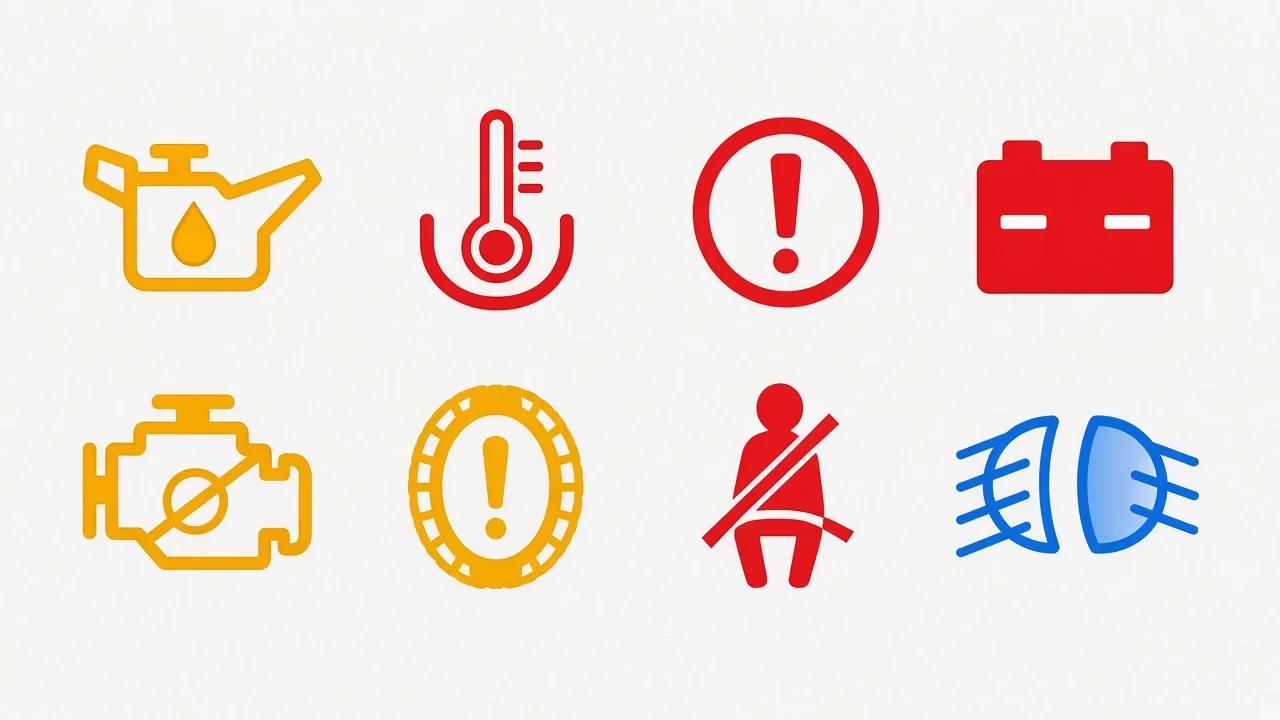
The instrument cluster uses small symbols to report on engine, brake, safety, and convenience systems, and knowing them helps you respond calmly instead of guessing. This reference explains common warning symbols and indicator lights by shape, color, and behavior, then describes sensible first actions. Exact artwork and available indicators differ between vehicles, so treat your owner's manual as the final word for your car.
Dashboard Symbol Pictures, Names, and Immediate Actions
Most dashboard lights fall into four broad groups. Engine and electrical symbols include an old-fashioned oil can with a drip, a thermometer floating over wavy lines for coolant temperature, a rectangular battery with plus and minus marks, and a side-view engine outline. Brake and safety symbols often use a circle inside parentheses, sometimes with an exclamation point or the letters ABS, plus a seated figure with a large circle in front for airbags.
Maintenance reminders tend to use a wrench, a fuel pump, a windshield with a spray fountain, or a flat tire cross-section containing an exclamation point. Operating indicators include arrows for turn signals, a headlamp shape with straight horizontal rays for high beams, and a speedometer-like dial for cruise control. Shape matters more than color for identification, because hues and wording vary by manufacturer and model year. When a symbol does not match these descriptions, the owner's manual shows the exact artwork.
What Colors, Flashing Lights, and Startup Checks Mean
Color works like a rough priority scale. Red commonly signals an urgent condition or safety issue, amber or yellow commonly means something needs attention soon, and green or blue usually shows that a function is switched on. Color alone does not tell you what to do, though. An amber light can still call for prompt action in some situations, while a red parking-brake reminder may simply mean the brake is still engaged.
When you switch on the ignition, many lights illuminate briefly as the car checks its bulbs and systems. That startup self-check is normal; a warning that stays lit after the engine starts deserves attention based on its specific meaning. Flashing has no universal rule. A blinking stability-control light often means the system is actively working, whereas a flashing engine light can signal a serious fault. Accompanying messages, chimes, and whether you are parked or moving all help you judge urgency.
Warnings That May Require a Safe Stop
A red oil-can symbol usually indicates low oil pressure, meaning the engine may not be receiving enough lubrication. When that warning is active while driving, pull over safely and shut the engine off rather than continuing. Some vehicles show separate oil-level or oil-change messages, often in amber or text form, which are less immediate. A coolant-temperature warning signals overheating; stop safely, turn off the engine, and never open a hot cooling system.
A red brake warning may simply mean the parking brake is applied, but if it stays on after release or the pedal feels different, stop safely and arrange assistance instead of driving on. A battery-shaped light generally points to the charging system, not necessarily the battery itself. A triangular master warning means you should read its accompanying message. Smoke, steam, weakened braking, or a major loss of power makes stopping and calling for professional help urgent.
Engine, Tire Pressure, and Service Indicators
The engine-outline symbol, often called the check engine light or malfunction indicator lamp, means the engine computer has detected a monitored engine or emissions fault. A steady light calls for timely inspection. A flashing one can indicate a condition, such as severe misfiring, that could damage emissions components, so reduce load and follow the vehicle's guidance promptly. A stored fault code helps point technicians toward a system, but it is evidence to interpret rather than proof that a specific part failed.
The tire pressure monitoring system symbol resembles a tire cross-section with an exclamation point. Check pressures when tires are cold, comparing them against the vehicle placard, often found on the driver's door jamb, and look for visible damage. On many vehicles, a light that flashes for a while and then stays steady indicates a monitoring-system fault rather than low pressure. Wrench or service reminders usually mean maintenance is due, not that something broke. Low-fuel and washer-fluid lights simply call for refilling soon.
Brake Assistance, Restraint, and Driver-Assistance Lights
An amber ABS light suggests antilock assistance may be unavailable. Conventional braking is typically still present, but wheels could lock during hard stops, so leave extra distance and have the system inspected. If the red brake warning appears alongside it, or the pedal feels abnormal, treat the situation as urgent. Traction and stability control often share a car icon with wavy skid marks. Flashing typically means the system is intervening on slippery pavement; a steady light or OFF label warrants checking the message and manual.
The airbag symbol shows a seated occupant with a circle in front. If it remains lit after startup, the restraint system may not deploy as designed, so arrange professional inspection rather than attempting repairs. A separate passenger-airbag status indicator reports whether the front passenger airbag is on or off, which can depend on occupancy sensing and vehicle settings. Steering-assist warnings and lane-keeping, collision-warning, or adaptive-cruise alerts mean that assistance may be limited or unavailable, so drive without relying on it.
Lighting, Readiness, and Everyday Reminder Symbols
Lighting indicators confirm what the exterior lamps are doing. Green arrows flash with the turn signals, and both flash together when the hazard lights are on; unusually rapid blinking on some vehicles can hint at a failed bulb. A blue headlamp with straight rays shows high beams, while a green lamp symbol indicates low beams or parking lights. Fog-light symbols add a wavy line through the beams, with front fog lights typically green and rear fog lights amber.
Reminder symbols include a seated figure wearing a belt, a car outline with an open door, and similar outlines showing the hood or trunk raised. Resolve each before driving, since an unlatched hood or loose cargo creates real hazards. Cruise-control and stop-start indicators vary widely in color, text, and display states. Diesel vehicles often show a coiled-wire symbol indicating glow-plug preheating, while hybrids and electric vehicles display READY and charge-status indicators whose operation the manual explains.
What to Do When a Light Stays On or Several Appear
When a warning stays on, start with the basics: maintain control, stop safely if the symbol calls for it, identify the symbol and any message, and follow the owner's manual. Several lights appearing together do not necessarily mean several separate failures, because one electrical or sensor problem can affect multiple systems at once. Prioritize red warnings, urgent messages, and any change in braking, steering, temperature, or engine power over convenience reminders.
Once safely parked, note the symbol, color, message text, and what was happening when it appeared, such as speed, weather, or a recent pothole. Those details help a technician narrow the search. Remember that a light identifies a condition or affected system, not its cause; pinpointing the fault may require testing. Clearing a warning with a scan tool or by disconnecting power does not mean the problem is resolved, and the light may return.