Car Battery Load Tester: What to Check Before You Buy

If you want to know whether a car battery can still start your engine, a battery load tester is the right tool. A multimeter alone is not enough. For most home mechanics, the choice comes down to two designs. A traditional resistive load tester draws real current from the battery. A digital conductance tester estimates battery health electronically without a heavy load. Which one suits you depends on the batteries you work with, whether you also want to check the alternator, and how much heat, noise and bulk you can tolerate. The sections below explain what each type does, what to look for in a listing, and how to make sense of the readings.
The short answer
A digital conductance tester is the more convenient choice for an occasional DIY user with a typical 12-volt passenger car battery. It is compact, quick and safe on a partly charged battery, and many models also run basic cranking and charging checks. A resistive (carbon pile or fixed-load) tester is the better fit if you want a direct, physical load test that closely mimics engine cranking. It suits older flooded lead-acid batteries and people who like to watch the voltage hold or sag under load. Two conditions change the answer. First, if your vehicle uses an AGM, EFB or start-stop battery, confirm the tester explicitly supports that battery type. Second, if you mainly suspect the alternator rather than the battery, make sure the tester includes a charging system test.
What a battery load test actually measures
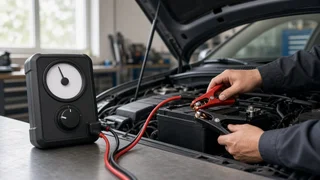
Resting voltage only tells you a battery's state of charge. It says little about whether the battery can deliver the large current a starter motor needs. A load test answers that question. It puts the battery under a heavy demand and watches how far the voltage drops. A healthy battery holds its voltage reasonably well. A worn battery may show a normal resting voltage and then collapse under load. A common rule of thumb for a traditional load test has three parts. Charge the battery first. Apply a load of about half its cold cranking amp (CCA) rating for around 15 seconds. Then check that the voltage stays above roughly 9.6 volts at moderate temperatures. The acceptable minimum drops in cold weather, so follow the guidance supplied with the tester you buy.
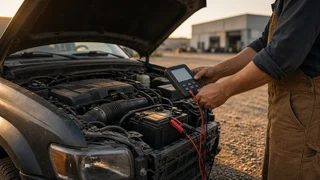
Conductance testers work differently. They send a small signal through the battery and measure how easily it passes. From that, they estimate internal condition and compare it with the rating you enter. They do not drain the battery, and they can usually give a meaningful result on a battery that is not fully charged. The trade-off is that the result is an estimate based on the tester's internal model. It is not a direct reproduction of a cranking load.
Resistive vs. digital conductance testers
Feature | Resistive / carbon pile load tester | Digital conductance tester; How it tests | Draws real current through a resistive element | Measures internal conductance with a small signal; Battery charge needed | Battery should be well charged first for a valid result | Can often test a partly charged battery; Heat and sparks | Element gets hot; brief tests and ventilation required | Minimal heat; no heavy current draw; Size | Typically bulkier, with heavier cables | Usually handheld and light; Battery types | Best suited to conventional flooded batteries; check guidance for others | Many models offer settings for flooded, AGM, gel and EFB; Rating input | Load often fixed or set manually | You enter rating and standard (CCA, EN, DIN, etc.); Extra functions | Usually a voltmeter for charging output checks | Often cranking and charging tests, sometimes data storage or printing; Repeat testing | Needs cool-down time between tests | Can test repeatedly with little wait
About model names like BT-100 and ED18
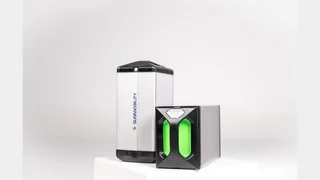
Many shoppers search for specific model names, such as a BT-100 battery tester or an ED18 battery tester. A model name alone does not reliably tell you which testing method a unit uses or which batteries it supports. Similar names are sometimes used by different sellers for different products. Before buying, read the listing for the actual testing principle (resistive load or conductance). Also check the supported voltage, the rating range in CCA, the battery chemistries covered, and whether a charging system test is included. Treat the listing and the included manual as the authority for that specific unit. Do not assume one product behaves like another with a similar name.
What to check when choosing a tester
System voltage: most passenger cars use 12-volt systems, but some testers also cover 6-volt or 24-volt batteries for classic cars, motorcycles or heavy equipment. Buy for the voltages you actually have. Battery types supported: AGM, EFB, gel and flooded batteries behave differently. A tester without the right setting may misjudge a healthy AGM battery as weak, or the reverse. Rating standards and range: the battery label may list CCA, or a European or Asian rating such as EN, DIN, IEC or JIS. A digital tester should let you select the standard printed on your battery and cover its rating. Charging and cranking tests: if you suspect the alternator, look for a charging system test that checks charging output with the engine running. A cranking test that records the lowest voltage during startup is also useful. Clamp and cable quality: solid copper-faced clamps that bite onto the battery terminals give more consistent readings. Thin clamps or corroded contacts introduce voltage drop that skews results. Cable length: long enough to reach the battery comfortably, especially if your battery sits under a seat or in the trunk with remote jump posts. Display and readout: a clear display, or an analog gauge on a carbon pile unit, that you can read in a dim engine bay. Some digital units show a simple good, charge-and-retest or replace verdict alongside the numbers. Power source: most testers draw power from the battery under test. Check the minimum voltage at which a digital unit still operates. Heat management: on resistive testers, look for clear duty-cycle guidance and a vented housing, because the load element gets very hot.
How to read the results
Start with resting voltage after the car has sat for a while with the engine off. A fully charged 12-volt lead-acid battery typically reads around 12.6 volts or slightly higher. A reading noticeably lower suggests the battery is discharged, and charging it first will give a fairer test. On a resistive tester, watch the voltage during the load period. A steady reading above the tester's pass threshold is a good sign, while a rapid drop points to a weak battery. On a digital tester, compare the measured value with the rating you entered and note the verdict. If the battery fails after a full charge, replacement is usually the reasonable next step. If it passes but the car still starts poorly, look elsewhere in the system.
When the battery passes but problems continue
A battery load tester tells you about the battery and, on many models, the charging output. It does not diagnose everything. If the battery tests healthy yet keeps going flat overnight, the likely culprit is parasitic draw, meaning current being drained while the car is off. Finding it usually requires a multimeter or clamp meter. A common method is to measure the draw and then pull fuses one at a time to see which circuit it comes from. The vehicle's wiring diagram and fuse rating chart help you identify what each circuit powers. Slow cranking with a good battery can also come from voltage drop across corroded battery terminals, loose ground straps or worn cables. You can check these with a voltmeter across each connection while cranking. If the charging test shows low or unstable output, the alternator, its belt or its wiring is the next thing to inspect.
Safety basics while testing
Lead-acid batteries can release hydrogen gas, especially while charging or under heavy load. Work in a ventilated area and keep sparks and flames away. Wear eye protection. Connect the positive clamp first, then the negative, and remove them in reverse order. With a resistive tester, keep each load test brief and let the unit cool between tests. Never lay the hot element against wiring, hoses or plastic trim.
Which type should you buy?
Choose a digital conductance tester if you want a compact tool that handles modern AGM and EFB batteries, tests partly charged batteries, and gives a quick verdict plus basic charging and cranking checks. Choose a resistive load tester if you mostly service conventional flooded batteries and prefer a direct load test. It also makes sense if you already own other tools for charging system checks and don't mind the extra bulk and heat. Whichever you pick, confirm in the listing that it covers your battery voltage, chemistry and rating standard. Those three details matter more than the brand or model name.