Car Battery Bulging Sides: What It Means and What to Do
The short answer
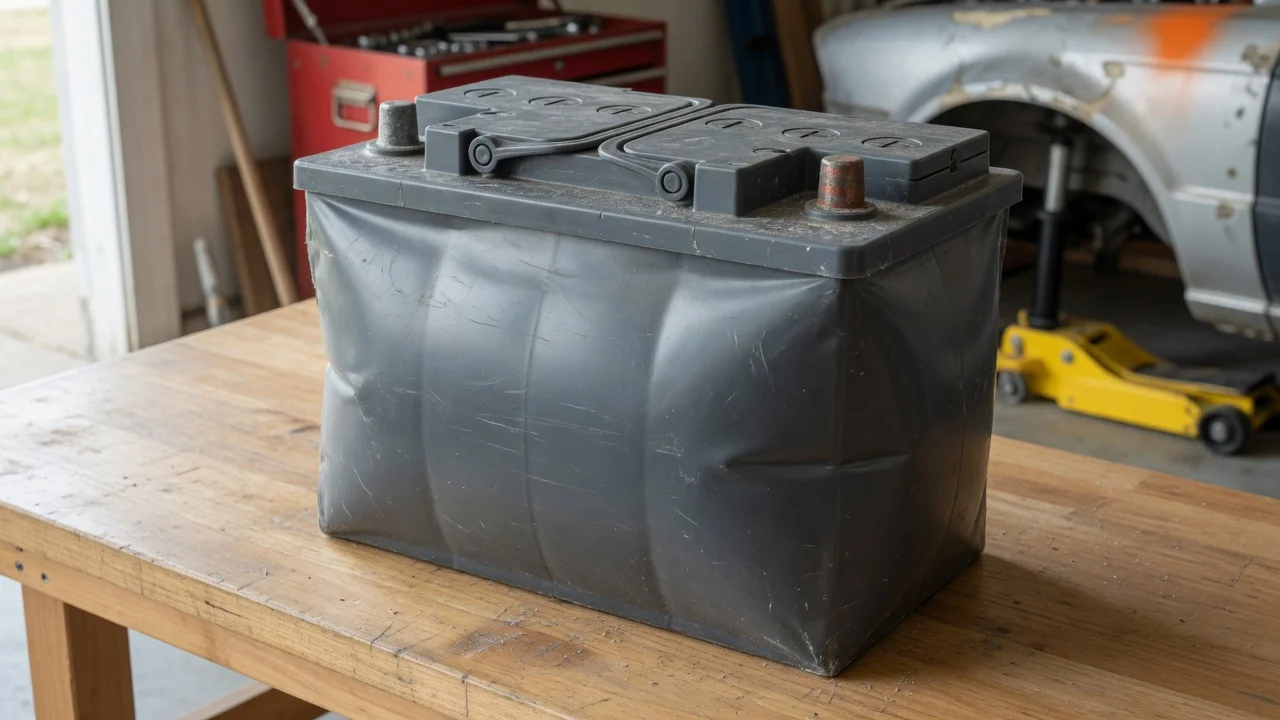
A car battery whose sides are bulging, swollen or bowed outward is damaged and should be replaced, not charged, jump-started or returned to service. The swelling shows that something inside the case has gone wrong, usually gas buildup, heat damage or freezing. A swollen case can also crack or leak corrosive electrolyte. Swelling is also a warning about the rest of the car. If the vehicle's charging system caused the battery to swell, a new battery fitted without fixing that fault can be damaged the same way.
Which batteries this applies to
This guide covers the conventional 12-volt lead-acid starter battery used in most petrol and diesel cars. That includes flooded (wet-cell), enhanced flooded (EFB) and absorbent glass mat (AGM) types. Hybrids and electric vehicles also carry a 12-volt auxiliary battery, and in many of them it is a lead-acid unit, so the same advice applies. Some newer vehicles use a lithium-based 12-volt battery instead. A swollen lithium battery carries different and potentially more serious risks. If your car has one, follow the manufacturer's guidance or have a dealer handle it. The large high-voltage traction battery in a hybrid or EV is a separate system that owners should not inspect or handle. Check the owner's manual or the battery label if you are unsure which type your car has.
Common causes of a swollen battery case
Overcharging: A faulty alternator or voltage regulator can push too much charging voltage into the battery. Electrolysis then speeds up and produces gas and heat faster than the battery can safely vent, and the case expands. The wrong charger, or the wrong charger setting for an AGM battery, can do the same. Excessive heat: High under-hood temperatures, hot climates, or a battery mounted close to engine or exhaust heat speed up internal chemical reactions and can soften and distort the plastic case. Freezing: When a lead-acid battery is deeply discharged, its electrolyte becomes closer to plain water and can freeze in cold weather. Ice expands inside the cells and can push the case walls outward or crack them. Internal faults and age: Shorted cells, failed plates or a damaged internal structure, often from age or vibration, can cause localized heating and gassing. Blocked venting: Batteries are designed to release gas. If vents or vent tubes are blocked, pressure can build inside the case.
The appearance of the swelling alone usually cannot tell you which cause applies. Narrowing it down takes a check of the charging system and the car's recent history, such as cold-weather storage or a long period sitting with a flat battery.
Is a bulging battery dangerous?
It can be. Lead-acid batteries can release hydrogen gas, which is flammable. A case under internal pressure, or one already distorted by heat, is more likely to crack and leak sulfuric acid electrolyte, which can burn skin, damage eyes and corrode metal parts in the engine bay. A swollen battery may also have reduced capacity or fail without warning, leaving the car unable to start. The supplied material does not quantify how often swollen batteries rupture or ignite, so it is not possible to put a figure on the risk. The practical point is that a bulging battery is not safe to keep relying on.
What to do next
Do not charge it, jump-start it or use it to jump another vehicle. Avoid sparks, flames and smoking near the battery, and wear eye protection and gloves if you need to be close to it. Look for cracks, leaking fluid, a rotten-egg smell or heavy corrosion. If any are present, or if the battery is hot to the touch, leave it alone and get professional help. Have the battery replaced with one of the correct type and specification for the vehicle. Some cars need a battery registration or coding step after replacement, which depends on make, model and model year. Have the alternator and voltage regulator output tested so an overcharging fault is caught before it damages the new battery. Take the old battery to a retailer, garage or recycling point that accepts lead-acid batteries. Do not put it in household waste.
Can a swollen battery be repaired?
No. Pressing the case back into shape, drilling or opening vents, or topping up the electrolyte does not reverse the internal damage, and doing so risks acid exposure. Replacement is the appropriate fix. Whether the battery is covered under warranty depends on the battery maker's terms and the cause of the failure, so check the warranty paperwork. Damage from a vehicle charging fault or from freezing may be treated differently from a manufacturing defect.
Reducing the chance of it happening again
Keep the charging system healthy, and act promptly on a battery or charging warning light. If you use a maintenance charger, choose one that suits the battery type. Avoid leaving the battery deeply discharged, especially in freezing weather. Make sure the battery is the right type for the vehicle, is properly secured, and has unobstructed venting where the design calls for it.