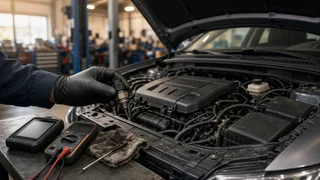
Can low oil pressure cause stalling or reduced power
Low oil pressure is not simply a lubrication warning; it can directly affect how an engine runs. When pressure falls, critical surfaces may lose the protective fluid film that prevents metal-to-metal contact. Drivers may notice rough running, hesitation, a sudden loss of momentum, or the engine dying at idle. In some systems, low pressure also disrupts hydraulic controls, triggering a protective limp mode or reduced engine power. Understanding these connections helps distinguish a transient dip from a serious mechanical fault that should stop the vehicle immediately.
Essential answer
Yes, low oil pressure can cause an engine to stall or produce reduced engine power, but the mechanism usually involves more than just thin lubricant. Oil serves as a hydraulic fluid for tensioners, cam phasers, and variable valve timing actuators. When pressure drops, those devices may lose the ability to hold correct timing or chain tension, making the engine struggle, misfire, or quit at low rpm.
The stalling is often most noticeable when the engine returns to idle after a load. Reduced power may appear as sluggish acceleration or a soft rev limiter if the control module detects inadequate oil pressure and commands a protective reduction. A fault code or warning light confirms the vehicle observed an abnormal condition, not which component has failed.