Camber, Caster and Toe: Wheel Alignment Angles Explained
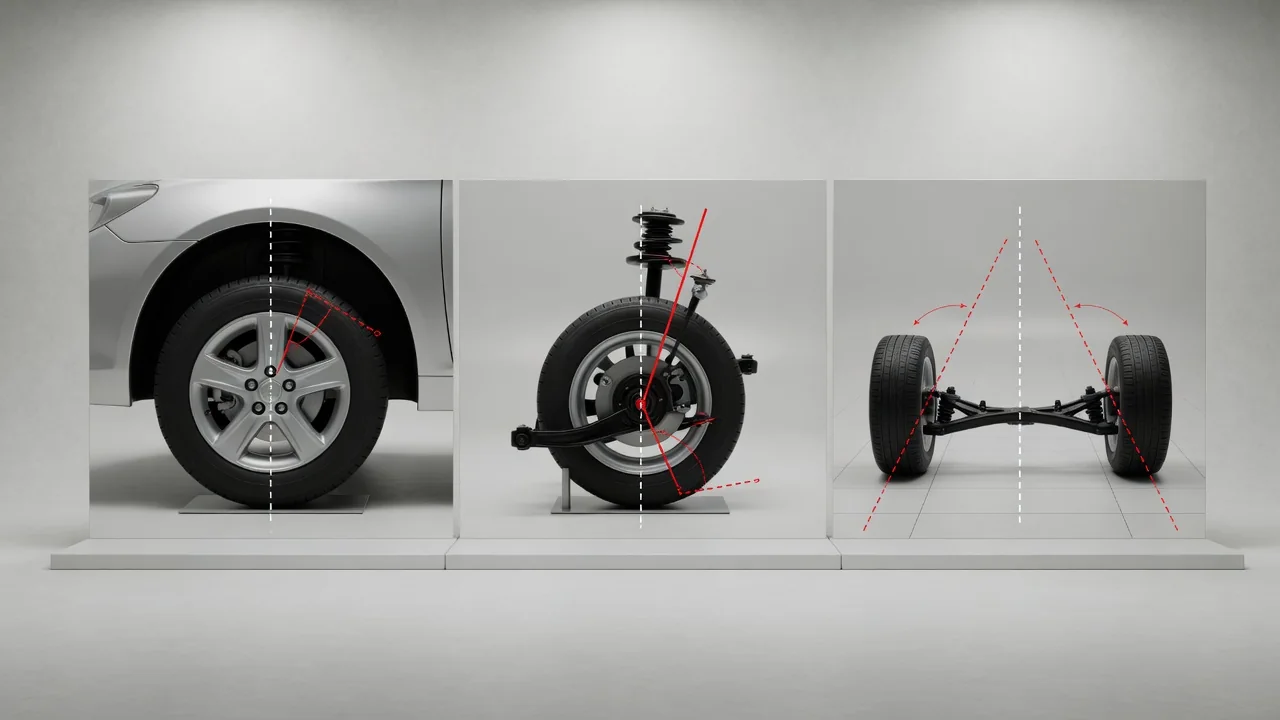
Wheel alignment angles describe how each tire sits relative to the vehicle and the road. Camber wheel alignment is the inward or outward tilt of a wheel, caster wheel alignment is the tilt of the steering axis, and toe wheel alignment is the direction the wheels point. Together they shape steering feel, directional stability, and tire wear. Reading an alignment spec sheet means matching each measured angle to the vehicle's specified range rather than judging a wheel by eye.
The Views and Reference Lines Behind Alignment Angles
Camber is the wheel tilt you would see looking from the front, caster is the steering-axis tilt viewed from the side, and toe is wheel direction viewed from above. Those three views define the main wheel alignment angles on a typical printout. Positive, negative, and zero describe that geometry relative to a measurement reference, not a judgment of good or bad by themselves. An acceptable reading depends on the vehicle's specified range, so the same camber angle that is correct on one car can be out of range on another.
Alignment specifications depend on the exact vehicle configuration and the manufacturer's prescribed measurement conditions, including ride height, load, and how the steering wheel is held during the procedure. A wheel that looks slightly leaned or slightly toed from the curb is not proof that wheel camber alignment or wheel toe alignment is out of specification. Visible position mixes body stance, tire bulge, and road crown with the actual angles. Only a comparison of measured values to the selected specification set can establish whether the alignment meets the intended geometry.
Camber: Wheel Tilt, Tire Contact, and Edge Wear
Camber in wheel alignment is the inward or outward lean of the wheel relative to vertical when viewed from the front. Positive camber means the top of the wheel tilts outward, negative camber means the top tilts inward, and zero camber means the wheel is vertical to the measurement reference. Wheel alignment and camber interact because that tilt changes how the tread sits on the pavement and how the contact patch loads as the suspension rolls. There is no universal ideal wheel alignment camber angle; the target is the range written for that vehicle.
Excessive negative camber can contribute to inner-edge wear because more load stays on the inboard shoulder in everyday driving. Excessive positive camber can contribute to outer-edge wear for the opposite reason. Those patterns are not exclusive to camber; inflation, toe, ride height, and driving style also shape the shoulders. Unequal camber across an axle can contribute to a pull toward the side with more positive camber, yet road slope, tire condition, and other faults limit diagnosis from symptoms alone.
Caster: Steering-Axis Tilt and Steering Feel
Caster in wheel alignment is the fore-and-aft tilt of the steering axis when viewed from the side, not the visible lean of the wheel itself. The steering axis is the imaginary line the knuckle pivots around as the wheel turns. Positive caster means the upper steering-axis point sits rearward of the lower point, negative caster means the upper point sits forward, and zero caster is vertical. The wheel alignment caster angle is a property of that pivot line relative to the manufacturer's measurement reference.
Positive caster contributes to directional stability and to steering return, the tendency of the wheel to straighten after a turn, because the contact patch trails the steering axis. That same geometry can raise on-center effort and change how the wheel feels as it is turned. Negative caster generally reduces that self-centering effect and can make the steering feel lighter or less settled. Unequal caster can contribute to a pull. Wheel caster alignment generally does not produce a distinctive straight-line tread-wear pattern, so a worn tire alone cannot identify a caster problem.
Toe-In and Toe-Out: Wheel Direction and Tire Scrub
Toe in wheel alignment is the direction the wheels point when viewed from above. Toe-in means the leading edges of the wheels point toward each other, toe-out means those edges point away, and zero toe means the wheel directions are parallel. On many reports a positive reading indicates toe-in and a negative reading indicates toe-out, but the sign convention belongs to the equipment and the selected specification, so the printout's legend should be confirmed before treating a minus sign as a fault. The wheel alignment toe angle is set to the manufacturer's target, not a generic street preference.
Toe settings influence steering response and straight-line behavior because even a small angular error makes the tires scrub as they roll. Incorrect toe can contribute to tire feathering, where one edge of each rib feels sharper than the other, or to rapid wear across the face. Those patterns are clues, not proof of a single fault. Individual toe is each wheel's angle relative to the vehicle centerline, while total toe is the sum of left and right. A total reading within range does not establish that the steering wheel will be centered.
Reading the Before-and-After Alignment Sheet
A typical sheet labels each axle and each wheel position, then lists before readings, after readings, specified targets, and allowable ranges. Front left, front right, rear left, and rear right appear as separate columns so camber, caster, and toe can be compared side to side. Angles are commonly shown in decimal degrees or in degrees and minutes, and toe may also appear as a linear distance using the equipment's defined measurement basis at the rim or at the tire. Those units are not interchangeable without knowing how the machine converted the reading.
Report colors usually mark whether a measurement falls inside the selected specification range; they do not independently confirm that the vehicle is in good condition or that the correct vehicle was chosen. Assess each final reading against its applicable range and note any value still outside that window to discuss with the technician. Correct vehicle selection, a centered steering wheel during the procedure, and the required measurement conditions all affect how the numbers should be interpreted. If those conditions were not met, an in-range color can still describe geometry that will not feel right on the road.
Which Angles Can Be Adjusted and When Testing Is Needed
Front toe is commonly adjustable on typical cars through tie-rod length, which is why a shop can often correct wheel toe alignment even when other angles are left as found. Rear toe, camber, and caster adjustment depend on suspension design and manufacturer provisions; some layouts include cams, shims, or slotted mounts, and others do not. A measured angle may have no routine factory adjustment. An out-of-range result then calls for investigation rather than an assumed adjustment procedure, because forcing a change that the design does not provide can damage parts or hide the real cause.
When readings cannot be brought into specification, professional checks look for worn joints or bushings, bent or damaged components, ride-height issues, and incorrect measurement setup. Safe observations at home include an off-center steering wheel, a pull, or visible uneven tread wear, yet those clues cannot identify the responsible angle on their own. Sudden handling changes or visible tire damage warrant prompt professional inspection. Unresolved readings on the final report are questions worth asking before the vehicle leaves, because wheel angle alignment that remains outside range will continue to affect steering and tire life.