Rear Wheel Alignment and Two-Wheel Alignment Explained
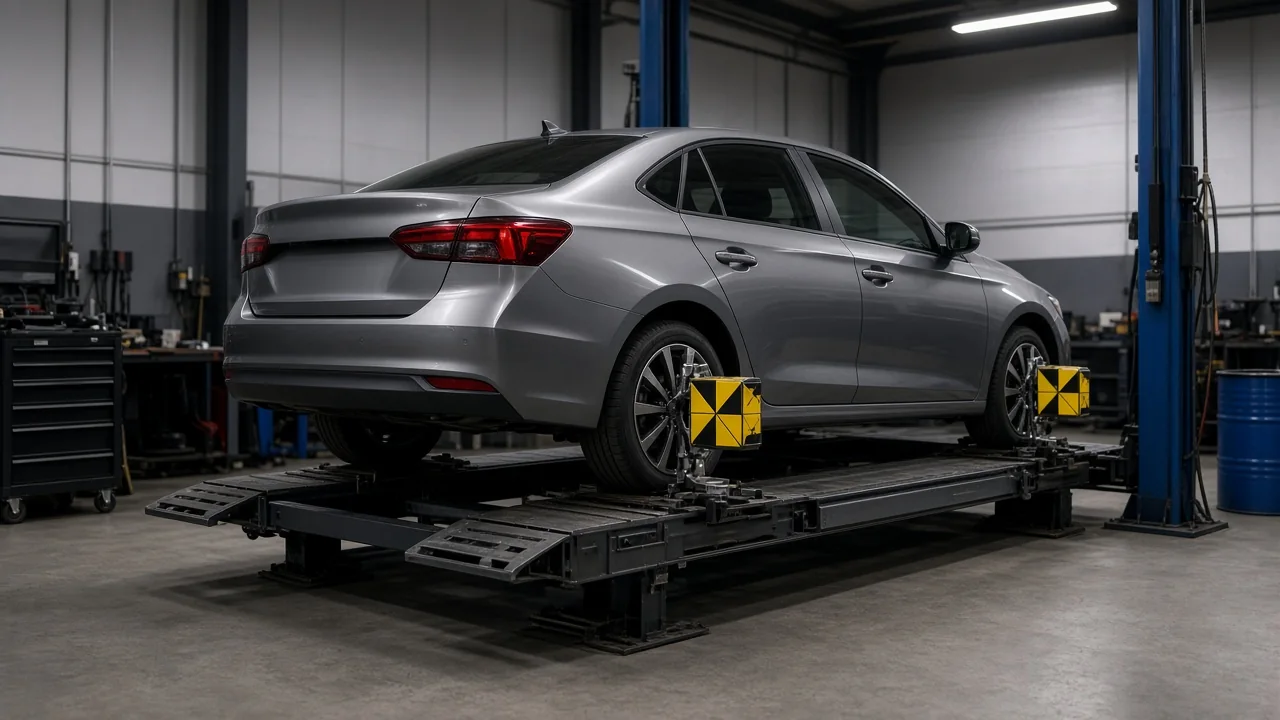
Rear wheel alignment describes how the rear axle sits relative to the vehicle and how the rear tires contact the road. Shops may also talk about wheel alignment rear wheels when they measure those positions, or about a two-wheel alignment when only the front pair is adjusted. Vehicle design decides whether a two wheel alignment is enough or whether four-wheel alignment is the right service.
What Rear Wheel Alignment Measures
Rear toe describes whether the rear wheels point slightly inward or outward when viewed from above, which sets the direction those tires want to travel. Rear camber describes the inward or outward tilt of each rear wheel when viewed from the front or rear of the vehicle. Together they shape how the contact patch sits on the pavement and how the rear tires share load. Alignment measurements compare those angles with the vehicle-specific specifications for that model, not a generic average applied to every vehicle.
Thrust angle is the direction the rear wheels point as a pair relative to the vehicle centerline. If that pair is slightly skewed, the rear axle can push the vehicle along a path that is not square to the body, even when the front wheels are centered. A wheel alignment rear measurement still only produces numbers against those specifications. A reading outside the published range is a reason to inspect further; it does not, by itself, prove that an adjustment is available on that axle.
How Suspension Design Determines Rear Adjustment Options
Factory rear adjustment provisions follow the suspension geometry of that vehicle, not a single rule for all cars and trucks. Some independent rear suspensions include camber or toe cams, shims, or eccentric bolts. Other designs use a solid axle or a nonadjustable trailing-arm layout with no intended rear toe or camber correction. Drivetrain layout alone does not decide the question. A front-wheel-drive car can have adjustable rear arms, and a rear-drive vehicle can have a fixed axle that is only measured.
When alignment measurements show an out-of-spec rear reading on a nonadjustable axle, the next step is inspection for wear, damage, or other geometry changes rather than assuming a kit will restore the angle. Bent control arms, collapsed bushings, a shifted axle, or collision damage can all move the wheels without any factory adjuster present. Confirm the applicable manufacturer specifications and the approved procedure for that vehicle before recommending corrective work. Do not assume a particular aftermarket part, shim, or replacement arm will fit or is authorized.
Signs That Rear Wheel Alignment Needs Inspection
Uneven tire wear on the rear, an off-center steering wheel, or a sense that the vehicle tracks at an angle can all be reasons to request a rear wheel alignment inspection. Feathered inner or outer shoulders, a tire that looks to be walking toward one side of the tread, or a body that seems to sit slightly crabbed in the lane are common owner observations. Those symptoms cannot identify an alignment fault by themselves. Tire condition, inflation, and worn suspension parts can produce the same clues.
Safe observations while the vehicle is parked still help a technician start in the right place. Note visible tread wear across each rear tire, compare inner and outer edges, and recall a recent curb strike, pothole, or parking-lot impact that might have moved suspension geometry. Sudden handling changes or visible tire damage deserve prompt professional assessment rather than continued driving on a compromised tire. Do not try to diagnose the problem with on-road tests; leave measurement of thrust angle and related angles to shop equipment.
What a Two-Wheel Alignment Service Includes
A two-wheel alignment commonly describes adjustment of the front wheels only, though service names can vary from shop to shop. Some invoices still say two wheel alignment, while others list a front alignment or a thrust-angle alignment under a similar heading. The work typically sets front toe, and often front camber and caster where those angles are adjustable, so the steering wheel and the front tires track together. Ask what the shop means by the term before comparing quotes.
Even when only the front wheels are adjusted, rear measurements may still establish the thrust line so the front pair can be set to that path rather than to a theoretical body centerline. Front-only adjustment can be appropriate when vehicle design and measured rear geometry support it, including many vehicles whose rear axle is within specification and not intended to be adjusted. Front adjustments do not correct an unresolved rear geometry fault. If rear toe, rear camber, or thrust angle remain off, the vehicle can still pull or wear tires.
Confirming the Alignment Scope Before Booking
Before booking, ask which wheels will be measured, which angles can actually be adjusted on that vehicle, and whether a suspension inspection is included. A four-wheel alignment service checks all four wheels and adjusts the available angles to the vehicle specifications. That is different from a two-wheel job that may still take rear readings but only turns front adjusters. The vehicle's adjustment provisions and the initial measurements should guide the recommended service, not a one-size menu item chosen before the car is on the rack.
Request a before-and-after alignment printout and an explanation of any readings left outside specification. The printout should show rear toe, rear camber, and thrust angle along with the front angles, so you can see what was measured and what was changed. If a rear reading remains out of range, ask whether further diagnosis is needed for worn parts, impact damage, or a nonadjustable axle rather than treating the remaining number as a completed repair. Keep that conversation tied to the vehicle in front of you.