Front-End, Two-Wheel and Four-Wheel Alignment: What Each Service Includes
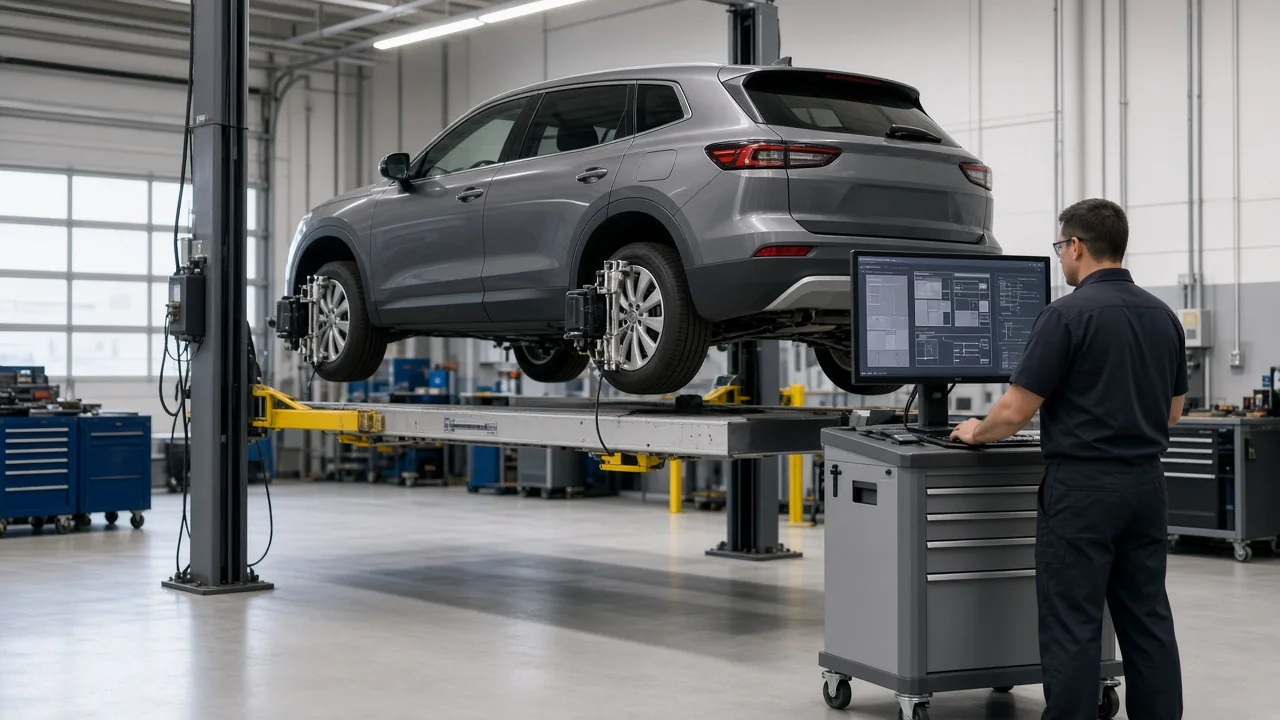
Alignment menus can look confusing, with front-end, two-wheel, thrust-angle and four-wheel services all priced differently. The differences come down to which wheels get measured, which angles can actually be adjusted and how much time the car spends on the rack. Knowing what your suspension allows, and what a proper report should show, helps you choose the right service and compare quotes fairly.
What a Front-End or Two-Wheel Alignment Actually Adjusts
At most shops, front-end and two-wheel alignment are the same job. The technician measures toe, camber and caster at the front wheels and adjusts them within whatever range the design allows. Toe is almost always adjustable through the tie rod ends because it has the biggest effect on tire wear. Camber and caster are different. Many strut-type front suspensions set these angles at the factory, so the shop can only measure them. That is why a printout can show a red value the shop had no way to change without extra parts.
Even a front-only job relies on the rear wheels. Modern alignment racks read the thrust angle from the rear so the technician can center the steering wheel to the direction the car actually travels, not just to the body. Shops usually recommend front-only work for three reasons: a solid rear axle with no adjustment points, wear on the front tires, or an off-center steering wheel after front suspension repairs. The limit is real, though. If the rear is out of specification, the car can still track crooked and wear its rear tires.
What a Four-Wheel Alignment Adds on Top of the Front Settings
A four-wheel alignment measures all four wheels. The technician adjusts rear toe and, where the suspension allows, rear camber before touching the front. Thrust angle is the direction the rear wheels point compared with the vehicle's centerline. If they point slightly left or right, the car moves a little sideways, which is called dog-tracking, and the driver ends up holding the steering wheel off-center to go straight. Fixing the rear first creates a true thrust line. The front is then set to match it, which a front-only job cannot fully do.
On a properly done job, the before-and-after printout should show the rear values brought into range before the final front readings. Names vary. Four-wheel, full and all-wheel alignment usually mean the same service. A thrust-angle alignment is a middle option that measures the rear but adjusts only the front. None of these replaces a pre-alignment inspection. Worn tie rods, loose ball joints or old bushings let the wheels shift under load, so those parts must be dealt with first. Otherwise, even perfect settings will not hold once the car leaves the rack.
Which Vehicles Need Rear Adjustment and Which Cannot Be Adjusted
Independent rear suspension is found on most modern sedans, crossovers and minivans and on many SUVs. It usually has adjustable rear toe and often adjustable rear camber, so it benefits from four-wheel service. That is why all-wheel-drive and four-wheel-drive vehicles built this way are usually quoted a full alignment. An incorrect rear toe setting also wears the rear tires with every mile driven. If you choose front-only work on one of these cars, half of the adjustable angles go unchecked. Uneven wear or a slight drift can remain even after the steering wheel looks straight.
Solid rear axles are common on body-on-frame pickups and some older cars, and their rear angles are usually fixed. On these vehicles, a thrust-angle or front-only service is normally the right choice unless the axle is bent or has shifted on its mounts. You don't have to guess which type you have. Ask the shop to show you the alignment machine's spec sheet, which lists the adjustable rear angles for your model. Aftermarket camber kits, lowering springs or lift kits can change this and may call for extra parts before a full alignment is possible. The shop should tell you that before starting.
What Drives the Cost of a Front-Only or Two-Wheel Alignment
A front-only or two-wheel alignment is usually the smaller job because fewer angles are measured and adjusted and the car spends less time on the rack. The price depends on the type of shop, local labor rates and whether a pre-alignment inspection is included. The car's condition matters too. Seized tie rod adjusters or rusted hardware can add a lot of time, especially on vehicles from areas that salt their roads. Some shops charge for that extra labor separately instead of including it in the base price.
When comparing quotes, look at what each one covers rather than just the total. A complete job should include a printed before-and-after report, a centered steering wheel and a short test drive to confirm the car tracks straight. Some shops no longer offer a separate two-wheel service and quote only a full alignment, which makes sense when the rear suspension is adjustable. It also helps to ask whether a re-check within a set period is included. That detail often explains why two quotes for similar work differ.
What Drives the Cost of a Four-Wheel Alignment
A four-wheel alignment costs more than front-only work because the technician measures and adjusts more angles and spends longer on the rack. Shops rarely sell rear-only alignment, because changing the rear moves the thrust line and the front then has to be reset. A typical quote combines rack time, technician labor, any shims or adjustment hardware the design needs, and a pre-alignment inspection of the tires and suspension. Vehicles with fixed rear angles may take less adjustment time. Lifted or lowered vehicles often need extra setup.
Newer cars add another cost. Depending on the manufacturer's requirements, the cameras and radar used by driver-assistance systems may need ADAS calibration after an alignment, and this is often billed separately. Pricing plans differ too. A one-time service makes sense if you plan to sell the car soon. A lifetime alignment or multi-year package can pay off if you'll keep the car for years, as long as its terms fit your situation. Dealer and independent shop quotes also vary. Ask for an itemized quote and find out what is excluded, such as parts needed to free a seized adjuster.
How to Choose the Right Service and Read the Alignment Report
Start by finding out whether your vehicle's rear is adjustable. Then think about any recent suspension or steering repairs and check which tires are wearing unevenly. A solid-axle truck with worn front tires usually needs front-only or thrust-angle service. An adjustable independent rear, or wear on the rear tires, points to a full alignment. Some signs mean the rear needs attention even if the shop suggests front-only work: the car moving slightly sideways on a straight road, a centered steering wheel that still pulls, or uneven wear on the rear tires.
On the printout, green values are within specification and red values were out. The shop should explain any angle marked as not adjustable. Keep in mind that an alignment can't fix a pull caused by tire conicity, a dragging brake or a bent wheel. A good shop checks for these during the inspection instead of just adjusting angles. Keep the report with your service records. If tire wear or handling problems show up later, you can compare new readings with the last recorded settings, which makes the cause much easier to find.