Do You Need a Wheel Alignment With New Tires?
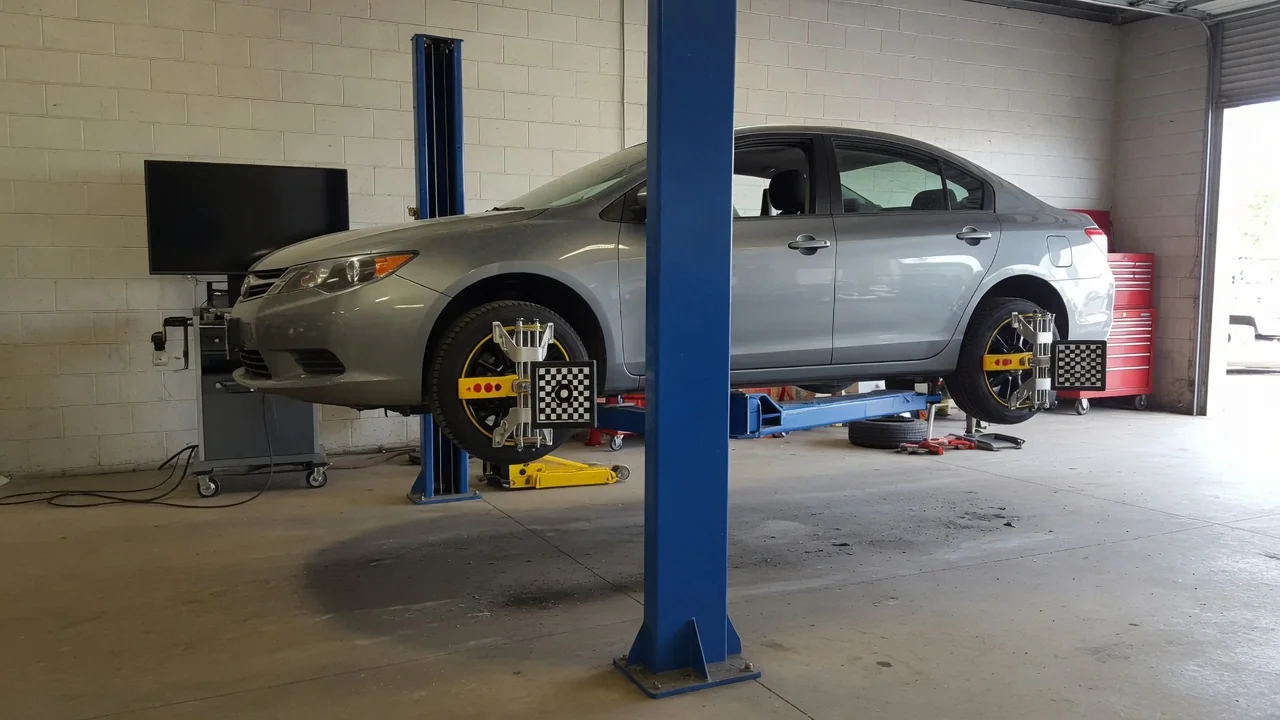
Buying a set of tires often comes with a question at the counter: should you add a wheel alignment? New tires and wheel alignment are related but separate services. Replacing tires does not change the angles your wheels sit at. Still, a fresh set is a smart time to confirm those angles are correct before the new tread starts wearing, whether you call them tires or tyres.
Do New Tires Automatically Require an Alignment?
Do you need a wheel alignment with new tires? Not automatically. Alignment describes how the wheels are angled relative to the vehicle and to each other. Those angles are set through adjustable steering and suspension parts. Mounting and balancing a new tire on the same wheel does not move those parts, so a routine tire swap generally leaves toe angle, camber angle, and caster where they were. The tires change, but the geometry holding them does not.
That said, replacement is a good chance to check. If the old tires wore unevenly for no obvious reason, the cause may still be there and ready to repeat on the new set. The only way to know whether an adjustment is needed is a measurement check on an alignment machine, which compares the actual angles with the vehicle's specifications. Installing new tires tells you nothing about those numbers.
Signs That Justify an Alignment Check
The tread on your outgoing tires is useful evidence to bring to the shop. Two patterns justify asking for an inspection: wear concentrated on one shoulder, and feathered tread that feels smooth when you run a hand across it one way and sharp the other way. Neither pattern proves a specific fault, because pressure, load, and worn components can leave similar marks. Both are still good reasons to measure before new tires go through the same process.
Handling symptoms matter too. A car that keeps pulling on level roads deserves attention, and so does a steering wheel that sits off-center while you drive straight. Tell the shop about any recent curb strike, hard pothole hit, or steering and suspension work. Keep in mind that incorrect tire pressure, road slope, a tire's internal construction, and worn bushings or ball joints can also cause pulling. Symptoms alone rarely settle the diagnosis.
When Skipping an Adjustment Can Be Reasonable
Skipping an adjustment can be reasonable when the evidence lines up. The concern is lower if the outgoing tires wore evenly across the tread, the car tracks straight with a centered steering wheel, and there has been no significant impact or related repair since the last alignment. Even so, normal wear and handling cannot confirm that every angle is within specification. Small errors can take many miles to show up in the tread.
The strongest reason to skip an adjustment is a measurement showing that current angles are already within the vehicle's specifications. Many shops can do a check without committing you to an adjustment, and numbers in range support leaving the settings alone. Beyond that, check your owner's manual or maintenance guidance for recommended checks. Also read the terms of any tire warranty or road-hazard plan, since some may ask for proof of alignment. No single interval applies to every vehicle.
Why Shops Recommend Alignment During Tire Replacement
Shops recommend a wheel alignment for new tires because timing matters. Once uneven wear starts, a later adjustment stops further damage but cannot restore tread that is already gone. Checking before the new set builds up miles protects the full tread depth you just paid for. It is fair to ask what the recommendation is based on. It could be wear on the old tires, handling problems you described, measured angles outside the range, or a routine offer made to every customer.
If you go ahead, ask for the alignment printout. A useful report shows before-and-after measurements for each wheel, the specifications for your vehicle, and which angles were changed. Out-of-range values are often highlighted. Also ask whether the suspension inspection found worn or loose steering or suspension parts. A technician cannot set angles reliably on components that move when they should not, so those problems may need repair before the alignment can be completed and hold its settings.
When to Schedule the Check Around Tire Installation
The best time to talk about alignment is before the old tires are hauled away. Their wear pattern is evidence for diagnosis, and once they are thrown out, that record is gone. Ask the technician to look at them with you. The shop can then check for underlying problems, install the new set, inflate it to the placard pressure, and measure alignment with the new tires on. Those readings reflect the conditions the vehicle will actually be driven in.
A wheel alignment after replacing tires is not an emergency with a fixed deadline. A car with even wear and normal handling does not need to rush back to the shop. Concerning wear or handling should still be checked promptly rather than left until the next tire purchase. Get a professional assessment before driving further if you notice severe pulling, loose or wandering steering, visible tire damage such as bulges or cuts, or a sudden change in handling.
How Misalignment Can Shorten New Tire Life
Misalignment wears tires in predictable ways. Toe describes whether the fronts of the tires point slightly inward or outward. When toe is off, each tire is dragged a little sideways as it rolls, which scrubs the tread and often leaves a feathered pattern. Camber is the inward or outward tilt of the tire when viewed from the front. Too much camber shifts the load toward one shoulder, so that edge wears faster while the rest of the tread still looks healthy.
New tires do not fix an existing alignment problem. They just give it fresh tread to wear down. How fast uneven wear develops depends on how large the error is, how you drive, and the tire itself, so no fixed mileage loss or guaranteed lifespan applies. As follow-up, check cold tire pressure against the door-jamb placard. While the car is parked, look across the tread for signs of uneven wear. Report any persistent pulling or off-center steering wheel to the shop.