Buy Blue Print brake pads
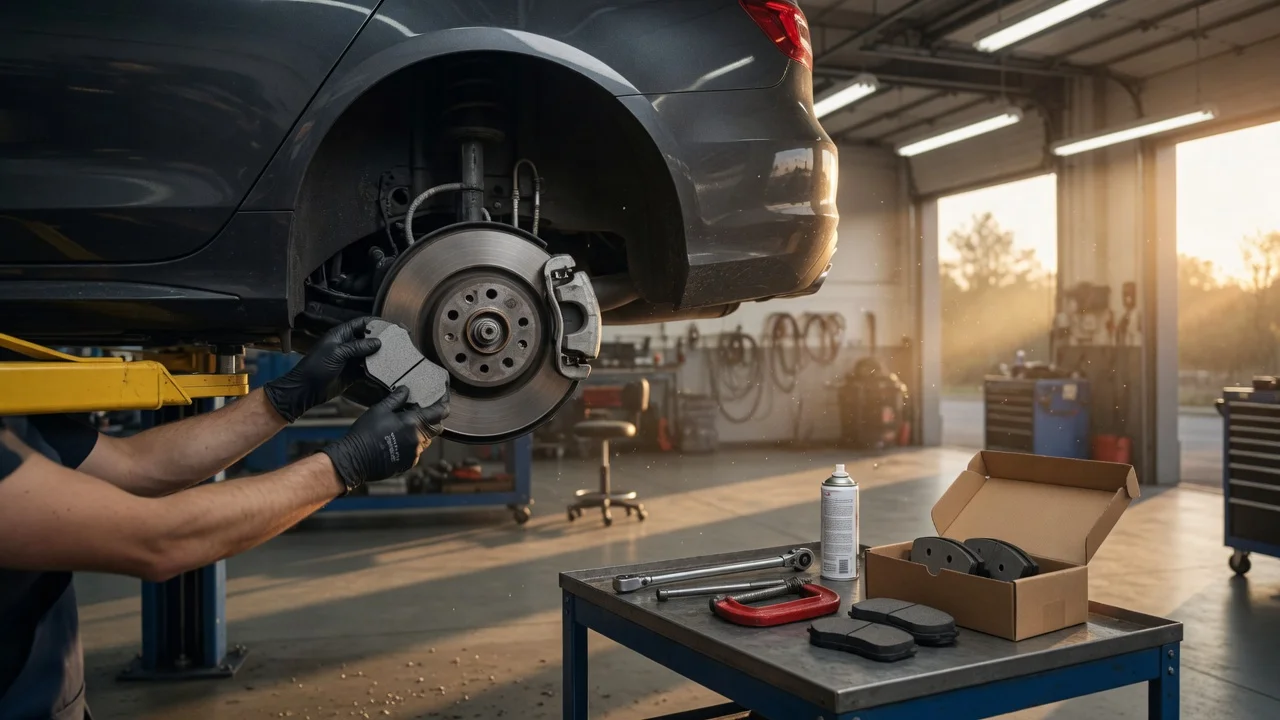
The short answer
To buy the right Blue Print brake pads, match the pad set to your vehicle's exact specification, not just its make and model. The same model can use different pads depending on model year, market, trim, engine and brake package. The most reliable approach is to cross-check a Blue Print part number against your vehicle identification number (VIN) or against the part number printed on the pads you are replacing. If those details do not line up, do not order on the model name alone.
Why the model name alone is not enough
Manufacturers often fit different brake hardware to versions of the same car. A higher-powered engine, a sport trim, a towing package or a mid-cycle update can change the caliper (the clamp that presses the pads against the disc), the disc diameter, or the pad shape. Pads for one version may physically not fit another, or may fit but be wrong for the braking load. Vehicles sold in different markets can also differ even when they share a name.
Details to confirm before ordering
Model year, and whether a mid-year change applies to your build date; Market the vehicle was originally sold in; Trim level and engine or powertrain, including hybrid or electric variants; Axle: front and rear pads are different parts and are sold separately; Brake system details, such as caliper make or disc size, if your vehicle was offered with more than one; Whether your vehicle uses an electronic wear sensor, and whether it is included with the pad set or sold separately; Whether the rear brakes use an electronic parking brake, which may affect the replacement procedure
A wear sensor is a small wire or clip that warns the driver, usually via a dashboard light, when the pads are worn. Some vehicles need one on a specific wheel, so check that the listing matches your setup.
Ways to confirm fitment
Method | What it involves | When it is most useful; VIN lookup | Entering your vehicle identification number into a parts catalogue or giving it to a parts supplier | When several versions of your model exist and you are unsure which you have; Old pad part number | Reading the number stamped on the backing plate of the pads being removed | When the current pads are the correct originals or a known-good replacement; Original equipment (OE) number cross-reference | Matching the vehicle maker's own part number to the equivalent Blue Print part | When you have the dealer part number from service records; Physical comparison | Comparing the new pad's shape, thickness and sensor provision against the old pad before fitting | As a final check before installation
Before and after fitting
Brake pads are replaced in pairs across an axle, so both sides wear evenly. It is also worth checking the discs at the same time: discs worn below the maker's minimum thickness, or that are scored or warped, should be replaced rather than paired with new pads. Follow the fitting and bedding-in instructions supplied with the pads, since new pads typically need a period of moderate braking before reaching full effectiveness. If you are not confident doing brake work, have a qualified technician fit them.
What this guide does not cover
No verified information on prices, stock availability, pad compound types or independent performance and wear testing for Blue Print brake pads was available for this article, so none is given here. For those points, check the current product listing for your specific part number and confirm any performance claims with the supplier.