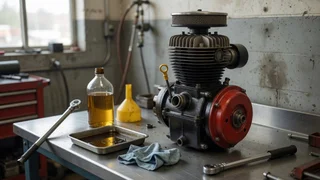
Find Briggs & Stratton 10 hp oil capacity
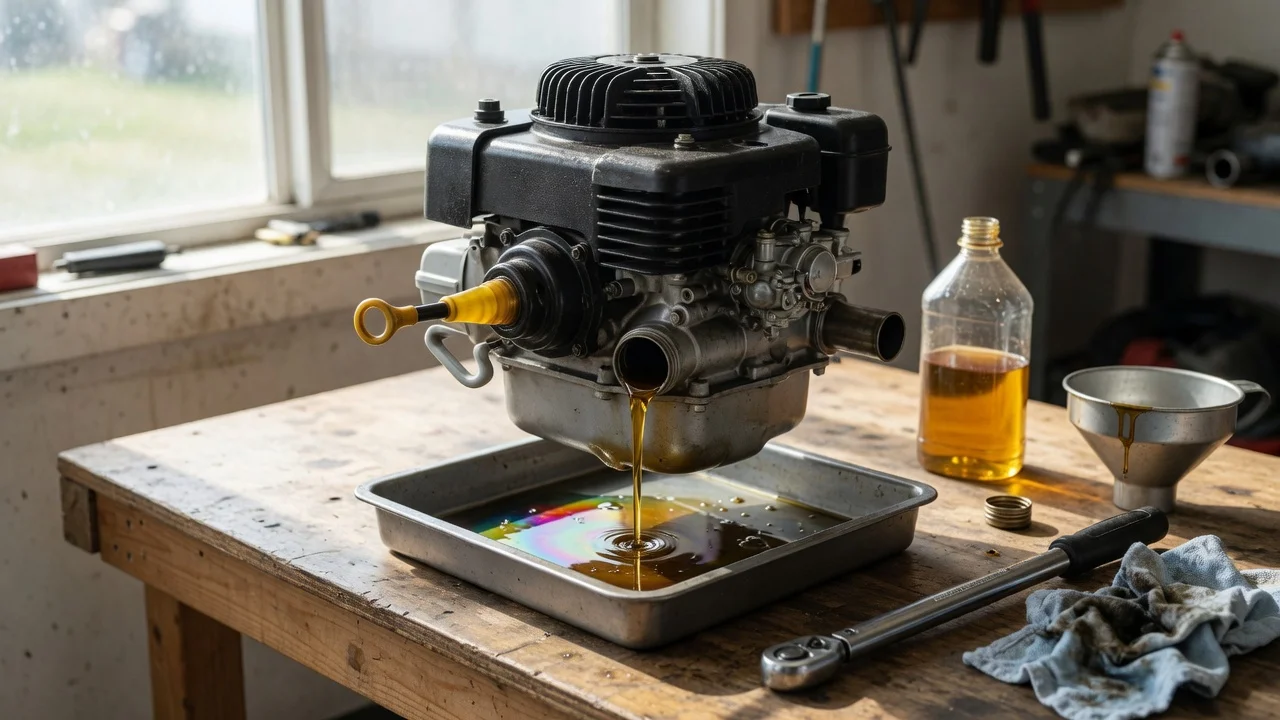
The short answer: it depends on the engine model, not the horsepower
There is no single oil capacity for a "10 hp Briggs & Stratton." Briggs & Stratton has built 10 hp engines across several families and decades. These include horizontal-shaft and vertical-shaft designs, cast-iron and aluminum blocks, and engines with different sump (oil pan) layouts. Crankcase volume can differ between these designs, so the horsepower rating alone does not tell you how much oil your engine needs.
The reliable answer comes from your engine's model number, checked against the operator's manual or the manufacturer's specification for that model. No verified capacity figures were supplied for this guide, so it does not list numbers by model. Treat any capacity you see quoted for "10 hp" in general as unconfirmed until you have matched it to your exact model.
How to find your engine's model number
Briggs & Stratton identifies each engine with three numbers: model, type and code. The model number identifies the engine design. The type number identifies the specific configuration built for an equipment maker. The code number is a date and production code. You need the model number to look up oil capacity. The type number can also matter, because two engines with the same model number may be built with different oil sumps.
Places to look for the numbers: • Stamped directly into the metal of the engine. On many engines this is the blower housing (the sheet-metal shroud over the flywheel) or a spot near the spark plug. • On a label or decal attached to the shroud, valve cover or another engine surface. • In the operator's manual or on the original equipment paperwork, if you still have it.
Stamped numbers can be hard to read under dirt or paint. Clean the area gently and use a light held at an angle. Make sure you are reading the engine's identification, not the serial plate of the mower, tiller or generator it is mounted in. Equipment makers often fit their own data plates, and those numbers will not match the engine's model number.
Reading an older model number
On many older Briggs & Stratton engines, the leading digits of the model number indicate approximate displacement in cubic inches, and the following digits encode design features. This can help you tell 10 hp families apart. It does not replace a capacity lookup, because engines with similar displacement can still use different sumps. Newer engines may follow a different numbering format, so check the model number against the documentation for that engine generation.
Confirming the fill level on the engine itself
Even with a published capacity, the dipstick or fill-plug level is the final check. A published capacity usually refers to a dry or fully drained engine. After a normal oil change, some oil stays inside, so the amount it takes can be less than the listed figure.
A cautious way to fill: • Park the equipment on level ground and let the engine cool. • Add oil in stages rather than pouring in the full listed amount at once. • Check the level the way your manual describes. Some dipsticks are read screwed in and some are read resting on the threads. Some engines have a fill plug that is filled to the point of overflowing instead. • Stop at the full mark. Do not overfill. Too much oil can cause smoking, leaks and oil fouling.
What this guide could not confirm
Several things were not covered by the supplied material: model-by-model oil capacities for 10 hp engines, the recommended oil grade or viscosity for each model, and the exact location of the identification numbers on every engine family. For any of these, use the operator's manual or the manufacturer's model lookup for your specific model and type numbers. Those sources take priority over general figures quoted for 10 hp engines as a group.