Brake Proportioning Valve Bleeding Tools: Choosing the Right Tool
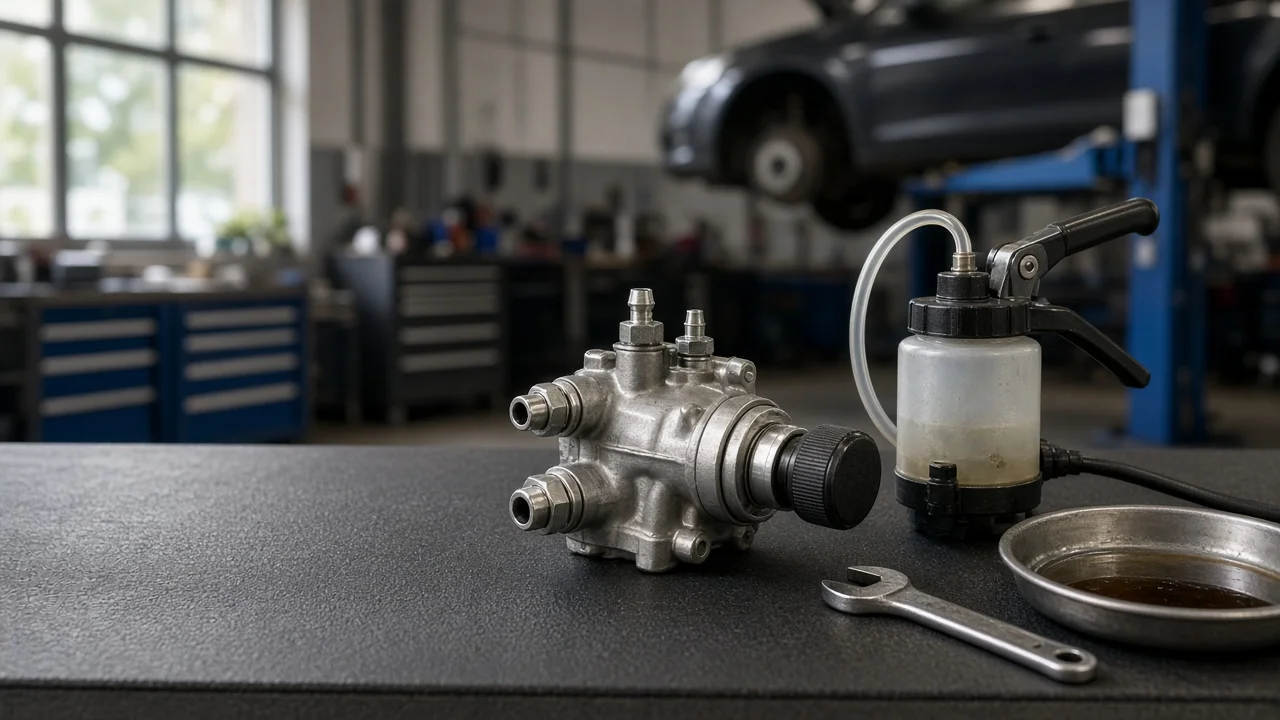
A brake proportioning valve bleeder tool is a small clip or clamp that holds the metering section of a combination valve open so fluid can reach the front brakes during bleeding. On many older vehicles with front discs and rear drums, that valve can block flow at the low pressure a pressure bleeder supplies. The right tool depends on how your valve is built, how you bleed the system and whether the tool actually fits your vehicle.
Define the Job the Tool Must Do
On many vehicles, especially older ones with front disc brakes and rear drum brakes, the metering valve, proportioning valve and brake warning switch are combined in one combination valve mounted near the master cylinder. The metering section holds back pressure to the front calipers until the rear shoes overcome their return springs, so both ends begin braking together. That same function can stop brake fluid from reaching the front circuit when a pressure bleeder supplies steady low pressure. Despite its common name, a proportioning valve tool does not adjust rear brake pressure. It holds the metering stem in its open position so the front lines can be flushed and bled, and that is its entire job.
Start with how you bleed. Two-person pedal bleeding usually produces enough pressure to pass through the metering valve, so many owners who bleed this way never need the tool. A pressure bleeder is the most common reason to buy one, and some service procedures call for holding the valve open with other methods as well, so follow the instructions for your specific vehicle. Also consider your practical limits: whether you maintain one vehicle or several with different valves, how much room there is around the valve, and whether you can reach it without disturbing brake lines.
Check Compatibility With Your Valve
The deciding detail is how your metering stem must be held. Some valves require the stem or button to be pushed in, while others require it to be pulled out, and many tools handle only one direction. Look at the end of the combination valve: an exposed stem, often under a small rubber boot, indicates a metering section that may need holding, and the service information for your vehicle states which way it moves. Some vehicles use a separate metering valve, some combination valves have no external stem, and many vehicles with four-wheel disc brakes or ABS have no metering valve to hold at all. In those cases this type of bleeding tool has nothing to do, and you should follow the bleeding procedure specified for that system.
Physical fit matters as much as design. The slot, jaw or clamp has to seat on the stem or valve body while leaving clearance from the master cylinder, mounting bracket and steel lines; a tool that only fits by bending a line is the wrong tool. When a seller lists vehicle fitment, check it against make, model, year and brake configuration rather than model name alone, because the same model can use different valves depending on brake options. Treat a listing that only says universal as a claim to verify, not as confirmation.
Features That Affect the Choice
Most tools fall into two groups. Spring-steel clips install quickly and are simple, but a clip that is too loose can slip off once the system is pressurized, and one that is too tight can be hard to remove without force. Screw or clamp designs take a little longer to set up but can be adjusted to hold the stem firmly. Some kits include several adapters to cover both push-in and pull-out valves, which helps if you work on more than one vehicle. Whatever the design, the contact surfaces should hold the stem without scratching or bending it or tearing the boot, because damage there can lead to leaks or a sticking valve.
Separate useful evidence from marketing labels. Terms such as professional grade or heavy duty say little about whether a tool suits your valve. More informative are the valve types or vehicle applications it is intended for, a diagram showing which direction it holds the stem, dimensions you can compare with your valve, included instructions, and a finish that tolerates brake fluid, which can damage painted surfaces. A brightly colored tool or an attached reminder tag is a genuinely practical feature, because it makes the tool hard to overlook when you close the hood.
Limitations and Ownership Costs
The tool goes on before the system is pressurized and must come off as soon as bleeding is complete. Leaving it in place keeps the metering valve from working, which can change how front and rear braking blend. Ownership costs are low: wipe brake fluid off after each use, store the tool so the clip or clamp is not bent, and replace it if the spring weakens or the jaw deforms. The recurring costs belong to the job rather than the tool, including the brake fluid type specified for your vehicle, a pressure bleeder cap that matches your master cylinder reservoir, clear bleeder hose and a catch container.
Know what the tool cannot do. It does not bleed an ABS hydraulic unit, which on many vehicles requires a scan tool procedure, and it does not diagnose or repair a faulty combination or proportioning valve. It will not re-center a pressure differential switch that has shifted, clear a warning light, fix a leaking line or seized caliper, or compensate for brake pads or brake rotors worn beyond the wear limits in your service information. If the pedal stays soft or sinks, or the brake warning light remains on after bleeding, stop driving the vehicle and have the system inspected by a professional.
Build a Practical Shortlist
A compact comparison takes only a few steps. First, confirm from service information whether your vehicle has a metering valve that must be held during bleeding and whether its stem is pushed in or pulled out. Second, make sure you can reach the stem with the valve installed. Third, keep only tools designed for that direction, or kits that include an adapter for it. Fourth, compare each tool's stated applications or dimensions with your valve instead of relying on a universal claim. Fifth, prefer a design that holds the stem without marking it and stays in place under bleeder pressure. Sixth, favor tools with clear instructions and a visible reminder to remove them.
Finally, weigh how often you will use it. If you bleed one vehicle with the pedal method, you may not need a tool at all. If you pressure bleed several vehicles with different valves, a multi-adapter kit is usually more practical than a single fixed clip.