Brake Pad Replacement Cost: Parts, Labor, Front and Rear Brakes
What brake pad replacement usually costs
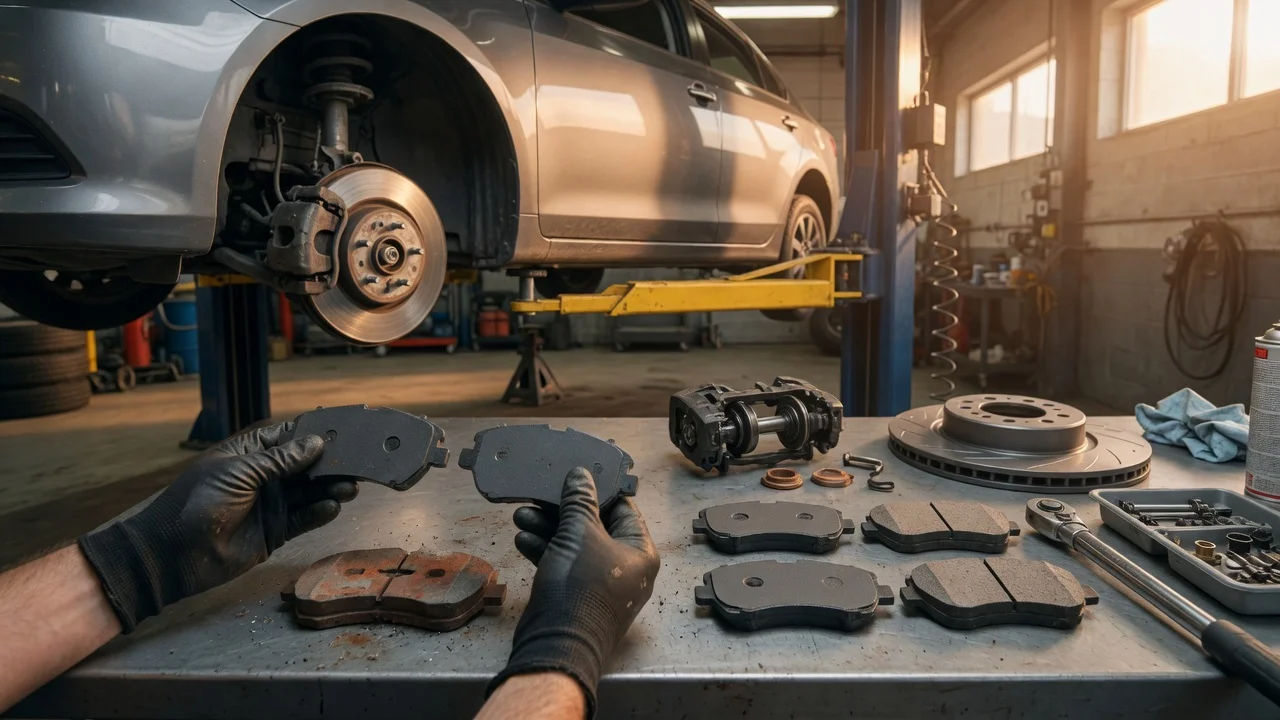
Brake pad replacement cost is the combined price of the pads, related hardware, and the labor to remove the old pads, inspect the rotors and calipers, and fit the new set. There is no single national price. The total changes with which axle is being serviced, the pad material, whether rotors or hardware must be replaced at the same time, the vehicle make and model year, and whether the work is done at a dealer, independent shop, or as a DIY job.
A pads-only job on one axle is the lower end of the range. The bill rises when the shop also machines or replaces rotors, installs new shims or slide-pin hardware, flushes brake fluid, or finds a seized caliper. Front pads often cost more in labor and parts than rear pads on the same vehicle because the front axle does most of the stopping work and uses larger pads. Ask for a written quote that splits parts and labor and states whether rotors are included.
What you are paying for
The parts line is the pads themselves plus any hardware the manufacturer or shop treats as a matched set. Pads are sold per axle, not as a single wheel. Common pad types are organic, semi-metallic, and ceramic. Organic pads are usually the least expensive and tend to be quieter; semi-metallic pads often last longer under heat and heavy use; ceramic pads typically cost more and produce less dust. The right type depends on the vehicle’s original specification, driving style, and climate. Using a pad that does not match the rotor surface or the vehicle’s intended friction material can shorten pad life or change pedal feel.
Labor is the time to lift the vehicle, remove the wheels, retract the caliper pistons, swap the pads, and check related parts. Many shops also apply lubricant to slide pins, bed the new pads, and road-test the car. Labor time is higher on vehicles with seized hardware, electronic parking brakes that need a scan tool to retract the rear pistons, or tight packaging that makes caliper access slow. Dealer labor rates are often higher than independent shops; mobile mechanics and chain shops sit in between depending on the market.
Typical quote line items; Pads for one axle (left and right); Anti-rattle clips, shims, or abutment hardware if not included with the pads; Rotor resurfacing or replacement if the rotors are below minimum thickness, scored, or warped; Brake fluid top-up or a fluid flush if the fluid is old or contaminated; Caliper service or replacement if a piston or slide pin is seized; Shop supplies, environmental fees, and sales tax where they apply
Front pads versus rear pads
Front brake pads usually wear faster and are replaced more often. On most passenger cars and light trucks, the front brakes handle a larger share of stopping force, so the front pads are larger, run hotter, and cost more per set. Front labor can also take longer if the calipers are heavier or the splash shields and sensors are more involved. If a shop quotes only “brake pads,” confirm whether the figure is for the front axle, the rear axle, or both.
Rear pads often last longer, but replacement is not always cheaper overall. Many newer vehicles use an electronic parking brake in the rear calipers. Retracting those pistons requires a scan tool or a specific service mode; shops bill extra time for that step. Some rears still use drum-in-hat parking brakes or conventional drums instead of discs; a rear drum job is a different parts list and labor procedure from a disc pad swap. Do not assume a rear quote is interchangeable with a front quote on the same car.
Replacing both axles at once can cost more in a single visit and less over two separate appointments, because the vehicle is already on the lift and the shop can inspect all four corners. That is a scheduling and inspection decision, not a requirement. Pads should be replaced when they reach the wear limit on that axle, even if the other axle still has life left.
Conditions that change the bill
Rotors are the most common add-on. Pads need a flat, sufficiently thick rotor surface. If the rotors are grooved, cracked, heat-spotted, or thinner than the discard specification stamped on the rotor, the shop will recommend machining (where still legal and thick enough) or replacement. A pads-and-rotors job on one axle is a different price from pads only. Performance, truck, and luxury applications often use larger or two-piece rotors that cost more than a compact-car rotor.
Calipers, hoses, and fluid matter when something besides the pads has failed. A leaking or seized caliper can drag a pad and destroy a new set quickly. Brake fluid absorbs moisture over time; some shops include a flush with a full brake service, others list it separately. Wear sensors, which are common on European and some Asian models, are usually replaced with the pads they belong to. Missing that part can leave a warning light on after the job.
Vehicle specifics also move the number. Model year, trim, engine, and whether the car has performance brakes, tow packages, or hybrid regenerative braking all affect pad size and labor. A quote for one trim does not automatically apply to another. Identify the year, make, model, engine, and brake package before comparing prices. Aftermarket, original-equipment, and dealer-branded pads are not priced the same, and cheap pads can increase dust, noise, or rotor wear even when the install looks identical.
How shops typically quote the job
A useful estimate names the axle, the pad brand and material, whether hardware is included, rotor condition, and labor hours or a flat labor price. “Brake job” is too vague. Ask whether the quote assumes the rotors will be reused, and what happens if inspection shows they cannot be. Many shops inspect after the wheels are off and then call with a revised total; that is normal, because rotor thickness and caliper condition are hard to confirm with the wheel on.
Independent published national averages for this job were not supplied for this article, so any dollar figure you see in ads or forums should be treated as local and vehicle-specific until a shop inspects your car. Online parts prices show only the box of pads, not labor, hardware, or rotor work. A parts-only price is useful for DIY planning and a poor stand-in for a shop invoice.
DIY parts cost versus shop replacement
Buying pads yourself covers the friction material and, if you choose a complete kit, the clips and shims. You still need a jack, stands, a C-clamp or caliper tool, torque wrench, and, on many newer rears, a way to retract an electronic parking brake. Mistakes such as twisting a hose, failing to seat a pad, or launching without bedding the pads can cost more than the labor you skipped. If you are not equipped to measure rotor thickness and to torque wheel nuts to spec, a shop job is the safer next step.
If you supply your own pads, some shops will install them and some will not, because they cannot warranty parts they did not sell. Confirm that policy before you buy. Whether you DIY or use a shop, replace pads in axle sets and torque the wheels to the vehicle specification after the first short drive, because the wheels were removed.
Signs you actually need pads, not a different repair
A high-pitched squeal that starts at light braking is often the wear indicator. A grinding noise, a vibration in the pedal, a longer stopping distance, or a brake warning light can mean pads are gone, rotors are damaged, or fluid or a sensor is at fault. Those symptoms overlap. A visual check of pad thickness through the wheel, or a shop inspection, is what confirms the pads are the item to replace. Do not replace pads alone if the rotors are below spec or a caliper is stuck; the new pads will not last.
How to get a quote you can compare
Give the shop the year, make, model, engine, and any brake or tow package. State front, rear, or both axles. Ask for pad material and whether hardware and wear sensors are included. Ask whether the quote is pads only or pads and rotors, and what the rotor brand is. Ask how electronic parking brakes, if fitted, are handled in the labor time. Get the estimate in writing and confirm the warranty on parts and labor.
Compare like with like: the same axle, the same pad grade, and a clear yes or no on rotors. The lowest parts price is not always the lowest ownership cost if the pads dust heavily, glaze, or wear the rotors. Once you have two or three itemized quotes for your specific vehicle, you have enough to choose a shop or to buy a pad kit and do the work yourself.