Brake Pad Replacement Cost: Front and Rear Parts and Labor
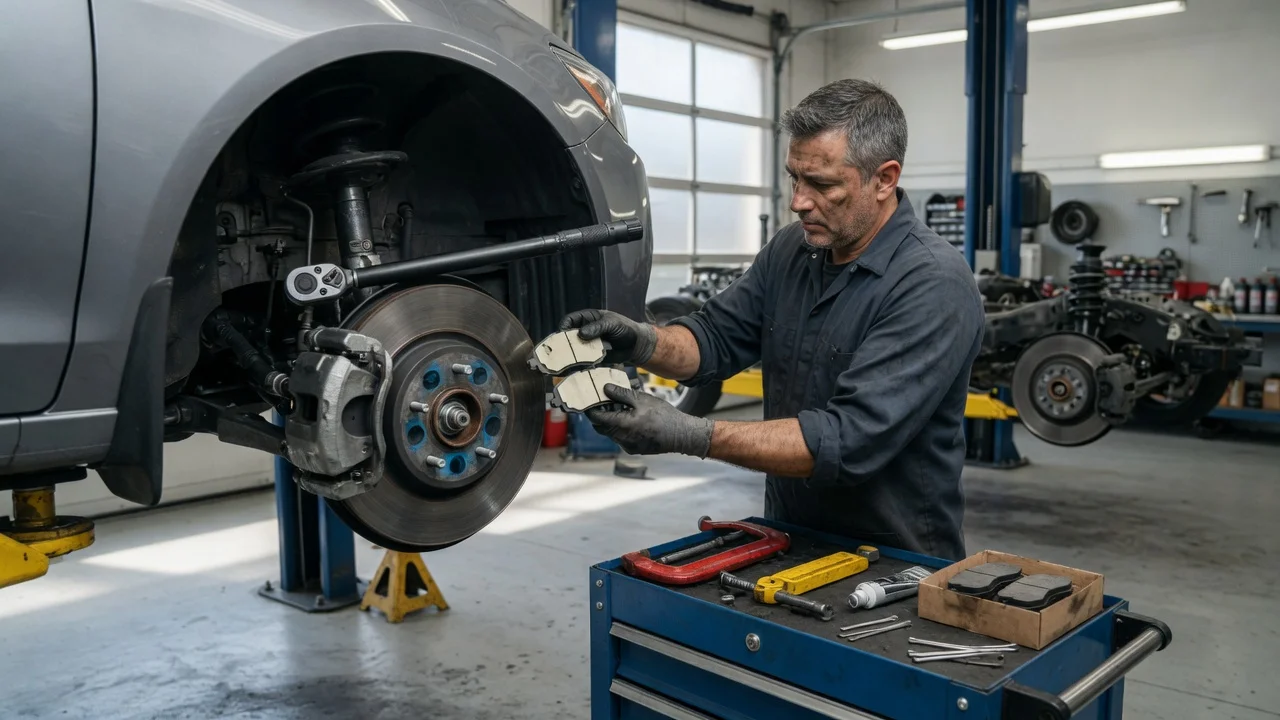
Brake pad replacement cost is the price of the pads plus the labor to fit them. The total changes with which axle is serviced, the vehicle, pad grade, and whether rotors, hardware, or fluid are included in the same visit. A parts-only figure is not the same as an installed price. Specific dollar amounts are not listed here because they depend on model year, market, trim, powertrain, parts brand, and shop labor rate, and those figures were not supplied for this article.
What a brake pad job includes
A brake pad is the replaceable friction lining that presses against a rotor when you apply the brakes. Some rear axles use shoes inside a drum instead of pads on a disc. Replacement is due when lining thickness is at the maker’s minimum, a wear sensor or warning light comes on, or noise, vibration, or a long pedal points to worn or contaminated material. Shops quote a set for one axle: both left and right sides, because those pads wear together.
Front brake pad replacement cost
The front axle does most of the stopping work on a typical passenger vehicle, so front pads are often larger and the labor line is commonly the bigger of the two axles. Front calipers, rotors, and pad shapes can differ by trim and brake package, and many vehicles put a wear sensor only on the front. A front-only quote should name the pad specification for that model year, market, trim, and powertrain. If the shop also recommends front rotors, that is a separate charge from the pads and will raise the installed total.
Rear brake pad replacement cost
Rear parts and labor can be lower or higher than the front, depending on the vehicle. Many cars use smaller rear discs. Others fold the parking brake into the rear caliper, or use rear drums and shoes rather than pads, which changes both the part and the labor time. Some rear jobs need an electronic parking-brake service mode or a scan tool. Confirm whether the rear axle uses disc pads or drum shoes before comparing quotes, and match the part to the same model year, market, trim, and powertrain.
How front and rear quotes differ
Factor Front axle Rear axle; Pad set Often larger friction area; takes more of the stopping load Often smaller; may include parking-brake function; Labor Typical caliper and pad swap on most cars May need electronic parking-brake service or drum-shoe work; Rotors or drums Often replaced or resurfaced with the pads Replaced when worn or when the parking-brake surface is damaged; Wear sensor Common on the front set Present on some vehicles, absent on others
Parts price versus labor
The parts line is the pads and, on a complete job, the abutment clips, slide-pin boots, and wear sensors that should be renewed with them. Pad price moves with friction material (organic, semi-metallic, or ceramic), brand, and whether the set is an original-equipment match or an aftermarket equivalent. Fitment is not guaranteed by “front” or “rear” alone: the catalog entry must match the vehicle’s year, market, trim, and brake package.
The labor line is the time to remove the wheels, unbolt the calipers, replace the pads, lubricate and refit hardware, and check pedal feel and, where required, the parking brake. Labor rises when seized hardware, rusted slides, or a stuck caliper turns a pad job into extra work, and when rotors must be replaced or resurfaced in the same visit. Ask whether the quoted hours assume pads only or pads and rotors.
Conditions that change the bill
Which axle is being done: front, rear, or both; Whether rotors are reused, resurfaced, or replaced; Pad material and whether a wear sensor is included; Vehicle class and brake package, such as base, towing, or performance; Independent-shop versus dealer labor rate; Corrosion, seized calipers, or electronic parking-brake service; The vehicle’s market and model year
How to compare quotes
Ask the shop to split parts and labor, name the pad brand and material, and state whether rotors, hardware, and sensors are included. Compare two estimates only when they cover the same axle, the same extra operations, and the same vehicle specification. If remaining pad thickness or a photo of the pads is missing from the estimate, request that measurement before approving rotor replacement. Published national averages and parts-catalog list prices were not supplied here, so treat any figure you see elsewhere as a starting range until it is tied to your vehicle and a written estimate.
A suitable next step
If you already have a written estimate, check that it covers the axle you were quoted, lists pads separately from rotors, and identifies the pad specification. If you do not have a measurement yet, have remaining pad thickness inspected on both axles before ordering parts. For a parts purchase without labor, confirm fitment against the exact model year, market, trim, and powertrain rather than by axle position alone.