Brake Fluid Flush Machines and Systems: Choosing Service Equipment
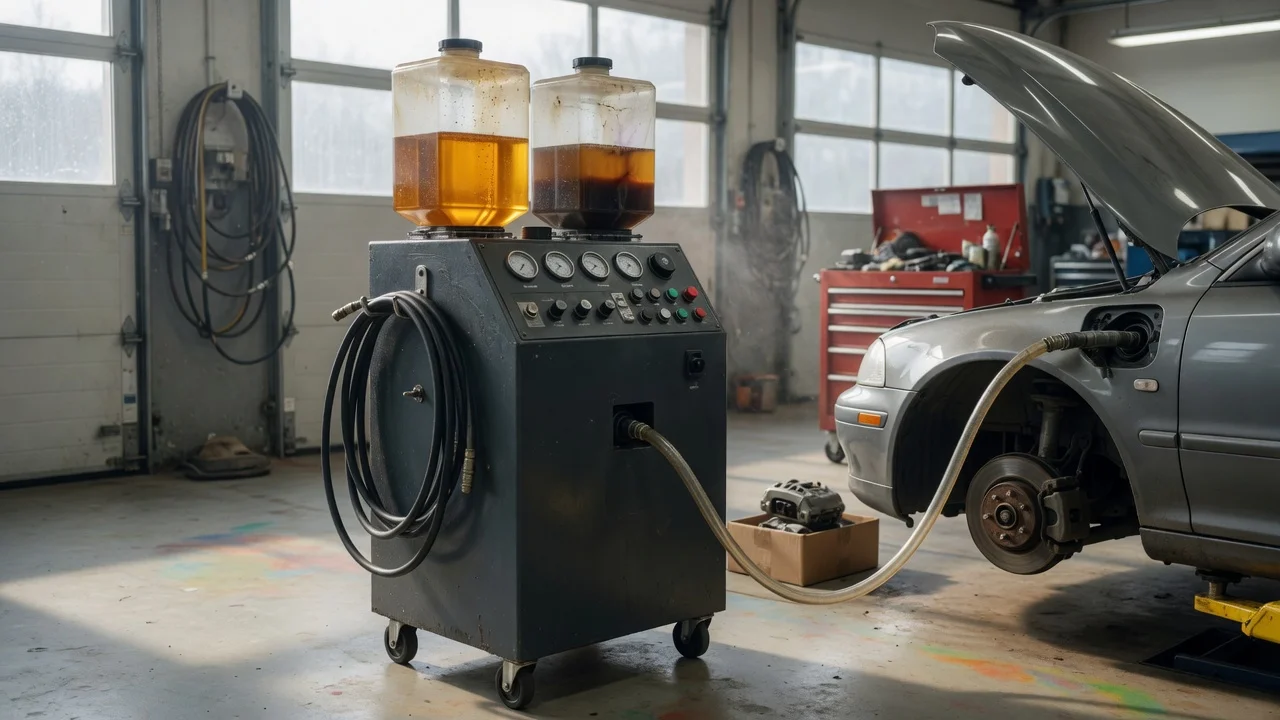
What a brake fluid flush machine does
A brake fluid flush machine replaces old brake fluid by moving fresh fluid through the hydraulic system while used fluid exits at the bleeder screws or reservoir. The equipment is intended to remove contaminated fluid, moisture, and trapped air more consistently than a manual two-person bleed. Most machines either pressurize the master cylinder reservoir, pull fluid at the wheel end, or fill and extract fluid at the reservoir before a conventional bleed.
Main types of brake fluid flush equipment
Service equipment generally falls into three groups. A pressure bleeder attaches to the master cylinder reservoir and pushes fresh fluid through the system under regulated air pressure. A vacuum bleeder connects at each caliper or wheel cylinder and draws fluid through the bleeder screw. An exchange or extractor unit removes old fluid from the master cylinder reservoir and refills it with new fluid, which is normally followed by a bleed at each wheel. Some combination units can perform both pressurized flushing and general fluid extraction.
Pressure versus vacuum versus exchange systems
Criterion | Pressure bleeder | Vacuum bleeder | Exchange/extractor unit; Fluid path | Fresh fluid pushed from reservoir through the system | Used fluid pulled from each bleeder screw | Reservoir emptied and refilled before a wheel bleed; Air intrusion risk | Risk of air entering if the reservoir adapter leaks or pressure is too high | Risk of air being drawn past bleeder-screw threads | Lower pressure at the reservoir; wheel bleed still needed; Setup | Requires a compatible reservoir adapter and regulated supply pressure | Requires access to each bleeder screw and a collection container | Requires only reservoir access for the exchange step; Typical service speed | Can be fast once the adapter is fitted | Slower because each wheel is serviced individually | Quick at the reservoir, then normal bleed time per wheel; Fluid contamination control | Good if the machine and lines are clean | Good when suction does not pull air past the threads | Good for reservoir fluid, but the exchange alone does not replace all fluid in the lines and ABS passages
What to check before choosing equipment
Compatibility matters first. Pressure units depend on reservoir adapters, so confirm that the kit covers the vehicle makes and cap styles you will service. Vacuum extraction must fit the bleeder screws without damaging them, and many modern vehicles require service-procedure support for electronic stability control or ABS module activation during bleeding.
Identify the brake fluid types you will handle. DOT 3, DOT 4, and DOT 5.1 systems are glycol-based and generally share compatible service equipment if the machine is kept clean. DOT 5 is silicone-based and should not be mixed with glycol fluids. If a shop services vehicles using different fluid types, the equipment must be clearly separated or thoroughly cleaned to avoid cross-contamination.
Check the regulated pressure range before buying a pressure bleeder. A unit that cannot hold a stable low pressure may cause fluid leakage at the reservoir adapter, which can damage paint and make the flush incomplete. Air supply requirements should also be confirmed, because some machines need a shop air line while others can be operated manually or from an electric pump.
Ownership and operating costs
The purchase price is only part of the comparison. Adapters, replacement seals, collection bottles, and cleaning materials add cost over time. A pressure machine that lacks commonly needed adapters can become expensive to equip after purchase. A vacuum system may have lower initial hardware cost but can consume more technician time per vehicle. Compare the complete supported use case rather than the base tool price alone, and treat advertised prices as a starting point because quoted equipment bundles and completed shop purchases can differ by market and date.
Choosing by service type
High-volume general repair: a pressure bleeder with a broad adapter set is usually the most efficient choice when the vehicles are known and adapter coverage is adequate. Mixed fleet or occasional DIY service: a vacuum bleeder can be simpler to set up and does not require a wide collection of reservoir caps, but it is slower for multiple axles and may allow air to be drawn past bleeder threads. Fluid exchange before a standard bleed: an extractor is useful for quickly removing old reservoir fluid, but it should be treated as one step in a flush, not as a complete replacement of all fluid in the brake lines. Vehicles with complex ABS or stability-control bleeding requirements: confirm that the service procedure can be performed with the equipment before committing to a machine, because scan-tool or module activation support may determine whether the flush is acceptable.
Practical checks that can change the decision
Verify reservoir adapter fit on representative vehicles before purchase. Check whether the unit accepts the air pressure already available in the shop. Confirm maximum pressure and whether it can be regulated low enough for passenger-car reservoirs. Identify fluid types used across the fleet and plan separation or cleaning for DOT 5 silicone fluid. Inspect replacement-seal, adapter, and bottle availability.
When a flush machine is not the full answer
No single piece of equipment removes the need for the vehicle-specific bleed procedure. Reservoir exchange alone leaves old fluid in the lines, ABS hydraulic unit, and wheel circuits. On vehicles that require an electronic actuator cycle or a defined bleed sequence, the machine must work alongside the correct procedure. If that support is missing, the equipment may still speed up fluid movement, but it cannot by itself confirm that the whole system has been flushed.